Power fails at the worst possible moment. The lights cut out during dinner. A socket sparks when you plug in a charger. The breaker trips again and again, and nothing stays on.
An emergency electrician in Dubai can turn that panic into a safe, working home again. This guide explains what counts as a real electrical emergency, what to do first, what help costs, and how to choose a reliable team.
You will learn the warning signs, the safe first steps, the repair process, and the prevention checks that stop the next fault. Keep this page saved for the night you need it.
Key Takeaways
- A burning smell, sparking socket, exposed wire, or breaker that will not reset is an emergency. Call a professional at once.
- Switch off power at the main breaker if it is safe to do so. Stay away from water and never touch exposed wires.
- A 24 hour electrician in Dubai usually aims for fast same-night arrival in central areas. Traffic, location, and demand affect timing.
- Many faults share simple causes: overload, loose wiring, worn sockets, water damage, or an ageing consumer unit.
- Licensed, insured electricians give upfront prices and clear explanations. Ask for both before work starts.
- Renters should tell the landlord or property manager first, unless there is immediate danger. Owners usually arrange the repair directly.
- Regular checks on sockets, breakers, and the consumer unit prevent most emergencies before they start.
Quick Answer: An emergency electrician in Dubai is a licensed professional who responds outside normal hours to urgent electrical faults. Call one for sparking, burning smells, total power loss, exposed wires, water near electrics, or a breaker that will not reset. Switch off the main breaker if safe, keep clear of water, and do not touch damaged wiring.
What Is an Electrical Emergency?
An electrical emergency is any fault that creates danger, stops essential power, or risks fire or shock. It needs urgent professional help, not a wait until morning.
Not every fault is an emergency. A single dead light bulb can wait. A buzzing consumer unit cannot. The difference is risk. If people, property, or essential services are at risk, treat it as urgent.
Dubai homes face extra pressure on electrical systems. Air conditioning runs for long hours in summer heat. High loads, dust, humidity, and older wiring in some villas all add strain. A small fault can grow fast in those conditions.
Definition Box: Emergency Electrical Repair
Emergency electrical repair means urgent work to make a home safe and restore power after a dangerous fault. It covers fault finding, isolation of the damaged circuit, safe repair or replacement, and testing before power returns. A 24 hour electrician in Dubai provides this service day and night, including weekends and public holidays.
What Counts as an Electrical Emergency?
Use this checklist to decide fast. If any item applies, call an emergency electrician in Dubai now. Do not wait to see if the problem fixes itself.
1. Burning Smell From Sockets, Switches, or the Consumer Unit
A burning or acrid smell means heat is building where it should not. Loose connections, overloaded circuits, or melting insulation can cause it. Switch off the affected circuit if you can do so safely. Call for help at once.
Do not mask the smell with air freshener. Do not keep using the socket. Heat damage often hides behind the wall plate, so the visible part may look normal.
2. Sparking Sockets or Switches
A brief spark when you plug in a device can happen once. Repeated sparking, crackling, or visible arcing is different. It signals loose wiring, a damaged socket, or a failing switch.
Stop using that socket immediately. Unplug devices only if the plug and cable feel cool and dry. If the socket feels hot, leave it alone and switch off the circuit.
3. Total Power Loss in Your Home
A power outage electrician in Dubai can help when your home loses all power but neighbours still have lights. First check the main breaker and the building supply. If the breaker will not stay on, the fault is inside your home.
Total loss matters most at night, in summer heat, or when medical equipment, fridges, or security systems depend on power. Do not open the consumer unit beyond the main switch unless you are trained.
4. Exposed or Damaged Wires
Exposed wires after a renovation, a fallen fixture, or water damage are a shock risk. Children and pets face the highest danger. Keep everyone away from the area.
Never tape over exposed wires as a fix. Tape hides the damage and can trap heat. A professional must inspect, isolate, and replace the damaged section.
5. Water Near Electrics
Water and electricity are a dangerous mix. Leaks from air conditioning, plumbing, or rain can reach sockets, light fittings, or the consumer unit. Switch off power at the main breaker if you can reach it without stepping in water.
Stay out of standing water near electrical fittings. Call an emergency electrician and, if needed, a plumber to stop the leak. Learn more about linked water emergencies in our guide to emergency plumber Dubai.
6. Breaker That Will Not Reset
A breaker trips to protect you. If it trips once after a clear overload, reset it once and watch it. If it trips again at once, or will not stay on, stop resetting it.
Repeated resets can damage wiring and hide a serious fault. This is a classic case of fuse box tripping in Dubai homes, often linked to a faulty appliance, a damaged circuit, or moisture in the system.
7. Buzzing, Humming, or Hot Consumer Unit
A consumer unit should run quietly and feel cool. Buzzing, humming, vibration, or warmth points to loose connections or a failing breaker. Turn off the main switch if it is safe and call for help.
Do not remove the consumer unit cover. Live parts sit behind it. A licensed electrician has the tools and training to test safely.
8. Electric Shocks or Tingling
A tingle from a tap, appliance, or light switch is a warning sign. It may point to an earthing fault. Stop touching the item at once.
Switch off the circuit if you can do so safely. Keep others away until a professional checks the earthing and wiring. Never ignore a small shock.
What to Do First: Safety Steps in Order
Stay calm and follow these steps. Safety comes before saving appliances or restoring power.
- Stay clear of danger. Move away from sparking sockets, exposed wires, and water near electrics. Keep children and pets in another room.
- Switch off power if safe. Use the main breaker on the consumer unit. Use dry hands and stand on a dry floor. If the unit is wet, buzzing, or smoking, leave it alone.
- Unplug devices only if safe. Remove plugs from affected sockets when the plug feels cool and dry. Leave hot or damaged plugs in place.
- Open windows if you smell burning. Fresh air helps if smoke is light. Leave the home if smoke grows thick or you feel unwell.
- Call an emergency electrician. Explain the symptoms clearly. Mention smells, sparks, water, and what tripped.
- Call for extra help if needed. If fire is visible, call emergency services first. If water is flooding, call a plumber after the power is off.
Do and Do Not: First Five Minutes
| Action | Do | Do Not |
|---|---|---|
| Power | Switch off the main breaker if safe and dry | Keep resetting a tripping breaker again and again |
| Water | Stay out of standing water near fittings | Touch wet sockets, switches, or appliances |
| Wires | Keep everyone away from exposed wires | Touch, tape, or cut damaged wiring |
| Smell | Ventilate lightly and call for help | Ignore a burning smell or keep using the circuit |
| Appliances | Unplug cool, dry devices only | Pull a hot plug with wet hands |
Quick Answer: Switch off power at the main breaker, keep away from water and exposed wires, and call a 24 hour electrician in Dubai. Never touch damaged wiring. Leave the home if smoke grows thick.
What an Emergency Electrician Does on Arrival
A good emergency visit follows a clear process. It starts with safety, then diagnosis, then repair and testing. You should understand each step before work begins.
Step 1: Make the Home Safe
The electrician checks the consumer unit, the affected circuit, and the area around the fault. They isolate the faulty circuit so the rest of the home can stay powered where safe. This step protects people first and property second.
Step 2: Find the Fault
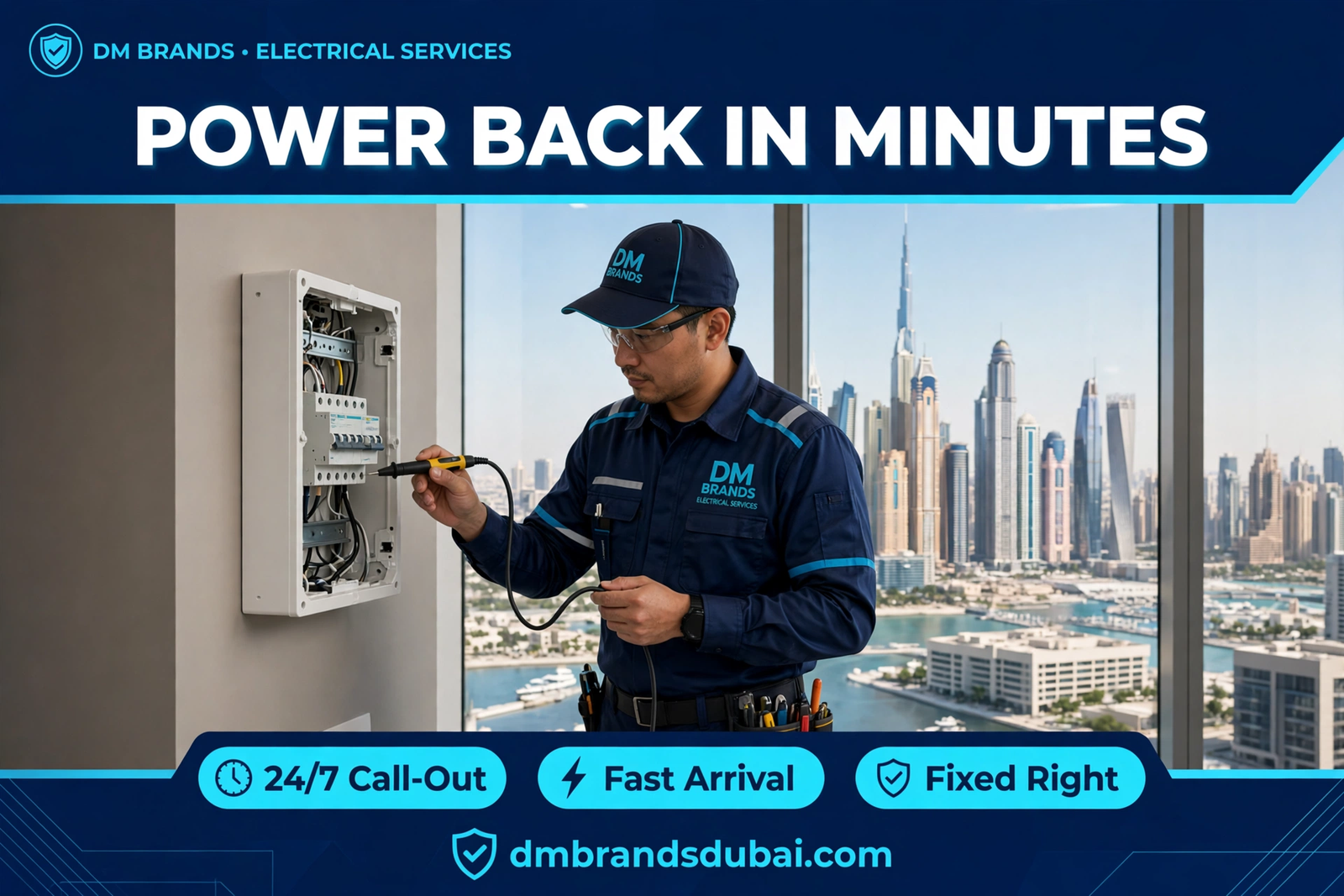
Fault finding uses testing tools, not guesswork. The electrician checks continuity, insulation, load, and earthing. They test sockets, switches, appliances, and the consumer unit in turn.
Common causes include a faulty appliance, a loose connection, a damaged cable, water ingress, or a worn breaker. The test results point to the true cause, not just the symptom.
Step 3: Explain the Options
You should hear the cause in plain words, the repair options, and the price before work starts. A temporary safe fix may restore power tonight. A permanent repair may need a part the next day.
Ask what is safe now and what still needs attention. A clear explanation is a sign of a professional team.
Step 4: Repair and Replace
Repairs may include replacing a socket, switch, breaker, or section of cable. The electrician uses parts rated for the load and the Dubai climate. Work should follow safe practice and leave no exposed wiring.
For larger jobs, such as a panel fault, the team may make the home safe tonight and return with parts for a full fix. Read our guide to electrical panel upgrade Dubai if your panel is old or overloaded.
Step 5: Test Before Leaving
Testing matters as much as the repair. The electrician checks the circuit under load, tests safety devices, and confirms sockets and lights work. They should show you what changed and what to watch.
Ask for a short written note of the fault, the repair, and any follow-up work. That record helps landlords, insurers, and future electricians.
Emergency Electrician Response Times in Dubai
Speed matters in an emergency. Response time depends on where you live, the time of day, traffic, and how many teams are free. Central areas often see faster arrival than outer communities.
A same day electrician in Dubai can usually reach most homes within a few hours. Night calls may take longer if fewer teams are on duty. Clear directions, building access, and gate codes help the team arrive faster.
Typical Response Times by Situation
| Situation | Typical Response Aim | What Affects It |
|---|---|---|
| Central Dubai, daytime | Fastest, often within 1–2 hours | Traffic and team availability |
| Dubai Marina, JLT, Downtown | Fast, strong coverage | Building access and parking |
| JVC, Al Barsha, Business Bay | Fast to moderate | Distance and road conditions |
| Palm Jumeirah, Dubai Hills Estate | Moderate | Gate access and villa location |
| Arabian Ranches, The Springs, Mirdif | Moderate | Distance from central teams |
| Late night or public holiday | Longer, fewer teams on duty | Demand and staff cover |
| Severe weather or peak summer | Longer | High call volume |
These times are typical aims, not promises. A reliable company gives a realistic arrival window on the phone and updates you if it changes. If you need an electrician near me in Dubai at night, ask for the nearest available team and confirm the call-out charge first.
How to Speed Up Arrival
- Give the exact building, tower, villa number, and gate code.
- Tell the team which floor, room, and circuit failed.
- Mention burning smells, sparks, water, or shocks clearly.
- Confirm parking or visitor access with building security.
- Keep your phone nearby for the electrician's call.
- Clear a path to the consumer unit before they arrive.
Emergency Electrician Cost in Dubai: What to Expect
Prices vary by fault, parts, time, and location. No honest company can quote an exact price before seeing the fault. Use the ranges below as typical and indicative only. Confirm the final price before work starts.
Typical and Indicative Cost Ranges
| Service | Typical Indicative Range | Notes |
|---|---|---|
| Emergency call-out, daytime | Lower than night call-out | Covers arrival and first diagnosis |
| Emergency call-out, night or weekend | Higher than daytime | Reflects out-of-hours cover |
| Socket or switch replacement | Modest part plus labour | Price depends on part quality |
| Breaker or MCB replacement | Moderate | Depends on breaker type and rating |
| Consumer unit repair | Higher | May need parts ordered in |
| Fault finding, complex circuit | Varies with time needed | Testing can take longer than repair |
| Water heater electrical fault | Varies | May need a new element or thermostat |
| Full panel upgrade | Highest in this list | Planned work, not a night fix |
Night, weekend, and public holiday call-outs usually cost more than daytime visits. Parts, travel, and the time needed also affect the total. Ask for the call-out fee, the hourly or fixed repair price, and the part cost in writing.
How to Avoid Surprise Bills
- Ask for the call-out charge before booking.
- Ask whether diagnosis is included or charged separately.
- Ask for a fixed price for the repair once the fault is found.
- Ask if parts carry a warranty.
- Keep the receipt and the fault note.
- Avoid companies that refuse to give any price range on the phone.
A clear price talk builds trust. A vague price talk often leads to a dispute later. Choose the team that explains costs in plain words.
Common Electrical Emergencies in Dubai Homes
Dubai homes share many of the same faults. Heat, humidity, heavy air conditioning use, and high appliance loads create a clear pattern. Learn the pattern and you can spot trouble early.
AC-Related Overloads
Air conditioning is the largest electrical load in most Dubai homes. A failing compressor, a blocked filter, or a worn contactor can draw extra current and trip the breaker. The fault may look electrical but start with the AC unit.
If the breaker trips only when the AC starts, tell the electrician. They can test the AC circuit and check for overload. For AC faults, see our guide to emergency AC repair Dubai.
Tripping Breakers and Fuse Box Tripping
Fuse box tripping in Dubai homes often follows the same causes: too many high-power devices on one circuit, a faulty appliance, moisture, or a loose connection. Kettles, heaters, ovens, and AC units draw heavy loads.
Test by unplugging devices on the tripped circuit, then resetting once. If the breaker trips again with nothing plugged in, the fault is in the wiring or the breaker itself. Call a professional.
Faulty Sockets and Switches
Sockets wear out with heat and heavy use. Loose contacts create heat, arcing, and burning smells. Cracked faceplates, wobbly plugs, and discoloured sockets are early signs.
Replace worn sockets before they fail. A simple replacement costs far less than a fire repair. Never use a socket that feels hot or smells of burning.
Lighting Failures
A whole room losing light may point to a tripped circuit or a failed breaker. A single flickering light may point to a loose bulb, a failing driver, or a loose connection. Flicker across many lights can signal a supply or panel issue.
LED drivers fail more often in heat. If lights flicker when the AC starts, mention it to the electrician. The pattern helps diagnosis.
Water Heater Faults
Water heaters draw high current and run for long periods. A failed element, thermostat, or isolator can trip the breaker or stop hot water. A burning smell near the heater needs urgent attention.
Switch off the heater circuit if it trips repeatedly. Do not open the heater yourself. Water and high current need professional handling.
Consumer Unit and Distribution Board Issues
The consumer unit, also called the distribution board or DB, controls every circuit in the home. Loose busbars, ageing breakers, and poor connections cause heat, buzzing, and repeated trips.
Older boards may lack modern safety devices. If your board is old, hot, or noisy, ask about an upgrade. Our guide to electrical panel upgrade Dubai explains the options.
Outdoor and Balcony Electrics
Balcony lights, garden sockets, and pool equipment face rain, dust, and humidity. Water ingress causes trips and corrosion. Outdoor fittings need proper weather protection and regular checks.
If an outdoor circuit trips after rain, keep it off until tested. Do not use outdoor sockets that show rust, cracks, or water marks.
Diagnosis Process: How Electricians Find the Fault
Good diagnosis saves time and money. It follows a logical order and uses test equipment at each step. Here is how a professional works through a fault.
Step 1: Listen to the Symptoms
The electrician asks when the fault started, what tripped, what smells or sounds you noticed, and what changed recently. A new appliance, a renovation, or a leak often points to the cause.
Step 2: Visual Inspection
They inspect the consumer unit, sockets, switches, and visible wiring. They look for heat marks, discolouration, loose fittings, water stains, and damaged cables. Visual clues often narrow the fault fast.
Step 3: Test Each Circuit
Using a multimeter and insulation tester, they check each circuit in turn. They isolate circuits to find the one that trips. They test earth continuity and insulation resistance.
Step 4: Test Appliances
A faulty appliance can trip the whole circuit. The electrician unplugs devices and tests them one by one. Kettles, heaters, washing machines, and AC units are common culprits.
Step 5: Check Load and Balance
They check whether circuits carry too much load. Heavy appliances on one circuit cause repeated trips. Rebalancing loads or adding a circuit may solve the problem for good.
Step 6: Confirm the Fix
After repair, they test under normal load. They run the AC, the kettle, and the lights together if that was the failing pattern. They check that safety devices trip correctly when tested.
Temporary Fixes vs Permanent Repairs
Not every emergency ends with a full repair on the first visit. Sometimes a safe temporary fix restores power tonight, and a permanent repair follows with the right part.
| Approach | When It Fits | Example | Limit |
|---|---|---|---|
| Temporary safe fix | Part not in stock, late night | Isolate faulty circuit, restore other circuits | Fault still needs a full fix |
| Temporary bypass | Essential power needed now | Move a load to a safe circuit | Only if load and cable allow it |
| Permanent repair | Part available, fault clear | Replace socket, breaker, or cable section | Takes longer, costs more upfront |
| Full upgrade | Old panel, repeated faults | Replace consumer unit | Planned visit, not a night job |
A temporary fix must still be safe. It must not hide a fault, overload a circuit, or leave exposed wiring. Ask the electrician to write down what is temporary and what remains to be done.
Never accept a fix that relies on tape, a bypassed safety device, or a breaker that is too large for the cable. Those shortcuts create danger. A safe temporary fix protects you until the permanent repair is done.
How to Choose a Reliable Emergency Electrician in Dubai
Choice matters most in an emergency. You need speed, but you also need skill and honesty. Use this checklist before you book.
1. Licensed and Insured
Ask if the electrician is licensed for work in Dubai and if the company carries insurance. Licensed teams follow safe practice and use correct parts. Insurance protects you if something goes wrong.
2. Clear Upfront Pricing
A reliable company explains the call-out fee and the repair price before work starts. They give a written quote once the fault is found. They do not start work and reveal the price later.
3. Real Reviews and Local Experience
Check reviews for emergency work, not just planned jobs. Look for mentions of fast arrival, clear explanations, and clean work. Local experience in Dubai Marina, JVC, and villa communities helps, because building types differ.
4. Proper Tools and Parts
A professional arrives with test equipment, common breakers, sockets, and cable. They do not guess. They test, explain, and fix with rated parts.
5. Safety First Attitude
The right electrician isolates the fault, tests before leaving, and tells you what to watch. They do not rush a dangerous job. They explain risks in plain words.
6. Clear Communication
You should get an arrival window, a phone update if delayed, and a written fault note. Good communication reduces stress in an emergency.
Comparison: Reliable vs Risky Choice
| Factor | Reliable Electrician | Risky Choice |
|---|---|---|
| Licence | Licensed, happy to confirm | Vague or no licence details |
| Pricing | Upfront, written, clear | No price until work is done |
| Diagnosis | Tests with proper tools | Guesses or swaps parts at random |
| Safety | Isolates fault, tests after repair | Leaves exposed wiring or bypasses safety |
| Reviews | Recent, local, detailed | No reviews or only vague praise |
| Follow-up | Written note and warranty on parts | No record, no warranty |
For general electrical work, not just emergencies, see our guide to electrical repair services Dubai. It explains the full range of home electrical repairs.

Prevention and Maintenance Tips
Most emergencies start as small warning signs. Regular checks catch them early. Build these habits into your home routine.
Monthly Quick Checks
- Test the RCD or safety switch using the test button.
- Look at sockets for heat marks, cracks, or loose plugs.
- Listen for buzzing near the consumer unit.
- Check outdoor sockets for water marks or rust.
- Notice flickering lights or slow-starting appliances.
Seasonal Checks Before Summer
Summer heat raises electrical load sharply. Before the hot months, check the AC circuit, clean filters, and test breakers. A pre-summer check reduces night-time trips when AC demand peaks.
Ask an electrician to inspect the consumer unit once a year. They can tighten connections, test safety devices, and spot heat damage early. Annual checks cost less than emergency call-outs.
Daily Habits That Prevent Faults
- Do not overload one socket with many high-power devices.
- Use one high-power appliance per socket where possible.
- Keep water away from sockets and switches.
- Unplug devices you do not use for long periods.
- Replace damaged cables and plugs at once.
- Keep the area around the consumer unit clear and dry.
Mistakes to Avoid
- Do not ignore a burning smell.
- Do not keep resetting a tripping breaker.
- Do not use a damaged extension lead.
- Do not run extension leads under rugs or through doors.
- Do not attempt DIY repairs inside the consumer unit.
- Do not use indoor sockets outdoors.
Smart Home Safety
Smart switches, cameras, and home automation add convenience, but they also add load and wiring. Poor installation can cause faults. Use a professional for smart home work. See our guide to smart home installation Dubai for safe options.
Security systems also depend on stable power. A faulty circuit can disable cameras at the worst time. Learn more in our guide to CCTV installation Dubai.
Renters vs Owners: Who Pays for Emergency Electrical Repairs?
Responsibility depends on your tenancy contract, the cause of the fault, and Dubai rental practice. This section gives general guidance only. Check your contract for the exact terms.
When the Landlord Usually Pays
Landlords usually cover repairs to fixed wiring, the consumer unit, built-in fixtures, and faults from fair wear and tear. If the wiring failed through age or poor installation, the landlord or property manager usually arranges the repair.
Tell the landlord or agent as soon as you can. Send photos of the fault and the electrician's note. Keep receipts if you paid for urgent work to make the home safe.
When the Tenant Usually Pays
Tenants usually pay for damage they caused, such as a broken socket from misuse or a fault from an overloaded extension lead. Tenants also pay for their own appliances unless the contract says otherwise.
If you caused the damage, tell the landlord honestly. Early reporting often reduces cost and avoids a larger fault later.
What to Do in an Emergency as a Renter
- Make the home safe first. Switch off power if safe.
- Call the landlord, agent, or building management at once.
- If there is immediate danger and no reply, call an emergency electrician.
- Keep the invoice, photos, and fault note.
- Send the records to the landlord the same day.
- Do not attempt DIY repairs on fixed wiring.
What Owners Should Know
Owners should keep a record of electrical work, panel age, and past faults. That record helps future electricians diagnose faster. Owners should also budget for panel checks and socket replacements before faults become emergencies.
If you rent out a property, arrange an annual electrical check between tenancies. It protects tenants and reduces emergency calls.
| Situation | Usually Responsible | Action |
|---|---|---|
| Ageing wiring or panel fault | Landlord or owner | Report, arrange licensed repair |
| Tenant damage to socket | Tenant | Report, pay for repair |
| Faulty tenant appliance | Tenant | Unplug, replace appliance |
| Water leak causing electrical fault | Depends on leak source | Fix leak and electrics together |
| Emergency call-out at night | Depends on contract terms | Keep invoice, agree cost in writing |
Quick Answer: Landlords usually pay for fixed wiring and wear-and-tear faults. Tenants usually pay for damage they caused or their own appliances. In danger, make the home safe first, then sort cost with the contract and receipts.
What to Check Before Calling an Emergency Electrician
A short check before you call helps the electrician arrive prepared. It also helps you describe the fault clearly. Do these checks only if they are safe.
Before You Call Checklist
- Check if neighbours have power. If the whole building is out, the fault may be external.
- Check the main breaker. Note if it is off, tripped, or will not stay on.
- Note which rooms lost power and which still work.
- Note any smell, spark, sound, or heat you noticed.
- Note what was running when the fault happened.
- Check for water near sockets or the consumer unit.
- Take a photo of the consumer unit and any damage, from a safe distance.
- Have your address, building name, and gate code ready.
Questions to Ask on the Phone
- What is the call-out fee for tonight?
- How soon can a team arrive?
- Is the electrician licensed and insured?
- Do you carry common breakers and sockets?
- Will I get a written price before repair?
- What should I do while I wait?
Clear answers to these questions show a professional service. Vague answers are a warning sign. Choose the team that answers directly.
Areas Served: Emergency Electrician Across Dubai
DM Brands Dubai provides 24/7 emergency electrical help across the city. Our teams cover apartments, villas, and offices in central and outer communities.
We serve Dubai Marina, JVC, Downtown Dubai, Palm Jumeirah, Arabian Ranches, The Springs, JLT, Business Bay, Dubai Hills Estate, Al Barsha, and Mirdif. If you live nearby, call us and ask for the nearest team.
An electrician in Dubai Marina can reach towers fast when building access is ready. Villa areas need clear gate codes and villa numbers. Give those details on the phone to save time.
For safety guidance from official sources, see DEWA and Dubai Municipality. Both sites share general safety information for homes in Dubai.
When to Call Now and When to Book a Daytime Visit
Not every fault needs a night call-out. Use this guide to decide. When in doubt, call. A short phone call can confirm whether you need urgent help.
Call Now
- Burning smell, smoke, or visible fire risk.
- Sparking sockets or switches.
- Exposed wires or a shock.
- Water near electrics.
- Total power loss with essential needs.
- Breaker that will not reset.
- Buzzing or hot consumer unit.
Book a Daytime Visit
- Single dead socket with no smell or heat.
- Flickering bulb in one room.
- Loose switch plate with no sparking.
- Planned socket addition or upgrade.
- Annual consumer unit check.
- Smart home or lighting upgrade.
A daytime visit costs less and allows time for parts. An emergency visit protects safety and restores power fast. Choose based on risk, not convenience alone.
Frequently Asked Questions
1. How fast can an emergency electrician reach me in Dubai?
Arrival depends on location, traffic, and time of day. Central areas often see arrival within 1–2 hours. Outer villa areas may take longer. Ask for a realistic window on the phone.
2. What is the cost of a 24 hour electrician in Dubai?
Cost varies by fault, parts, and time. Night and weekend call-outs usually cost more than daytime visits. Prices in this guide are typical and indicative only. Confirm the call-out fee and repair price before work starts.
3. What should I do if my fuse box keeps tripping?
Reset it once after unplugging devices on that circuit. If it trips again, stop resetting it. Call an emergency electrician to find the fault. Repeated resets can hide a serious problem.
4. Is a sparking socket an emergency?
Yes, if sparking repeats or you see arcing, smell burning, or feel heat. Stop using the socket at once. Switch off the circuit if safe and call for help.
5. Can I reset the breaker myself?
Yes, once, if the breaker and your hands are dry and there is no smell, smoke, or water. If it trips again, do not keep resetting it. Call a professional.
6. What causes a power outage in one home only?
A tripped main breaker, a faulty consumer unit, a damaged circuit, or a failed appliance can cut power to one home. If neighbours have power, the fault is likely inside your home.
7. Who do I call for a power outage electrician in Dubai?
Call a licensed emergency electrician for faults inside your home. If the whole building or street is out, check with building management or DEWA first. For official guidance, see DEWA.
8. Do emergency electricians work at night in Dubai?
Yes. A 24 hour electrician in Dubai works through the night, weekends, and public holidays. Night teams may be smaller, so arrival can take longer.
9. What is the difference between a temporary fix and a permanent repair?
A temporary fix makes the home safe and restores power until parts arrive. A permanent repair replaces the faulty part and solves the cause. Both must be safe. Ask what is temporary in writing.
10. Can an electrician fix a tripping breaker the same day?
In many cases, yes. A same day electrician in Dubai can replace a faulty breaker, socket, or cable section on the first visit if parts are in stock. Complex faults may need a follow-up visit.
11. Is it safe to use other sockets after one socket sparks?
It may be safe if the fault is isolated to one socket and the circuit is off. Do not assume it is safe. Ask the electrician to test the circuit before you use nearby sockets.
12. What should I do if water leaks onto electrical fittings?
Switch off power at the main breaker if you can do so without stepping in water. Stay away from wet fittings. Call an electrician and a plumber. Do not use wet sockets or switches.
13. Why does my breaker trip when the AC starts?
The AC may draw high starting current, or a failing compressor may overload the circuit. A loose connection or undersized breaker can also cause trips. An electrician can test the AC circuit and load.
14. How do I find an electrician near me in Dubai at night?
Search for a 24 hour electrician in Dubai, check reviews, and call to confirm arrival time and price. Give your exact building and area, such as Dubai Marina or JVC, to find the nearest team.
15. Do I need an electrician for a buzzing consumer unit?
Yes. Buzzing, humming, or heat from the consumer unit needs urgent checks. Do not remove the cover. Switch off the main switch if safe and call for help.
16. What does an emergency electrician check first?
They check safety first, then the consumer unit and the affected circuit. They isolate the fault, test circuits and appliances, and explain the cause before repair.
17. Can I use an extension lead after a power fault?
Use extension leads only as a short-term fix and only if they are undamaged and rated for the load. Do not run them under rugs or through doors. Replace damaged leads at once.
18. Who pays for emergency electrical repairs in a rented home?
It depends on your contract and the cause. Landlords usually pay for fixed wiring and wear and tear. Tenants usually pay for damage they caused. Make the home safe first, then agree cost with receipts.
19. How can I prevent electrical emergencies at home?
Check sockets monthly, test safety switches, avoid overloading circuits, replace worn cables, and book an annual consumer unit check. Act on burning smells and flickering lights early.
20. What areas does DM Brands cover for emergency electricians?
DM Brands covers Dubai Marina, JVC, Downtown Dubai, Palm Jumeirah, Arabian Ranches, The Springs, JLT, Business Bay, Dubai Hills Estate, Al Barsha, Mirdif, and nearby areas. Call to confirm the nearest team.
21. Should I call an electrician or DEWA for a power cut?
Call DEWA or building management if the whole building or street is out. Call an emergency electrician if only your home is out and the breaker will not stay on.
22. What if my lights flicker across the whole home?
Flicker across many rooms can point to a supply or panel issue. Note when it happens and call an electrician. Do not ignore whole-home flicker.
Conclusion
Electrical emergencies demand fast, calm action. Know the warning signs. Switch off power if safe. Keep clear of water and exposed wires. Call a licensed emergency electrician in Dubai and describe the fault clearly.
A good team makes your home safe, finds the true cause, explains the repair, and tests before leaving. Prevention checks, honest pricing, and clear communication turn a stressful night into a solved problem.
Save this guide and the DM Brands number. When power fails at night, you will know exactly what to do next.
Call DM Brands Dubai — 24/7 Emergency Electrician
Power out? Socket sparking? Breaker will not reset? Do not wait until morning.
Call DM Brands Dubai now for fast 24/7 emergency electrical help across Dubai Marina, JVC, Downtown Dubai, Palm Jumeirah, Arabian Ranches, The Springs, JLT, Business Bay, Dubai Hills Estate, Al Barsha, Mirdif, and nearby areas.
Our licensed team arrives fast, diagnoses the fault, gives upfront pricing, and restores power safely. Call now for a same-day emergency electrician in Dubai and get your home safe tonight.