Your sofa is the hardest-working piece of furniture in your home. It hosts family movie nights in Dubai Marina, afternoon naps in JVC, homework sessions in Dubai Hills, and long conversations over karak in Arabian Ranches. It also collects everything that comes with daily life in Dubai: fine desert dust, sand tracked in from the beach at Palm Jumeirah, humidity from the summer months, pet hair, food crumbs, coffee spills, sunscreen, sweat, and the invisible build-up of allergens that settles deep into fabric fibres.
That is why professional upholstery cleaning in Dubai is not a luxury. It is essential maintenance for a healthy, comfortable, and good-looking home. A regular vacuum can lift surface dust, but it cannot reach the dirt, oils, dust mites, and odours trapped below the surface. A proper deep clean restores colour, softens fabric, removes smells, and extends the life of sofas, armchairs, dining chairs, and mattresses by years.
This guide explains everything you need to know about upholstery cleaning in Dubai. You will learn what it is, why Dubai homes need it more often than homes in cooler climates, how different fabrics are cleaned, which method suits your furniture, how to remove common stains, what professional upholstery cleaners actually do during a visit, and what upholstery cleaning costs in Dubai. You will also find practical maintenance tips, honest DIY advice, and answers to the questions Dubai residents ask most often.
Whether you live in a villa in the Springs, an apartment in Downtown Dubai, a townhouse in Mirdif, or a family home in Al Barsha, this guide will help you protect your furniture and keep your living space fresh, healthy, and welcoming.
What Is Upholstery Cleaning?
Upholstery cleaning is the deep cleaning of the soft, padded surfaces of furniture. It covers sofas, loveseats, armchairs, recliners, dining chairs, office chairs, headboards, ottomans, and mattresses. The process goes far beyond a quick vacuum or a wipe with a damp cloth.
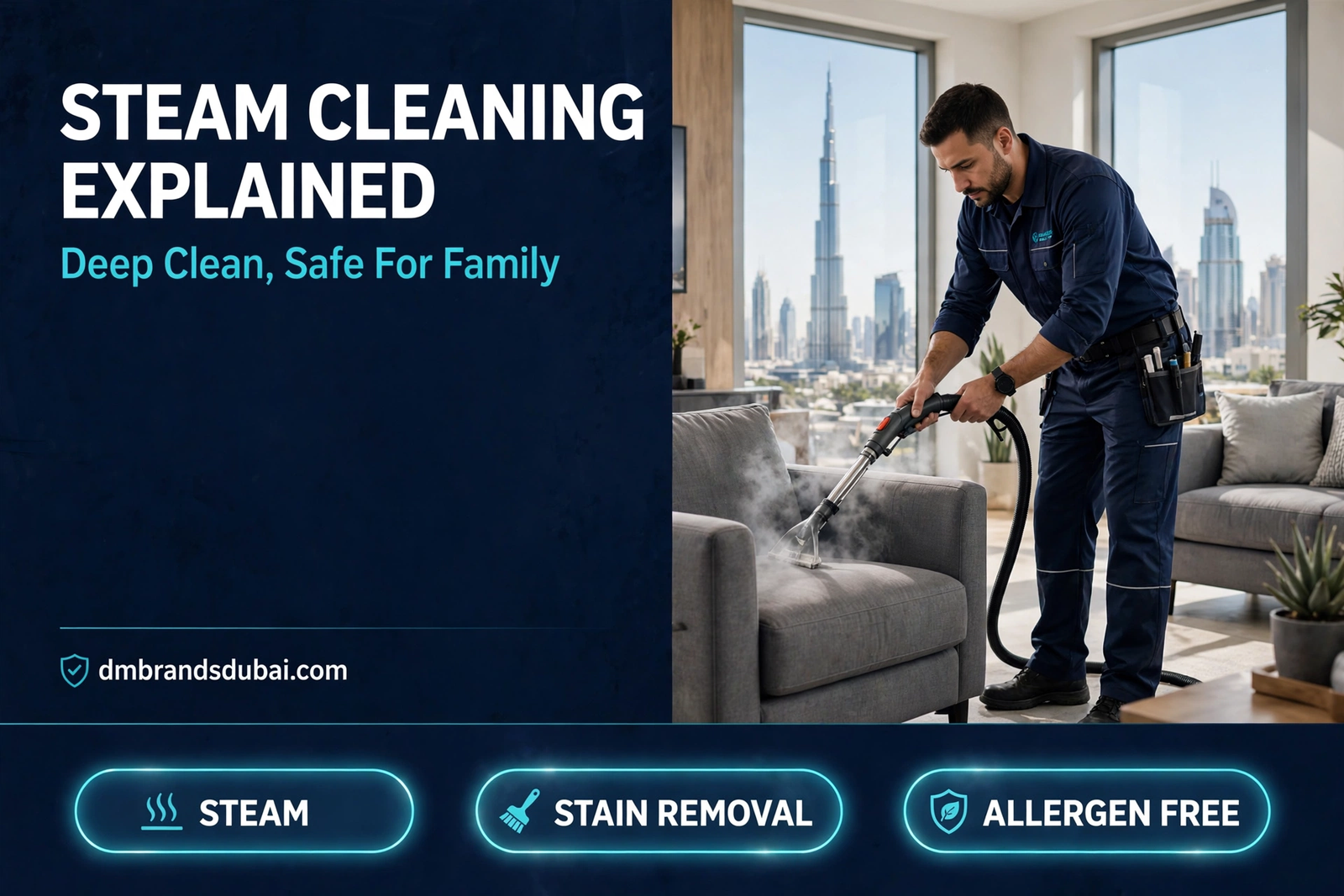
A professional clean starts with a careful inspection. The technician identifies the fabric type, checks the care label, tests colours for fastness, and looks for stains, wear, pet damage, and odours. The furniture is then vacuumed with a high-powered machine to remove loose dust, sand, crumbs, and pet hair from the surface and from deep inside the cushions and crevices.
Next, the technician pre-treats stains and heavily soiled areas. A suitable cleaning solution is applied and gently agitated so it can break down oils, dirt, and grime without damaging the fibres. The main cleaning method is then applied. For most fabric sofas, this is hot-water extraction, often called steam cleaning. For delicate fabrics, it may be dry cleaning or low-moisture foam cleaning. Finally, the furniture is rinsed, extracted, and left to dry with good airflow.
The result is not just a cleaner-looking sofa. It is a healthier one. Dust mites, pollen, bacteria, and trapped odours are lifted out. Colours look brighter because the grey film of dust is gone. Fabric feels softer because the sticky residue from body oils and spills has been removed. The sofa also smells fresh, without the heavy perfume that masks a problem instead of solving it.
Upholstery cleaning is different from sofa cleaning Dubai in one important way: sofa cleaning is one part of it. Upholstery cleaning covers every upholstered item in the home, including chairs, headboards, and mattresses. If you only need your three-seater sofa cleaned, a sofa service is enough. If you want the whole living room, dining chairs, and bedroom refreshed together, a full upholstery service makes more sense and usually costs less per item.
Why Dubai Homes Need Upholstery Cleaning More Often
Dubai is a wonderful place to live, but its climate and lifestyle put extra pressure on upholstered furniture. Understanding those pressures helps you decide how often to clean and why a professional service matters.
Desert Dust and Fine Sand
Dubai sits in a desert environment. Fine dust enters homes through windows, balconies, air-conditioning systems, shoes, and clothing. It settles on sofas and works its way into the weave of the fabric. Over time, this dust acts like fine sandpaper. Every time someone sits down, the fibres rub against trapped grit and wear faster.

Regular vacuuming helps, but it cannot remove all of it. Dust that has settled deep into the padding stays there. A professional extraction clean lifts it out with hot water and powerful suction, which protects the fabric and keeps colours from turning dull and grey.
Homes near construction sites, in newer communities such as Dubai Hills and JVC, or close to the beach in JBR and Palm Jumeirah often notice dust build-up faster. If your sofa looks dusty a few days after vacuuming, it is a sign that a deep clean is overdue.
Humidity, Sweat, and Odours
Dubai summers are hot and humid. Air conditioning keeps indoor temperatures comfortable, but it also creates a cycle of cool, dry air indoors and warm, humid air rushing in every time a door opens. Sweat, body oils, and moisture settle into upholstery, especially on armrests, headrests, and seat cushions where skin makes regular contact.
That moisture creates the perfect environment for bacteria and odours to develop. A sofa can start to smell stale even when it looks clean. This is common in busy family homes in Business Bay, Al Barsha, and Deira, where sofas are used for many hours every day. Professional cleaning removes the source of the smell instead of covering it with air freshener.
Humidity also increases the risk of mould and mildew in fabric that stays damp. This is a particular concern for ground-floor apartments, villas with shaded rooms, and homes where a spill was blotted but never properly dried. A professional clean, followed by fast, thorough drying, helps prevent that problem.
Pet Hair, Dander, and Accidents
Many Dubai families share their homes with cats and dogs. Pets love sofas, and sofas collect pet hair, dander, oils from fur, and the occasional accident. Pet hair weaves itself into fabric and resists a normal vacuum. Dander is a common allergen and can trigger sneezing, itchy eyes, and asthma symptoms, especially in children.
Professional upholstery cleaners use specialised tools to lift embedded pet hair and treat pet stains and odours at the source. Enzyme-based treatments break down the proteins in urine and vomit that cause lingering smells. This is far more effective than a supermarket spray, which often leaves a sticky residue that attracts more dirt.
Food, Drinks, and Daily Spills
Life happens on the sofa. Coffee in the morning, juice boxes in the afternoon, takeaway dinners in the evening, and popcorn during a film. In Dubai, where families often eat together in the living room, spills are inevitable. Food and drink stains set quickly in the heat, and sugar-based spills become sticky and attract dust.
Children add another layer. Crayons, felt-tip pens, chocolate, and sticky hands are part of family life in Mirdif, the Springs, and Arabian Ranches. A professional clean can remove most of these marks if they are treated correctly and promptly. The longer a stain sits, the harder it becomes to remove, which is why quick action and regular professional cleaning go together.
Allergens and Dust Mites
Dust mites thrive in warm, humid conditions, and Dubai provides both for much of the year. They live in sofas, armchairs, cushions, and especially mattresses, feeding on dead skin cells. Their waste is a major trigger for allergies and asthma. The U.S. Environmental Protection Agency notes that indoor air pollutants, including dust mites and pet dander, can affect health, and that reducing them through cleaning and ventilation helps improve indoor air quality.
You cannot see dust mites, but you can feel their effects. If family members sneeze, cough, or wake with a blocked nose after sitting on the sofa or sleeping in bed, allergens in upholstery may be part of the cause. Hot-water extraction cleaning, with water heated to a temperature that helps remove mites and their waste, is one of the most effective ways to reduce them. Regular cleaning is especially important for homes with babies, young children, elderly residents, or anyone with asthma or allergies.
Fabric Types and How Each Is Cleaned
No two sofas are the same. The cleaning method that works beautifully on a sturdy cotton sofa can ruin a delicate velvet armchair or a suede dining chair. Professional upholstery cleaners always start by identifying the fabric and reading its care label. That label uses a simple code that tells the technician what is safe to use.
The most common codes are W, S, WS, and X. W means water-based cleaning is safe. S means solvent-based, or dry, cleaning only. WS means either water or solvent can be used. X means vacuum only, with no water or solvent. If your label is missing, a professional will test a hidden area before cleaning the whole piece.
Here is how the main fabric types found in Dubai homes are cleaned.
Cotton Upholstery
Cotton is popular in Dubai because it feels cool, breathes well, and comes in many colours and patterns. It is also absorbent, which means it soaks up spills, sweat, and oils quickly. Cotton can usually be steam cleaned, but it can shrink if it gets too wet or dries too slowly.
A professional will pre-treat stains, use a controlled amount of hot water, and extract as much moisture as possible. Good airflow and, where needed, air movers help the fabric dry quickly and evenly. Cotton sofas in family homes in JLT, Al Barsha, and Dubai Marina benefit from cleaning every six to twelve months, depending on use.
Linen Upholstery
Linen looks elegant and relaxed, and it suits Dubai's bright, airy interiors. It is also delicate. Linen wrinkles easily, can shrink, and may lose colour if cleaned with harsh chemicals or too much heat. It needs a gentle touch.
Most linen upholstery is cleaned with low-moisture methods or a careful steam clean with a mild, pH-neutral solution. The technician will work in small sections, avoid over-wetting, and dry the fabric quickly. Linen is not a good candidate for aggressive DIY scrubbing, which can distort the weave and leave water marks.
Velvet Upholstery
Velvet adds luxury to living rooms in Downtown Dubai, Business Bay, and Palm Jumeirah. It has a soft pile that catches the light beautifully, but it also shows every mark, crushes easily, and absorbs spills fast. Water can leave rings on velvet if it is not handled correctly.
Velvet is usually cleaned with a low-moisture or dry-cleaning method. The technician may use a specialised solvent, a gentle foam, and a soft brush to lift the pile back up after cleaning. Steam cleaning is sometimes possible for certain velvets, but only after a careful test. Never soak velvet, and never scrub it hard, as this can flatten the pile permanently.
Microfibre Upholstery
Microfibre is one of the most practical choices for Dubai family homes. It resists stains better than cotton, feels soft, and is relatively easy to maintain. It is made from tiny synthetic fibres that repel liquids to a degree, but it still traps dust, oils, and pet hair.
Most microfibre can be steam cleaned safely. The key is to use the right solution and to brush the fibres after cleaning so they do not feel stiff. Microfibre dries quickly, which makes it ideal for busy households that need the sofa back in use the same day.
Leather Upholstery
Leather sofas are common in Dubai, especially in modern apartments and offices. Leather feels cool, looks smart, and wipes clean easily. It also needs regular care. Heat, sunlight, and air conditioning dry leather out, causing it to crack, fade, and lose its softness. Body oils, sunscreen, and sweat can stain and discolour it.
Leather is not cleaned like fabric. It needs a dedicated leather cleaner, followed by a conditioner that restores moisture and protects the surface. Steam cleaning and excess water can damage leather and should be avoided. Our dedicated leather sofa cleaning approach is covered in detail later in this guide, and a separate specialist service is the safest option for valuable leather pieces.
Suede and Nubuck
Suede and nubuck look soft and premium, but they are among the most delicate upholstery materials. Water can stain them, and many common cleaners will leave marks. Suede usually needs dry cleaning with a solvent-based product and a soft brush to restore the nap.
If you have suede dining chairs or a suede headboard, do not attempt a wet clean at home. A professional who understands suede can clean it safely and protect it afterwards. In Dubai's dusty environment, suede benefits from regular gentle vacuuming with a soft brush attachment between professional cleans.
Synthetic Blends and Performance Fabrics
Many modern sofas in Dubai use synthetic blends or performance fabrics designed to resist stains and fading. These are popular in homes with children and pets because they are practical and durable. They usually respond well to steam cleaning, but the care label still matters.
Some performance fabrics have a protective coating that can be damaged by harsh chemicals. A professional will choose a mild solution that cleans without stripping that protection. If your sofa was sold as stain-resistant, tell your cleaner before the visit so they can protect that finish.
Cleaning Methods Compared
There is no single best method for every sofa. The right choice depends on the fabric, the level of soiling, the type of stains, and how quickly you need the furniture dry. Here is a clear comparison of the four main professional methods used for upholstery cleaning in Dubai.
| Method | How It Works | Best For | Drying Time | Key Advantage | Key Limitation |
|---|---|---|---|---|---|
| Steam cleaning (hot-water extraction) | Hot water and cleaning solution are sprayed into the fabric, then extracted with powerful suction | Cotton, microfibre, most synthetic fabrics, heavily soiled sofas, allergen removal | 4–8 hours | Deepest clean, removes dust mites and odours | Not suitable for velvet, suede, or water-sensitive fabrics |
| Dry cleaning (solvent cleaning) | A solvent-based cleaner dissolves dirt and oils without water | Velvet, suede, linen, silk, fabrics marked S, delicate pieces | 1–3 hours | Fast drying, safe for water-sensitive fabrics | Less effective on heavy water-based stains and deep allergen removal |
| Shampooing | A foaming shampoo is worked into the fabric, then extracted or vacuumed away | Heavily soiled fabric, odour removal, budget-friendly deep clean | 6–12 hours | Good agitation lifts ground-in dirt | Can leave residue if not rinsed well, longer drying |
| Foam cleaning (low-moisture) | A dry foam is applied, brushed in, and vacuumed out after it dries | Light to moderate soiling, velvet, quick refresh, offices | 1–2 hours | Very fast drying, low risk of water marks | Not deep enough for heavily soiled or stained furniture |
Steam Cleaning Explained
Upholstery steam cleaning, also called hot-water extraction, is the most common professional method in Dubai. Hot water, usually mixed with a mild cleaning solution, is injected into the fabric under pressure. The heat loosens dirt, oils, and allergens. A powerful vacuum then extracts the dirty water, along with the contaminants it has lifted.
This method is excellent for family sofas that see daily use. It reaches deep into the padding, removes dust mites, and leaves fabric smelling fresh. The main drawback is drying time. In Dubai's air-conditioned homes, a steam-cleaned sofa usually takes four to eight hours to dry fully. Good ventilation, ceiling fans, and open windows, where safe, speed this up.
Dry Cleaning Explained
Dry cleaning for upholstery does not mean no liquid at all. It means using a solvent-based cleaner instead of water. The solvent dissolves oils and dirt without soaking the fabric. This is the safest method for velvet, suede, silk, and other water-sensitive materials.
Dry cleaning dries quickly, often in one to three hours, and carries a low risk of shrinkage or water marks. It is also useful for light cleaning of leather-adjacent fabrics. Its limitation is that it is less effective on heavy, water-based soiling, such as large drink spills or mud, where steam cleaning would do a better job.
Shampooing Explained
Shampooing uses a foaming detergent that is worked into the fabric with a brush or machine. The foam lifts dirt to the surface, where it is extracted or vacuumed away once dry. This method provides strong agitation, which helps with ground-in dirt and odours.
Shampooing can be effective, but it must be done carefully. If the shampoo is not rinsed or extracted properly, it leaves a sticky residue that attracts dirt faster. Modern professional shampooing usually includes a thorough extraction step to avoid this. Drying takes longer than steam cleaning, so it suits homes where the furniture can be left unused overnight.
Foam Cleaning Explained
Foam cleaning, also called dry foam or low-moisture cleaning, applies a light foam to the surface, brushes it in, and vacuums it out after it dries. It uses very little water, so drying is fast, often in one to two hours. This makes it ideal for offices in Business Bay and JLT, show homes, and quick refreshes before guests arrive.
Foam cleaning is best for light to moderate soiling. It will not remove deep stains or heavy allergen build-up on its own. It is often used as a maintenance clean between deeper steam cleans.
Stain Removal Guide for Dubai Homes
Stains are stressful, but most can be removed if you act quickly and use the right approach. The golden rule is to blot, never rub. Rubbing pushes the stain deeper and spreads it wider. Always work from the outside of the stain towards the centre, and always test any product on a hidden area first.
Coffee and Tea Stains
Coffee is one of the most common sofa stains in Dubai. Blot up as much liquid as possible with a clean white cloth. Mix a small amount of mild dish soap with cool water, dab the stain gently, and blot again. Rinse by dabbing with clean water, then blot dry. Avoid hot water, which can set the stain. For old coffee stains, or coffee with milk and sugar, a professional pre-treatment is usually needed.
Food and Grease Stains
Food spills, curry, sauces, and greasy takeaway marks need a different approach. First, scrape off any solid food with a blunt knife. Blot the stain, then apply a small amount of dish soap solution to break down the grease. Work gently and rinse by blotting. For stubborn grease, a professional solvent-based treatment works best, especially on velvet or suede.
Pet Stains and Urine
Pet urine is more than a stain. It is an odour problem that gets worse in Dubai's heat if it is not treated properly. Blot up as much as possible immediately. Do not use hot water or ammonia-based cleaners, which can make the smell worse and set the stain. Use a cold-water blot, then an enzyme-based cleaner designed for pet stains, following the product instructions.
For old or large pet stains, professional treatment is strongly recommended. A technician can use an enzyme pre-treatment, deep extraction, and odour neutraliser to remove the source of the smell from the padding, not just the surface. This is also important for hygiene, especially in homes with babies who play on the floor and furniture.
Ink, Pen, and Marker Stains
Ink is common in homes with school-age children. Ballpoint pen marks respond to a small amount of rubbing alcohol dabbed on a white cloth, but this must be done carefully and tested first, as alcohol can damage some fabrics and remove colour. Felt-tip and permanent marker stains are harder and often need a professional solvent treatment.
Never pour alcohol directly onto the sofa. Always apply it to a cloth first, dab gently, and use a fresh part of the cloth each time so you do not spread the ink. If the mark does not lift quickly, stop and call a professional. Scrubbing will only make it worse.
Red Wine, Juice, and Soft Drinks
Red wine and coloured juice can stain quickly. Blot immediately, then dab with a mixture of cool water and a small amount of white vinegar and dish soap. Blot, rinse, and repeat. Do not use hot water. For red wine on light fabric, professional help is often needed, especially if the stain has dried.
Blood, Sweat, and Body Oils
Blood should always be treated with cold water, never hot, as heat sets it. Blot with cold water and a mild soap solution. Sweat and body oils build up gradually on armrests and headrests, causing darkening and a stale smell. A professional steam clean removes this build-up effectively, while a regular home wipe only moves it around.
Mud, Sand, and Outdoor Dirt
Dubai's beaches and desert trips bring sand and mud indoors. Let mud dry completely, then vacuum it off before attempting any wet cleaning. Wetting fresh mud will push it deeper into the fabric. Once dry and vacuumed, a mild soap solution can remove any remaining mark.
What Not to Do With Stains
Do not use bleach on upholstery, even on white fabric, unless a professional advises it. Do not use coloured cloths that can transfer dye. Do not soak the fabric, as this can cause water marks, shrinkage, and mould. Do not use a hairdryer on high heat to dry a stain, as this can set it. If you are unsure, blot the stain, keep the area ventilated, and call a professional upholstery cleaner the same day. The sooner a stain is treated correctly, the better the result.
Allergen and Dust-Mite Removal: The Health Benefits
A clean sofa looks better, but the health benefits matter more. Upholstery is a reservoir for allergens. Dust mites, pet dander, pollen, mould spores, and bacteria collect in fabric and padding. Every time someone sits down, a small cloud of these particles is released into the air. For healthy adults, this may cause no symptoms. For children, allergy sufferers, and people with asthma, it can make a real difference to daily comfort.
Professional upholstery cleaning reduces this load in several ways. Hot-water extraction removes dust mites and their waste from deep in the fabric. Powerful vacuuming lifts pollen and pet dander that a home vacuum leaves behind. Pre-treatments and rinsing remove the sticky residue that traps allergens. Odour treatments neutralise bacteria that cause stale smells.
Mattresses deserve special attention. We spend roughly a third of our lives in bed, in close contact with the mattress surface. Dust mites thrive there, and sweat, skin cells, and humidity create ideal conditions for them. A professional mattress cleaning Dubai service, using steam and extraction, can significantly reduce allergen levels and improve sleep quality. Many Dubai residents notice they wake with fewer sniffles and less congestion after a mattress and upholstery deep clean.
Health authorities recommend reducing indoor allergens through regular cleaning, washing bedding in hot water, and controlling humidity. The Asthma and Allergy Foundation of America explains that dust mites, pet dander, and mould are common indoor allergy triggers, and that cleaning soft furnishings, using allergen-proof covers, and vacuuming regularly can help reduce exposure. The NHS also notes that house dust mites are a common cause of allergies, and that reducing dust in the home is an important step in managing symptoms.
Professional cleaning is not a medical treatment, and it will not cure asthma or allergies. It is, however, a practical and effective part of a healthier home. Combined with regular vacuuming, washing cushion covers, and good ventilation, it helps keep allergen levels low. For families in Dubai who keep windows closed and rely on air conditioning for much of the year, deep cleaning soft furnishings is one of the best ways to improve indoor air quality.
Children benefit most. Babies crawl, toddlers climb, and young children press their faces into sofas and cushions. Their immune systems are still developing, and they breathe faster than adults, which means they inhale more of what is in the air around them. Keeping upholstery clean is a simple, sensible step for any family home in JVC, Dubai Hills, Arabian Ranches, or the Springs.
Leather Care: Cleaning and Conditioning Leather Sofas
Leather needs a different kind of care from fabric, and it rewards regular attention. Dubai's heat, sunlight, and air conditioning are tough on leather. Direct sun through a window in a Marina apartment or a villa in Palm Jumeirah can fade and dry leather in months. Air conditioning removes moisture from the air, which also dries leather out. Without conditioning, leather becomes stiff, cracked, and dull.
Professional leather sofa cleaning starts with a gentle vacuum to remove dust from seams and crevices. The technician then applies a pH-balanced leather cleaner with a soft cloth, working in small sections. This lifts body oils, sunscreen, food marks, and general grime without stripping the leather's natural oils. For stubborn marks, a specialist leather stain remover may be used, but always with care to avoid damaging the finish.
After cleaning, a leather conditioner is applied. This restores moisture, keeps the leather supple, and adds a light protective layer that resists future stains. The sofa is then buffed to a soft, natural sheen, not a shiny, slippery finish. This process should be done every six to twelve months, depending on use and exposure to sun.
Between professional cleans, you can care for leather at home. Dust it weekly with a dry, soft cloth. Wipe spills immediately with a damp cloth, then dry the area. Keep leather away from direct sunlight where possible, and do not place it directly under an air-conditioning vent. Avoid household cleaners, baby wipes, and silicone sprays, which can damage the finish or leave a sticky residue. If your leather is cracked, faded, or heavily stained, ask a professional about leather restoration before the damage becomes permanent.
What to Expect During a Professional Upholstery Cleaning Visit
Knowing what happens during a visit helps you prepare and makes the day run smoothly. A professional service from DM Brands Dubai follows a clear, careful process. Here is what to expect, step by step.
Step 1: Booking and Preparation
When you book, you will be asked about the type and number of items, the fabric if you know it, any stains or odours, and whether you have pets or children. This helps the team bring the right equipment and solutions. You do not need to do much before the visit. Clear personal items, toys, and cushions from the furniture, and make sure there is clear access to the pieces and a nearby power socket and water supply.
Step 2: Inspection and Fabric Testing
The technician will inspect each piece, check the care label, and identify the fabric type. They will test a small, hidden area for colour fastness and reaction to the cleaning solution. They will also point out any stains that may not come out completely, such as old dye transfer, bleach marks, or sun fading. Honest expectations matter more than false promises.
Step 3: Thorough Vacuuming
Before any wet cleaning, the furniture is vacuumed with a professional machine and an upholstery tool. This removes loose dust, sand, crumbs, pet hair, and surface allergens. Cushions are removed and vacuumed on both sides, and crevices are cleaned where crumbs and dust collect. This step is essential. Cleaning without vacuuming first would turn dry dirt into mud inside the fabric.
Step 4: Pre-Treatment of Stains
Stains and heavily soiled areas, such as armrests and headrests, are pre-treated with a suitable solution. The solution is left to work for a few minutes so it can break down oils and grime. For pet stains, an enzyme treatment may be used. For ink or dye marks, a specialist spotter may be applied with care.
Step 5: Main Cleaning
The main cleaning method is applied, based on the fabric and the level of soiling. For most fabric sofas, this is steam cleaning with hot-water extraction. The technician works in small, overlapping sections, applying the solution and extracting it immediately. For delicate fabrics, dry cleaning or foam cleaning is used instead. The technician will adjust pressure, temperature, and solution strength to suit each piece.
Step 6: Rinsing and Extraction
After cleaning, the fabric is rinsed with clean water and extracted again. This removes any remaining cleaning solution and dirty water. Proper rinsing is important. Residue left in the fabric attracts dirt and can make the sofa look dirty again within weeks. A professional machine extracts far more water than a home rental machine, which is why professional cleaning dries faster and lasts longer.
Step 7: Drying and Final Check
The technician will check the furniture, brush the pile where needed, and help you set up airflow for drying. Ceiling fans, open windows, and air conditioning all help. You will be advised not to sit on damp upholstery and not to replace cushions until the fabric is fully dry. The team will also offer aftercare advice, including how to handle future spills and when to book the next clean.
Most visits take one to three hours, depending on the number of items. A single three-seater sofa may take 45 to 60 minutes. A full living room set, with dining chairs and a mattress, can take two to three hours. Drying time is separate, and the team will give you a realistic estimate based on the fabric and the method used.
Upholstery Cleaning Cost in Dubai
Cost is one of the first questions Dubai residents ask, and the answer depends on several factors. Prices vary by the size and number of items, the fabric type, the cleaning method, the level of soiling, and the location. A small armchair costs less than a large L-shaped sectional sofa. A delicate velvet sofa that needs dry cleaning costs more than a standard microfibre sofa that can be steam cleaned.
Here are typical price ranges you can expect in Dubai. These are general market ranges for planning, not fixed quotes. A professional company will confirm the exact price after knowing the size and condition of your furniture.
- Single armchair: typically AED 100 to AED 200
- Two-seater sofa: typically AED 150 to AED 300
- Three-seater sofa: typically AED 200 to AED 400
- L-shaped or sectional sofa: typically AED 350 to AED 600
- Dining chair: typically AED 40 to AED 80 per chair
- Office chair: typically AED 50 to AED 100
- Mattress, single: typically AED 150 to AED 250
- Mattress, double or queen: typically AED 200 to AED 350
- Mattress, king: typically AED 250 to AED 450
- Headboard: typically AED 100 to AED 200
Several factors can affect the final price. Heavy staining, pet odours, or mould may need extra pre-treatment. Very large or awkward pieces may take longer. Some companies offer package prices when you book multiple items together, such as a sofa, two armchairs, and a mattress. This often works out cheaper per item than booking each separately.
When comparing quotes, look beyond the lowest price. Ask what is included. Does the price cover vacuuming, pre-treatment, steam cleaning, and deodorising, or are those charged separately? Does the company use professional-grade equipment and safe, child- and pet-friendly solutions? Is the team trained and insured? A very cheap quote that skips pre-treatment or uses a weak machine may leave your sofa damp, sticky, and dirty again within weeks.
DM Brands Dubai provides clear, upfront pricing before work starts. You will know the cost for your specific furniture, with no hidden charges. If you are unsure, send photos and measurements when you book, and the team can give you an accurate estimate.
DIY vs Professional Upholstery Cleaning
Many Dubai residents try DIY cleaning first. A home vacuum, a supermarket upholstery spray, or a rented carpet cleaner seems cheaper and more convenient. For light maintenance, DIY can help. For a deep clean, professional equipment and expertise make a clear difference. Here is an honest comparison.
| Factor | DIY Cleaning | Professional Cleaning |
|---|---|---|
| Equipment power | Home vacuum or rented machine, limited suction | Industrial hot-water extraction machine, strong suction |
| Depth of clean | Surface level, leaves dirt and moisture deep inside | Deep extraction removes dirt, allergens, and odours from padding |
| Fabric knowledge | You must guess the right method and product | Technician identifies fabric, tests, and chooses the safe method |
| Stain removal | Limited, risk of setting stains or damaging fabric | Specialist pre-treatments and spotters for coffee, ink, pet stains, and more |
| Drying time | Often 12–24 hours, risk of dampness and mould | Usually 4–8 hours for steam cleaning, 1–3 hours for dry cleaning |
| Residue risk | High, supermarket products can leave sticky residue | Low, professional rinsing and extraction remove residue |
| Health benefit | Removes surface dust only | Reduces dust mites, pet dander, pollen, and bacteria |
| Cost | Lower upfront, AED 50–150 for products or rental | Higher upfront, typically AED 150–400 for a three-seater sofa |
| Risk | Shrinkage, colour loss, water marks, mould if over-wet | Low when done by a trained, insured professional |
| Convenience | You do the work, carry equipment, and clean up | Team arrives, cleans, and leaves the area tidy |
DIY is fine for regular maintenance. Vacuum weekly, blot spills immediately, and use a fabric-safe spray for light freshening. For a deep clean, for valuable or delicate furniture, for pet stains, for allergen removal, or for a sofa that has not been professionally cleaned in over a year, a professional service is the safer and more effective choice.
If you do rent a machine, follow the instructions carefully. Do not over-wet the fabric. Use only the recommended solution, in the correct dilution. Work in small sections and extract as much water as possible. Allow the furniture to dry fully with good airflow before using it again. If the fabric feels damp after 24 hours, improve ventilation and consider professional help to prevent mould.
How Often Should You Clean Upholstery in Dubai?
There is no single answer for every home. The right frequency depends on how much the furniture is used, who uses it, whether you have pets or children, and where you live in Dubai. Here are sensible guidelines.
- Light-use homes, no pets or children: every 12 to 18 months
- Average family homes: every 6 to 12 months
- Homes with children or pets: every 6 months
- Homes with allergy or asthma sufferers: every 3 to 6 months, with regular vacuuming in between
- Mattresses: every 6 months, or every 3 to 4 months for allergy sufferers
- Dining chairs: every 6 to 12 months, or after a major spill
- Office chairs and reception seating: every 6 months, or more often in high-traffic offices
Dubai's dust and humidity mean that even light-use homes benefit from an annual deep clean. If your sofa looks dull, feels sticky, smells stale, or triggers sneezing, it is time to clean, even if it has not been a full year. If you have just moved into a new home in Dubai Hills, JVC, or Al Barsha, a deep clean of second-hand or previously used furniture is also a wise first step. A deep cleaning services Dubai visit, combined with upholstery cleaning, gives a fresh start in a new home.
Maintenance Tips Between Professional Cleans
Professional cleaning lasts longer when you look after your upholstery between visits. These simple habits protect your furniture and keep it looking and smelling fresh.
Vacuum your sofa at least once a week, using an upholstery attachment. Pay attention to crevices, under cushions, and along seams where dust and crumbs collect. In Dubai, where dust enters homes daily, twice a week is better for high-use sofas. Use a lint roller or a rubber glove to lift pet hair between vacuums.
Rotate and fluff cushions regularly. This evens out wear and prevents one seat from becoming flat and faded while the others stay new. Turn loose cushions over, swap their positions, and plump them up after use. This also helps the filling dry evenly and prevents odours from building up in one spot.
Blot spills immediately. Keep a clean white cloth or paper towels nearby in the living room. The faster you blot, the less likely a stain will set. Do not rub, and do not use coloured towels that can transfer dye. For water-based spills, blot, then dab with a little cool water and blot again.
Protect your sofa from direct sunlight. Dubai's sun is strong, and it can fade fabric and dry out leather. Use curtains, blinds, or sheer panels to filter sunlight in rooms with large windows, especially in Marina, JLT, and Downtown apartments with floor-to-ceiling glass. Move valuable pieces away from direct sun where possible.
Use washable throws and cushion covers. A throw over the armrests and seat cushions protects the areas that get the most contact. It is much easier to wash a throw than to clean a sofa. Choose light, breathable throws that suit Dubai's climate, and wash them regularly.
Keep pets groomed and their bedding clean. Regular brushing reduces the amount of hair that ends up on the sofa. A washable pet blanket on their favourite spot protects the fabric and makes cleaning easier. Clean pet bedding weekly to reduce odours and allergens.
Control humidity and ventilation. Use air conditioning and, where needed, a dehumidifier to keep indoor humidity in a comfortable range. Open windows when the weather allows, especially in the cooler months, to let fresh air circulate. Good ventilation helps upholstery dry faster after cleaning and prevents musty smells.
Mistakes to Avoid With Upholstery Cleaning
Even with good intentions, it is easy to damage upholstery. These are the most common mistakes Dubai residents make, and how to avoid them.
The first mistake is using too much water. Soaking a sofa can cause shrinkage, water marks, colour bleeding, and mould in the padding. Always use the minimum amount of liquid needed, and extract as much as possible. If you are unsure, use a dry method or call a professional.
The second mistake is scrubbing stains hard. Scrubbing pushes the stain deeper, spreads it, and damages the fibres. It can also create a fuzzy, worn patch that stands out from the rest of the sofa. Always blot gently and work from the outside in.
The third mistake is using the wrong product. Bleach, all-purpose cleaners, and harsh chemicals can discolour fabric, damage leather, and leave a residue that attracts dirt. Always check the care label and test a hidden area first. When in doubt, use plain cool water and a mild soap, or call a professional.
The fourth mistake is skipping the vacuum before cleaning. Cleaning a dusty sofa without vacuuming first turns dry dirt into mud. Always vacuum thoroughly before any wet cleaning.
The fifth mistake is not allowing enough drying time. Sitting on a damp sofa, replacing cushions too soon, or closing the room up without ventilation can trap moisture and cause mould and odours. Allow the furniture to dry fully, with fans and airflow, before using it again.
The sixth mistake is ignoring the care label. The label is there for a reason. A fabric marked S should not be steam cleaned. A fabric marked X should not be wet cleaned at all. If the label is missing, a professional can test the fabric and choose the safe method.
The seventh mistake is waiting too long between cleans. By the time a sofa looks visibly dirty, the build-up inside is already significant. Regular cleaning is easier, cheaper, and more effective than trying to rescue a heavily soiled sofa after years of neglect.
Service Areas: Upholstery Cleaning Across Dubai
DM Brands Dubai provides professional upholstery cleaning across the city, for apartments, villas, townhouses, and offices. Our team travels with professional equipment and safe, effective cleaning solutions, so you do not need to move furniture or prepare anything special.
We regularly serve Dubai Marina, Jumeirah Lake Towers (JLT), Jumeirah Village Circle (JVC), Downtown Dubai, Business Bay, Palm Jumeirah, Al Barsha, Dubai Hills Estate, Arabian Ranches, The Springs, Mirdif, Deira, and surrounding communities. Whether you live in a high-rise apartment with a compact living room, a spacious villa with a large sectional sofa, or an office with reception seating and meeting-room chairs, we can help.
If you are moving home, we can also clean upholstery as part of a wider service. Our move-in cleaning Dubai and move-out cleaning Dubai services include deep cleaning of the whole property, and upholstery can be added so your furniture is fresh from day one. For a full home refresh, combine upholstery cleaning with carpet cleaning Dubai and curtain cleaning Dubai for a complete result.
Booking is simple. Tell us what you need cleaned, share photos if you like, and choose a time that suits you. We offer flexible scheduling, including weekends and evenings, to fit around family and work life in Dubai.
Frequently Asked Questions
How long does upholstery cleaning take?
A single armchair usually takes 30 to 45 minutes. A three-seater sofa takes 45 to 60 minutes. A full living room set with dining chairs can take two to three hours. Drying time is separate and usually takes four to eight hours for steam cleaning, or one to three hours for dry cleaning.
How long does a sofa take to dry after cleaning?
Most steam-cleaned sofas dry in four to eight hours with good airflow. Microfibre and synthetic fabrics dry faster. Cotton and heavily soiled sofas take longer. Dry cleaning and foam cleaning dry in one to three hours. Use fans, air conditioning, and open windows to speed drying.
Is upholstery cleaning safe for children and pets?
Yes, when done by a professional using safe, child- and pet-friendly solutions. Tell your cleaner if you have babies, young children, or pets, so they can choose the gentlest effective products. Keep children and pets away from damp furniture until it is fully dry.
Can you remove all stains from my sofa?
Most fresh stains can be removed or significantly improved. Old stains, dye transfer, bleach marks, and sun fading may not come out completely. A professional will inspect the stain, explain what is realistic, and use the best treatment for that fabric and stain type.
Is steam cleaning safe for my sofa?
Steam cleaning is safe for most cotton, microfibre, and synthetic fabrics, and it is the deepest cleaning method available. It is not safe for all fabrics, including some velvets, suedes, and silks. A professional will check the care label and test the fabric before steam cleaning.
How often should I clean my sofa in Dubai?
For an average family home, every six to twelve months is a good guide. Homes with children, pets, or allergy sufferers should clean every six months. Light-use homes can clean every twelve to eighteen months. Mattresses should be cleaned every six months.
What is the difference between sofa cleaning and upholstery cleaning?
Sofa cleaning focuses on sofas only. Upholstery cleaning covers all upholstered furniture, including sofas, armchairs, dining chairs, office chairs, headboards, ottomans, and mattresses. If you need more than one item cleaned, an upholstery service is usually better value.
Do you clean leather sofas?
Yes. Leather sofas are cleaned with a dedicated leather cleaner, followed by a conditioner that restores moisture and protects the surface. Leather is not steam cleaned, as excess water and heat can damage it.
Can you clean velvet sofas?
Yes, but velvet needs a gentle, low-moisture or dry-cleaning method. A professional will test the fabric, choose the safe method, and brush the pile after cleaning to restore its soft appearance. Do not soak velvet at home.
Will cleaning remove pet smells from my sofa?
Professional cleaning can remove most pet odours by treating the source, not just the surface. Enzyme pre-treatments break down the proteins that cause smells, and deep extraction removes them from the padding. Very old or large pet stains may need more than one treatment.
Should I vacuum my sofa before the cleaner arrives?
You can, but you do not need to. A professional clean always starts with a thorough vacuum using industrial equipment. Clearing personal items and cushions from the furniture helps the team work efficiently.
Can I sit on my sofa after cleaning?
Wait until the fabric is fully dry before sitting on it. Sitting on damp upholstery can transfer dirt and body oils back into the clean fabric, and it can cause the fabric to stretch or mark. Allow four to eight hours for steam cleaning, or one to three hours for dry cleaning.
Does upholstery cleaning remove dust mites?
Yes. Hot-water extraction is one of the most effective ways to reduce dust mites and their waste in soft furnishings. Regular professional cleaning, combined with vacuuming and washing bedding, helps keep allergen levels low.
What cleaning products do you use?
Professional cleaners use commercial-grade, fabric-safe solutions chosen for the specific fabric and stain. DM Brands Dubai uses safe, effective products that are suitable for family homes. If you have sensitivities, allergies, or specific product concerns, tell the team when you book.
How much does upholstery cleaning cost in Dubai?
A three-seater sofa typically costs AED 200 to AED 400. An armchair typically costs AED 100 to AED 200. A dining chair typically costs AED 40 to AED 80. A double mattress typically costs AED 200 to AED 350. The final price depends on size, fabric, condition, and the number of items.
Do you offer same-day upholstery cleaning in Dubai?
Availability depends on the schedule, but same-day and next-day appointments are often available in Dubai Marina, JVC, Downtown, and other central areas. Book early in the day for the best chance of a same-day slot, especially on weekends.
Can you clean dining chairs and office chairs?
Yes. Dining chairs, office chairs, reception seating, and meeting-room chairs can all be cleaned. Fabric chairs are usually steam cleaned, while leather chairs are cleaned and conditioned. Chairs with wooden or metal frames are protected during cleaning.
Will cleaning damage my sofa?
When done correctly by a trained professional, cleaning should not damage your sofa. The technician checks the fabric, tests for colour fastness, and chooses the safe method. DIY cleaning with the wrong product or too much water carries a higher risk of damage than professional cleaning.
What should I do if I spill something on my sofa?
Blot the spill immediately with a clean white cloth. Do not rub. Work from the outside in. For water-based spills, dab with cool water and blot again. For greasy or coloured spills, blot and call a professional the same day if the mark does not lift quickly.
Do you clean mattresses as part of upholstery cleaning?
Yes. Mattresses are upholstered items and can be cleaned with the same professional methods. Steam cleaning and extraction remove dust mites, sweat, and odours from mattresses. Many customers book sofa and mattress cleaning together.
How do I prepare for an upholstery cleaning visit?
Clear personal items, toys, and loose cushions from the furniture. Make sure there is clear access and a nearby power socket. You do not need to move heavy furniture or provide water and equipment, as the team brings everything needed.
Is upholstery cleaning worth it?
Yes, for most Dubai homes. It extends the life of expensive furniture, improves indoor air quality, removes allergens and odours, and restores the look and feel of sofas and chairs. Compared with replacing a sofa, which can cost thousands of dirhams, regular professional cleaning is excellent value.
Conclusion: Give Your Sofa the Deep Clean It Deserves
Your sofa, armchairs, dining chairs, and mattress work hard every day. They deserve more than a quick vacuum and a spray of air freshener. In Dubai, where dust, sand, humidity, pet hair, and daily spills build up fast, professional upholstery cleaning is the simplest way to protect your furniture, improve your indoor air, and keep your home feeling fresh and healthy.
A professional deep clean removes what you cannot see: dust mites, allergens, trapped dirt, and odours deep in the fabric. It restores colour, softens fibres, and extends the life of your furniture by years. It also gives you peace of mind, knowing that the place where your family relaxes, eats, and sleeps is truly clean.
DM Brands Dubai is ready to help. Our trained team provides expert upholstery cleaning across Dubai Marina, JVC, Downtown Dubai, Arabian Ranches, Palm Jumeirah, Business Bay, Al Barsha, Mirdif, Deira, JLT, Dubai Hills, and the Springs. We clean fabric sofas, leather sofas, velvet armchairs, dining chairs, office chairs, headboards, and mattresses, using safe, effective methods chosen for your specific furniture.
Book your upholstery cleaning in Dubai today. Contact DM Brands Dubai now for a clear, upfront quote, flexible scheduling, and a deep clean you can see, feel, and smell. Your sofa will look better, feel softer, and smell fresher, and your home will be healthier for it. Let us bring your furniture back to life.