A tired bathroom drags down the whole home. In Dubai, where hard water stains fixtures, humidity attacks grout and older apartments still carry their original 2000s fittings, a bathroom renovation is one of the most valuable upgrades a homeowner can make. It improves daily comfort, cuts water bills, and lifts resale value in competitive communities from Dubai Marina to Arabian Ranches.
Yet most homeowners start with one anxious question: what does a bathroom renovation in Dubai actually cost? The honest answer is that it depends on size, scope, materials and building rules, and quotes in this city can vary by tens of thousands of dirhams for what sounds like the same job. This guide breaks down every cost driver in plain language, with typical price ranges, realistic timelines, and the mistakes that blow budgets.
By the end, you will know how to scope your project, read a quotation like a professional, choose materials that survive Dubai’s climate, and decide whether a refresh, a mid-range remodel or a full luxury rebuild is right for your home.
What a Bathroom Renovation in Dubai Typically Costs
For a standard apartment bathroom, a basic refresh that keeps the existing layout usually falls in the range of AED 12,000 to AED 22,000. This covers new tiles over prepared surfaces, a modern vanity, a new toilet and mixer, repainting, and updated lighting, using good-quality mid-range fittings.
A full mid-range renovation, where old tiles are stripped back to the blockwork, waterproofing is redone, plumbing points are adjusted and quality branded sanitaryware is installed, typically costs AED 25,000 to AED 45,000 for a standard bathroom of roughly 4 to 6 square metres. This is the most common scope for apartments in Dubai Marina, JVC, Business Bay and Downtown Dubai.
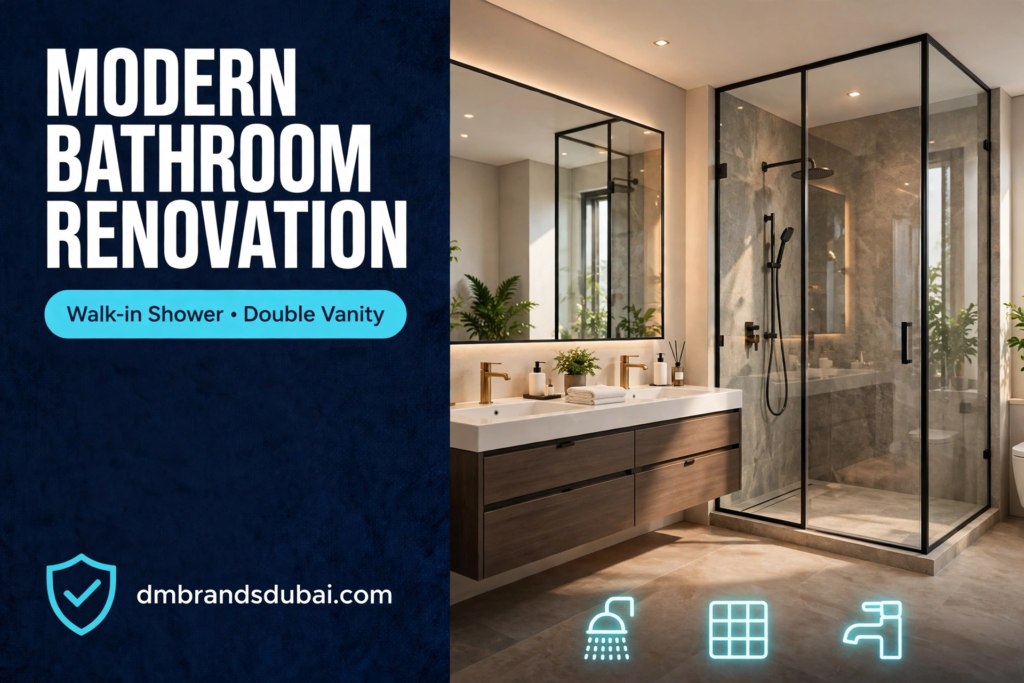
A large master bathroom or a villa bathroom with a separate shower and freestanding bath, double vanity and premium stone finishes can run from AED 50,000 to AED 120,000 or more. Luxury projects with imported Italian tiles, wall-hung sanitaryware, rain showers, smart toilets and custom joinery regularly exceed AED 100,000, and there is effectively no ceiling once natural stone and designer brands enter the picture.
These are typical market ranges, not fixed quotes. Your final price depends on the condition of the existing bathroom, the materials you select, and whether plumbing or walls move. Always get an itemised written quotation before work begins.
Cost by Bathroom Size
Size is the single biggest cost lever after material choice, because tiles, waterproofing, labour days and waste removal all scale with area.
| Bathroom type | Typical size | Typical renovation range (AED) |
|---|---|---|
| Guest / powder bathroom | 2–3 sqm | 8,000–18,000 |
| Standard apartment bathroom | 4–6 sqm | 22,000–45,000 |
| Master bathroom with shower | 8–12 sqm | 45,000–80,000 |
| Large villa master bathroom | 12–20 sqm | 70,000–130,000+ |
A small bathroom is not automatically cheap per square metre. Fixed costs such as demolition, waterproofing, plumbing labour and skip hire are spread over fewer metres, so the per-square-metre rate is higher. Conversely, a large bathroom benefits from economies of scale on labour, even though material quantities rise.
If you are renovating two bathrooms at once, ask for a combined price. Contractors save on mobilisation, skip hire and supervision, and a genuine discount of 10 to 15 percent on the second bathroom is common.
Full Breakdown: Where the Money Goes
A transparent quotation should separate the following items. If a quote is a single lump sum with no breakdown, ask for one before signing.
| Cost item | Typical share | Typical range (standard bathroom, AED) |
|---|---|---|
| Demolition and debris removal | 8–12% | 2,000–5,000 |
| Waterproofing membrane and screed | 5–8% | 1,500–4,000 |
| Plumbing rough-in and drainage | 12–18% | 3,000–8,000 |
| Electrical work and lighting | 5–8% | 1,200–3,500 |
| Wall and floor tiles plus fixing | 20–28% | 5,000–12,000 |
| Sanitaryware (toilet, basin, shower) | 15–22% | 4,000–12,000 |
| Vanity, mirror and accessories | 8–12% | 2,000–6,000 |
| False ceiling, paint and finishing | 5–8% | 1,500–4,000 |
| Shower glass and screens | 5–10% | 1,500–5,000 |
| Project management and contingency | 5–10% | 1,500–4,000 |
Sanitaryware and tiles together usually account for nearly half the budget, which is why material selection matters more than haggling over labour rates. A branded concealed-cistern toilet can cost three times a standard close-coupled model, and imported porcelain tiles can cost four times a good local equivalent. Decide your material tier first, then compare labour quotes on a like-for-like basis.
Cost Factors That Move the Price Most
Keeping or moving the layout
Keeping the toilet, basin and shower in their current positions is the cheapest route, because drainage falls and water points stay put. Moving a toilet even one metre can require core drilling, new drainage gradients and building approval, adding AED 2,000 to AED 6,000. Moving a bathroom to a different room is a major structural and drainage project and should be priced as a new bathroom, not a renovation.
Condition of the existing bathroom
Bathrooms in older buildings in Bur Dubai, Deira and International City often hide corroded galvanised pipes, damaged screed and failed waterproofing. Once tiles come off, a contractor may find leaks that must be fixed before new finishes go on. A contingency allowance of 10 percent is sensible for any bathroom older than 15 years.
Tile choice and size
Large-format porcelain tiles look seamless and modern, but they cost more per square metre, need perfectly level substrates, and demand experienced fixers. Small mosaics suit shower niches and feature walls but are labour-intensive. Standard 60 by 60 centimetre porcelain is the value sweet spot: widely available in Dubai, durable, and easy to replace later.
Sanitaryware brands
Entry-level sanitaryware from reputable Asian manufacturers performs well and keeps costs down. European brands add design refinement, longer warranties and better spare-parts availability, at two to three times the price. For rental properties, mid-range branded ware is usually the best balance of durability and cost.
Waterproofing quality
Waterproofing is the one item never worth cutting. A failed membrane means leaks into the unit below, damaged ceilings, neighbour disputes and a full re-do. Insist on a branded membrane system, a flood test before tiling, and a written waterproofing warranty of at least five years.
Building approvals and access
Most Dubai apartment buildings require a renovation permit, a refundable deposit, and work restricted to approved hours. Some require the contractor to be registered with the building management. Permit fees, deposits and management requirements vary by community, so confirm them before accepting a start date.
Bathroom Renovation Costs in Dubai: Villas vs Apartments
Villa bathrooms are usually larger and offer more freedom: walls can move, plumbing can be rerouted more easily, and work hours are more flexible. The trade-off is scale. A villa master bathroom with a separate bath and shower, double vanity and walk-in wardrobe access can cost double a standard apartment bathroom.
Apartment bathrooms face tighter constraints. Drainage positions are often fixed by the building’s soil stacks, ceiling heights are lower, and management approvals add time. On the other hand, apartment bathrooms are smaller, so a full renovation is quicker — typically two to four weeks against three to six weeks for a large villa bathroom.
In communities such as Palm Jumeirah and Emirates Hills, villa renovations often include underfloor heating, steam showers and stone feature walls, pushing budgets higher. In JVC, Sports City and Silicon Oasis, apartment renovations tend to prioritise durability and value, with porcelain tiles and practical storage.
Step-by-Step Renovation Process
Step 1: Survey and scope
A reputable contractor visits, measures, photographs existing plumbing and drainage, checks water pressure, and discusses your must-haves. This survey should be free and should end with a written scope, not a verbal estimate.
Step 2: Design and material selection
Choose your layout, tiles, sanitaryware, vanity, shower screen and lighting together, so the quotation reflects real products rather than allowances. Allowances are where budgets slip: a tile allowance of AED 60 per square metre means little if you later choose tiles at AED 180.
Step 3: Approvals and protection
Submit the building permit application, pay any deposit, and protect corridors, lifts and adjacent rooms. Good contractors lay floor protection and seal doorways before demolition starts.
Step 4: Demolition and strip-out
Old tiles, sanitaryware and ceilings are removed, and debris is taken away in skips. Expect dust and noise for two to four days. Plumbing and electrical points are exposed and inspected at this stage.
Step 5: Plumbing, drainage and electrical first fix
New pipework, drainage falls, shower mixers, toilet points and electrical conduits are installed and pressure-tested. This is the most important hidden stage: mistakes here are expensive to fix after tiling.
Step 6: Waterproofing and flood test
The membrane is applied to floors and up the walls in wet zones, then flood-tested for 24 to 48 hours. Do not let tiling start until the flood test passes and you have seen photographic evidence.
Step 7: Screed, tiling and grouting
Floor screed is laid to falls toward the drain, then wall and floor tiles are fixed, grouted and sealed. Epoxy grout costs more but resists staining and mould far better than cement grout in Dubai’s hard water.
Step 8: Second fix and joinery
Sanitaryware, vanity, mirror, shower glass, taps, accessories and lighting are fitted. Joinery is installed last to avoid site damage.
Step 9: Snagging, cleaning and handover
Walk the finished bathroom with the contractor, list every defect, and insist on rectification before final payment. Keep warranties, manuals and spare tiles for future repairs.
Materials Compared: Tiles, Worktops and Sanitaryware
| Material | Best for | Typical price indication | Durability in Dubai |
|---|---|---|---|
| Porcelain tiles | Floors and walls | AED 60–200 per sqm | Excellent, low absorption |
| Ceramic tiles | Walls | AED 40–120 per sqm | Good, lighter duty |
| Natural marble | Feature walls, vanity tops | AED 300–800+ per sqm | Beautiful but needs sealing |
| Quartz vanity tops | Vanities | AED 1,200–3,500 per top | Excellent, stain resistant |
| Solid surface | Vanities, niches | AED 1,500–4,000 per top | Good, repairable |
| Acrylic bath | Standard baths | AED 1,500–5,000 | Good, light, warm to touch |
| Freestanding stone bath | Luxury masters | AED 8,000–25,000+ | Excellent, heavy, needs floor check |
Porcelain is the workhorse of Dubai bathrooms for good reason: it resists moisture, handles hard water, and suits underfloor heating. Marble looks spectacular but is porous, stains from hair dye and cleaning chemicals, and needs regular sealing — beautiful for a low-traffic guest bathroom, high-maintenance for a busy family bathroom.
For vanity tops, quartz beats marble on practicality. It resists stains, needs no sealing, and comes in colours that mimic marble without the upkeep. If you love real stone, reserve it for a feature wall or a single vanity top and use porcelain elsewhere.
Design Ideas That Work in Dubai Homes
Walk-in showers with a frameless glass screen make small bathrooms feel larger and are easier to clean than shower curtains or framed enclosures. A linear drain allows a level, step-free floor and suits large-format tiles.
Wall-hung toilets and vanities free up floor space, make cleaning easier, and suit modern apartments. They need a concealed frame and cistern, so confirm wall depth and access panels before committing.
Recessed niches in the shower wall replace hanging caddies and look built-in. Plan them during first fix, not after tiling, because they need framing and waterproofing detail.
Warm lighting changes everything. Combine a bright ceiling light for grooming with warm LED strips under the vanity or behind the mirror for evening use. A dimmer costs little and transforms the room at night.
Storage is the most underrated luxury. A tall mirrored cabinet, drawer vanity and a linen niche keep counters clear. In small Dubai apartments, a mirrored cabinet over the basin is almost always worth it.
Dubai-Specific Guidance: Approvals, Water and Climate
Building approvals
In most freehold apartment buildings, you need management approval before demolition. The application usually requires a scope of works, contractor trade licence, insurance, and sometimes a refundable deposit of AED 2,000 to AED 10,000. Work hours are typically Sunday to Thursday, 9am to 6pm, with noisy work restricted further. Start the application early: approval can take one to three weeks.
Water pressure and drainage
Dubai apartments vary widely in water pressure, especially on higher floors. Test pressure before choosing a rain shower or a multi-jet system, and consider a pressure pump if needed. Drainage falls are critical in level-access showers; a contractor who rushes screed falls will leave you with standing water.
Humidity and mould
Bathrooms without windows rely on extractor fans. Specify a quiet, humidity-sensing fan ducted to outside, not just into the ceiling void. Epoxy grout, well-sealed silicone joints and a squeegee habit after showers all extend the life of the finish.
Hard water
Dubai’s water is hard, so limescale builds on glass, chrome and shower heads. Choose easy-clean glass coatings, removable shower heads for descaling, and darker grout on floors so scale and staining show less. A whole-home water softener is a bigger investment but protects every bathroom in a villa.
Mistakes to Avoid
Choosing tiles before confirming stock is a classic error. A tile that is discontinued mid-project forces a redesign. Confirm full quantities, including 10 percent wastage, are in stock before demolition.
Skipping the flood test is the most expensive mistake of all. A leaking membrane discovered after tiling means stripping the bathroom again. Insist on the test and keep the photos.
Under-budgeting for accessories adds up fast. Towel rails, robe hooks, toilet-roll holders, soap dishes and a decent mirror can total AED 2,000 to AED 5,000, and they are often left out of headline quotes.
Ignoring lighting design leaves a beautiful bathroom that is unpleasant to use. Plan mirror lighting at face height, not just a single ceiling downlight that casts shadows.
Hiring on price alone invites shortcuts in waterproofing and plumbing that you cannot see until they fail. Compare itemised scopes, check past work, and verify the contractor’s trade licence.
Expert Tips to Save Money Without Cutting Corners
Keep the layout, but upgrade everything you touch daily: taps, shower mixer, toilet seat and lighting. These deliver the most perceived value per dirham.
Buy sanitaryware during Dubai Shopping Festival and seasonal promotions, when major suppliers discount branded ware significantly. Store items safely until the project starts.
Choose one feature wall rather than tiling every wall in premium tile. A porcelain feature behind the vanity or in the shower delivers the designer look for a fraction of the cost.
Do demolition and finishing in one mobilisation if renovating multiple bathrooms. Shared skip hire, supervision and deliveries reduce the per-bathroom cost.
Keep 10 percent of the budget as contingency and do not spend it on upgrades until snagging is complete. The contingency is for hidden problems, not for a nicer tap.
How Long Does a Bathroom Renovation Take in Dubai?
| Scope | Typical duration |
|---|---|
| Cosmetic refresh, no tile removal | 1–2 weeks |
| Standard full renovation | 2–4 weeks |
| Master bathroom, premium finishes | 4–6 weeks |
| Structural changes or layout moves | 5–8 weeks |
Delays usually come from approvals, material lead times for imported tiles or custom glass, and snagging. Order shower glass and custom joinery early, because their lead times are often longer than the tiling itself. A realistic programme with a one-week buffer beats an optimistic promise that slips by a month.
Choosing a Bathroom Renovation Contractor in Dubai
Ask for a trade licence, insurance, and at least three recent bathroom projects you can view or verify. A contractor who cannot show completed bathrooms is not the right choice, however cheap the quote.
The quotation should list every product by brand and model, tile sizes and prices, waterproofing system, warranty periods, payment schedule and programme. Stage payments tied to completed milestones — for example, after waterproofing passes its flood test — protect both sides.
Be wary of quotes far below the market range. They usually hide exclusions: no waterproofing warranty, no debris removal, no shower glass, or allowances set so low that every selection becomes an extra charge. The cheapest quote is often the most expensive project.
For related home improvements, many Dubai homeowners combine a bathroom renovation with other upgrades. Our guides to shower installation and repair, villa painting costs, handyman services and annual maintenance contracts explain how those projects are priced and sequenced. If your renovation reveals plumbing issues, our plumbing leak repair and blocked drain cleaning guides cover what to expect.
Frequently Asked Questions
How much does a small bathroom renovation cost in Dubai?
A small guest bathroom refresh typically costs AED 8,000 to AED 18,000, while a full renovation of a small bathroom with new waterproofing, tiles and sanitaryware usually falls between AED 15,000 and AED 30,000 depending on materials.
What is the average cost of a full bathroom renovation in Dubai?
For a standard apartment bathroom, expect AED 25,000 to AED 45,000 for a mid-range full renovation. Larger master bathrooms and villa bathrooms range from AED 50,000 to AED 120,000 or more with premium finishes.
Do I need building approval to renovate my bathroom in Dubai?
In most apartment buildings, yes. Management approval, a contractor trade licence and sometimes a refundable deposit are required before demolition. Villa owners usually face fewer restrictions but should still check community rules.
How long does a bathroom renovation take?
A standard full renovation takes two to four weeks. Cosmetic refreshes take one to two weeks, and large master bathrooms or layout changes can take four to eight weeks including approvals and snagging.
Can I renovate a bathroom without changing the tiles?
Yes, if the existing tiles are sound and waterproofing is intact. Regrouting, new sanitaryware, a new vanity and repainting can refresh a bathroom for AED 8,000 to AED 15,000, but this does not fix hidden leaks.
Is waterproofing really necessary if my bathroom never leaked?
Yes. Waterproofing membranes degrade over time, especially in older bathrooms. Any full renovation that strips tiles should include new waterproofing and a flood test, regardless of past leak history.
What tiles are best for Dubai bathrooms?
Porcelain tiles are the best all-round choice: low water absorption, hard-wearing and available in many finishes. Large-format porcelain suits modern bathrooms, while smaller tiles work well on shower floors for grip.
How much do bathroom tiles cost in Dubai?
Standard porcelain tiles typically cost AED 60 to AED 200 per square metre for the tile alone, excluding adhesive, grout and labour. Imported designer tiles can exceed AED 300 per square metre.
Should I choose a wall-hung or floor-standing toilet?
Wall-hung toilets look modern, free floor space and are easier to clean, but need a concealed frame and cost more to install. Floor-standing close-coupled toilets are cheaper, simpler to maintain and suit most apartments.
What is the cheapest way to renovate a bathroom in Dubai?
Keep the layout unchanged, choose standard porcelain tiles and mid-range sanitaryware, refresh rather than strip where sound, and renovate two bathrooms together to share mobilisation costs. Avoid moving drainage points.
Does a bathroom renovation increase property value in Dubai?
A well-executed modern bathroom improves saleability and can support a higher asking price, especially in older apartments where original bathrooms look dated. It rarely returns its full cost on resale alone, so renovate primarily for your own use.
Do I need a permit for moving plumbing in an apartment?
Yes, plumbing moves that affect drainage or common stacks need building management approval, and in some buildings a municipality or developer NOC. Confirm requirements before any drainage work begins.
How do I prevent mould in a renovated bathroom?
Specify a humidity-sensing extractor fan ducted outside, use epoxy grout, seal silicone joints properly, and keep the room ventilated after showers. A window helps, but a good fan matters more.
What is epoxy grout and is it worth it?
Epoxy grout is a resin-based grout that resists staining, mould and water far better than cement grout. It costs more and needs skilled application, but it is worth it for shower floors and wet zones in Dubai’s hard water.
Can I live in my home during a bathroom renovation?
Yes, if you have a second bathroom. If you have only one bathroom, plan alternative arrangements for two to four weeks, because the room will be unusable during demolition, waterproofing and tiling.
What should a bathroom renovation quotation include?
It should list every product by brand and model, tile and material prices, waterproofing system and warranty, labour scope, debris removal, approvals, payment schedule and programme. Single lump-sum quotes should be itemised on request.
How much contingency should I allow?
Allow 10 percent for bathrooms older than 15 years or where hidden pipework condition is unknown. For newer bathrooms in good condition, 5 percent is usually enough.
Is underfloor heating worth it in Dubai?
Underfloor heating is a luxury rather than a necessity in Dubai’s climate, but it adds comfort to stone and porcelain floors in winter months. It suits villa master bathrooms more than small apartment bathrooms, and it must be planned before screed and tiling.
Bathroom Renovation Costs by Dubai Community
Prices do not change dramatically by area, but expectations and building rules do. In Dubai Marina and Downtown Dubai, apartments are often older high-rise stock with compact bathrooms, strict management approvals and limited working hours, which can extend programmes by a few days. The upside is that standard layouts repeat across towers, so experienced contractors work fast and know the building’s drainage quirks.
In JVC, Business Bay and Dubai Silicon Oasis, newer apartments tend to have better plumbing and larger bathrooms, and mid-range renovations dominate. Homeowners here often prioritise durable porcelain, practical storage and water-saving fittings over luxury brands, keeping most projects in the AED 25,000 to AED 45,000 band for a standard bathroom.
Villa communities tell a different story. In Arabian Ranches, Jumeirah Village Triangle villas, The Springs and Meadows, master bathrooms are larger and frequently renovated alongside painting or flooring works. Combining trades in one visit saves mobilisation costs but needs careful sequencing so painters do not follow tilers into a dusty room. In Palm Jumeirah and Emirates Hills, luxury expectations push budgets higher: book-matched marble, freestanding baths, smart toilets and bespoke joinery are common, and a single master bathroom can exceed AED 100,000 without any structural change.
In older villa areas such as Jumeirah and Umm Suqeim, hidden condition matters most. Original bathrooms may be 20 years old, with corroded pipes and failed waterproofing that only appear after strip-out. Budget a full contingency here, and consider replacing all accessible pipework while walls are open — it is far cheaper now than after new tiles are laid.
Renovating a Bathroom in a Rented Property
Tenants often ask whether a bathroom upgrade is worth it in a rented home. The answer depends on your lease length and your landlord’s attitude. Cosmetic improvements — a new mirror, better lighting, a modern shower head, regrouting and repainting — are low-cost, reversible and usually welcomed by landlords, especially if you agree the scope in writing first.
A full renovation in a rented property needs written landlord permission and a clear agreement about who pays, who owns the improvements at lease end, and whether the work must be reversed. In practice, landlords of long-let villas sometimes share the cost of a bathroom renovation because it protects their asset and supports renewal rents. Short-term tenants should stick to cosmetic upgrades and portable improvements.
If you are a landlord renovating between tenancies, prioritise durability over fashion. Porcelain tiles, a robust close-coupled toilet, a solid vanity and epoxy grout survive tenant turnover far better than delicate stone and designer finishes. A fresh, neutral bathroom photographs well for listings and reduces void periods, which is where the real return comes from.
Sustainability and Water Saving in a Dubai Bathroom
Dubai’s water comes largely from desalination, so saving water is both an environmental and a financial win. Modern dual-flush toilets use as little as 3 litres for a half flush against 9 to 13 litres for older single-flush models, and a family can save thousands of litres a year from this one change.
Aerated taps and low-flow shower heads cut consumption without feeling weak, provided water pressure is adequate. Thermostatic mixers reach temperature faster and waste less water while you wait for hot water — a real benefit in villas with long pipe runs. Sensor taps suit guest bathrooms and reduce water left running.
Material choices matter too. Porcelain tiles last decades, quartz vanity tops need no chemical sealers, and LED lighting cuts electricity use sharply against halogen downlights. Ask your contractor to recycle demolition waste where facilities allow, and to dispose of old sanitaryware responsibly rather than sending everything to landfill. A renovation that saves water every day for the next fifteen years is a better investment than one that merely looks new on handover day.
What to Ask Before You Sign a Contract
Before signing, confirm the contractor’s trade licence is current and covers general maintenance or building contracting as appropriate. Ask whether the quotation includes building management deposits, permit fees, skip hire and disposal, because these are common exclusions that surprise homeowners later.
Confirm the warranty in writing: waterproofing should carry at least five years, sanitaryware warranties follow the manufacturer, and workmanship should be covered for at least one year. Ask who handles snagging after handover and how quickly defects are attended to — a contractor who disappears after final payment is a familiar Dubai story.
Finally, agree the payment schedule in stages tied to visible milestones: a deposit on signing, a payment after first fix and waterproofing passes its flood test, a payment after tiling, and the balance only after snagging is complete. Never pay the full amount upfront, and keep a retention of at least 10 percent until you have walked the finished bathroom and signed off the snag list.
Getting Quotes: How to Compare Like for Like
Get at least three itemised quotations for the same written scope, with the same tile and sanitaryware specifications. If one quote is dramatically lower, check what it excludes: waterproofing membrane brand, shower glass thickness, tile adhesive type, debris removal and management fees are the usual gaps. A quote that looks cheap because it omits the shower screen is not comparable to one that includes it.
Ask each contractor to confirm the programme in writing, including approval time, material lead times and snagging. A contractor who promises a full renovation in one week is either cutting corners on curing and drying times or has not allowed for approvals. Waterproofing membranes, screed and adhesives all need curing time, and rushing them shortens the bathroom’s life. The most reliable quote is rarely the fastest or the cheapest — it is the one that explains its scope clearly and stands behind its waterproofing.
Conclusion: Plan Well, Spend Where It Shows
A bathroom renovation in Dubai rewards careful planning more than big spending. Fix the hidden work first — waterproofing, plumbing and drainage — then spend on the surfaces and fittings you touch every day. Keep the layout where possible, choose porcelain and quartz for durability, and insist on an itemised quotation and a flood-tested membrane.
If you are planning a bathroom renovation in Dubai Marina, JVC, Downtown, Arabian Ranches, Palm Jumeirah or anywhere across the city, get a detailed survey and a written quotation before committing. A well-planned renovation delivers a bathroom that looks beautiful on handover day and still performs years later — and that is the real measure of value.
Contact DM Brands Dubai for a bathroom renovation survey and itemised quotation. Prices in this guide are typical market ranges for planning purposes and are not a fixed quote for your home.