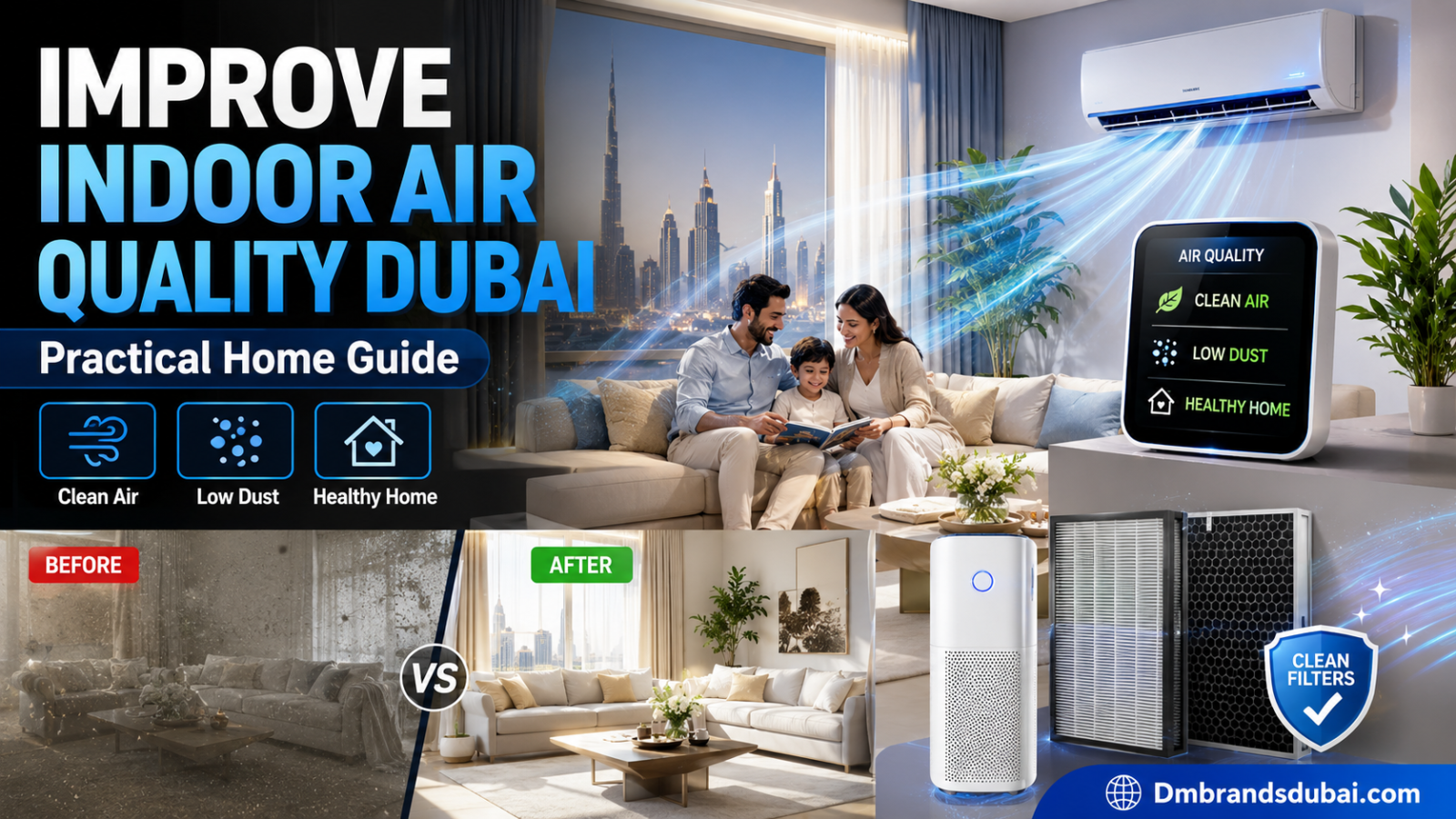
Improve Indoor Air Quality Dubai starts with understanding a problem most other climates do not face in the same way: homes here stay sealed and air-conditioned for most of the year, so whatever dust, humidity, or pollutants get in have nowhere to go.
Table of Contents
How Do You Improve Indoor Air Quality in Dubai?

The fastest way to improve indoor air quality in a Dubai home is to address the AC system first, since it is the single biggest driver of what circulates through the property.
That means replacing or cleaning filters every one to three months, having ductwork and coils professionally cleaned at least once a year, keeping indoor humidity in the 40 to 60 percent range, and reducing indoor pollution sources such as unventilated cooking, smoking, and off-gassing furniture or fresh paint.
Quick Facts
| Detail | Information |
|---|---|
| Main IAQ driver in Dubai homes | The AC system (ducts, coils, filters) |
| Recommended filter check | Every 1–3 months, more often after sandstorms |
| Comfortable humidity range | 40–60% relative humidity |
| Recommended duct cleaning frequency | Every 12–24 months, depending on system use |
| Coil cleaning frequency | Annually; twice yearly in coastal or dusty areas |
| Common Dubai-specific pollutants | Desert dust, construction dust, sea salt particulates, VOCs from new fit-outs |
Why Indoor Air Quality Is a Bigger Issue in Dubai Than Most Cities
The Sealed-Home Problem
Dubai’s architecture is built to keep extreme heat out, which means windows stay shut and the AC runs almost continuously from April through October, and heavily for the rest of the year. In most climates, opening a window flushes out stale air. In Dubai, the outdoor environment is often too hot, humid, or dusty to make that a realistic option. The result is a recirculation loop where the same indoor air is cooled, filtered, and pushed back through the home again and again.
What Actually Pollutes the Air
Three sources dominate in Dubai specifically:
- Fine desert dust, a mixture of mineral silica, sea salt, and urban particulates fine enough to pass through basic filtration and settle deep in ductwork.
- Construction dust, a near-constant presence given the pace of development across most neighbourhoods, which loads AC filters and coils faster than in a typical city.
- VOCs from new interiors. Fresh paint, adhesives, flooring, and furniture in newly completed developments off-gas volatile organic compounds for weeks or months after fit-out.
Why the AC System Is Central to the Problem and the Fix
Because a recirculating AC system draws in, cools, and redistributes the same air continuously, every duct, filter, and coil it passes through either cleans that air or adds to the problem. A structured maintenance schedule covering filter changes, coil cleaning, drain pan care, and periodic duct inspection addresses the majority of indoor air quality decline before residents ever notice a symptom.
Signs of Poor Indoor Air Quality in Your Home
- A layer of fine dust that returns to surfaces within a day or two of cleaning.
- A musty or stale smell as soon as the AC switches on.
- Increased allergy symptoms, congestion, or eye irritation indoors compared with outdoors.
- Visible dust or debris blowing from supply vents when the system starts.
- Persistent headaches or fatigue that improve after time outside or in a well-ventilated space.
- Condensation or visible mould around AC vents, window frames, or bathroom ceilings.
Any one of these on its own can have another cause, but two or more together usually point to the AC system, humidity control, or both.
Recommended Indoor Air Quality Benchmarks
While there is no single number that defines “good” air, the benchmarks below are commonly cited targets for a healthy indoor environment and are a useful reference point when assessing a Dubai home.
| Parameter | Target Range | Why It Matters |
|---|---|---|
| PM2.5 (fine particulate matter) | Below roughly 35 µg/m³ | Higher levels are linked to respiratory and cardiovascular irritation |
| CO2 | Below roughly 1,000 ppm | Elevated CO2 indicates insufficient fresh air exchange and is linked to fatigue and poor concentration |
| Relative humidity | 40–60% | Outside this range encourages mould growth (too high) or dry-air irritation (too low) |
| VOCs | As low as practically achievable | Off-gassing from paints, adhesives, and furnishings can cause headaches and irritation at elevated levels |
Commercial buildings, schools, and healthcare facilities in Dubai may fall under specific Dubai Municipality monitoring requirements; residential properties are not typically mandated but benefit from the same targets.
Step-by-Step: How to Improve Indoor Air Quality in a Dubai Home
1. Start With the AC Filter
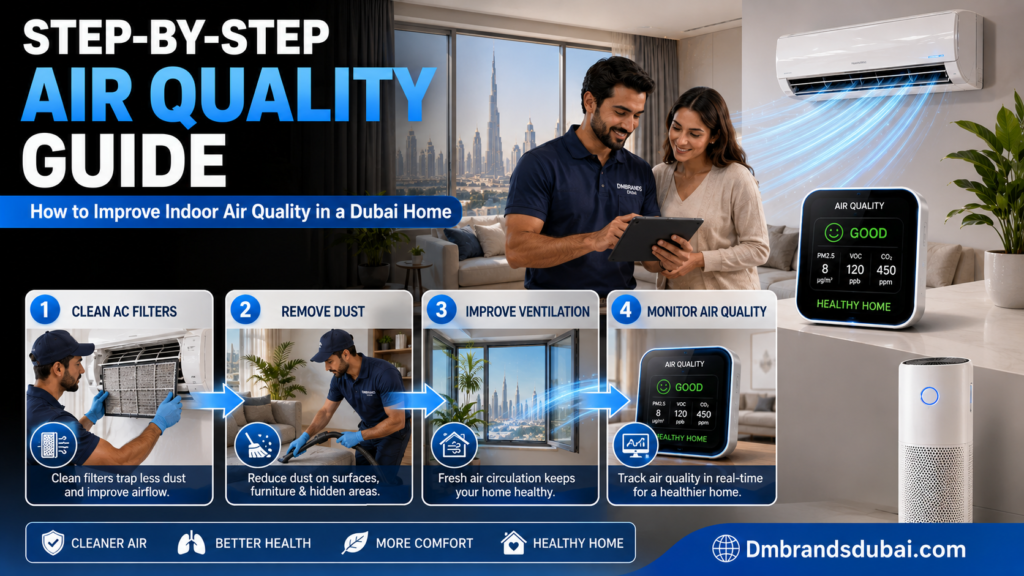
A dirty filter is the single most common and cheapest-to-fix cause of poor circulation. In Dubai’s dust load, filters should be checked monthly and replaced or cleaned every one to three months, more frequently immediately after a sandstorm. A clogged filter also forces the system to work harder, which raises electricity use on top of the air quality impact.
2. Schedule Professional Duct Cleaning
Ductwork accumulates dust, allergens, and, in humid conditions, microbial growth over time, and none of it is visible or reachable during a routine filter change. A full ductwork decontamination clears this buildup and is one of the most direct ways to reduce dust that keeps returning to surfaces shortly after cleaning.
3. Have Evaporator and Condenser Coils Cleaned
A fouled coil does two things at once: it reduces cooling efficiency, and it can become a breeding ground for mould and bacteria in humid conditions, both of which affect air quality directly. Annual coil cleaning, or twice yearly for coastal properties, keeps the coil doing its job without becoming a pollutant source itself.
4. Control Humidity
Dubai’s humidity swings between very dry, heavily air-conditioned indoor air and high outdoor humidity for much of the year. Both extremes cause problems: excess humidity encourages mould in AC components, drain pans, and bathroom areas, while air that is too dry can irritate eyes, skin, and airways. A properly maintained AC system, correct thermostat settings, and prompt drain-line clearing keep humidity in a comfortable middle range.
5. Reduce Indoor Pollution Sources
- Use extraction fans when cooking, since unventilated cooking is a major indoor source of particulates.
- Avoid smoking indoors.
- Air out newly delivered furniture, fresh paint, or flooring where possible before full occupancy, since these off-gas VOCs most heavily in the first weeks.
- Vacuum with a HEPA-filtered vacuum cleaner and dust regularly, particularly soft furnishings like curtains and rugs that trap particulates.
6. Consider Supplementary Filtration
Standalone HEPA air purifiers can help in specific rooms, particularly bedrooms or nurseries, but they work best alongside a clean, well-maintained central AC system rather than as a substitute for it. A purifier cannot compensate for a duct system or coil that is actively distributing dust and allergens throughout the property.
7. Monitor, Don’t Just Guess
Indoor air quality problems are often invisible until they become uncomfortable. IAQ monitors that track CO2, VOCs, particulate matter, and humidity give an early warning before dust or moisture buildup becomes a bigger issue, and they help confirm whether a cleaning or maintenance step actually made a measurable difference.
DIY Steps vs Professional Service: What You Can and Cannot Do Yourself
| Task | DIY-Suitable | Requires a Professional |
|---|---|---|
| Replacing or rinsing a washable filter | Yes | — |
| Dusting vents and surfaces | Yes | — |
| Running an extraction fan while cooking | Yes | — |
| Deep duct decontamination | No | Yes, specialised equipment needed |
| Evaporator/condenser coil deep cleaning | Partial (light outdoor rinse only) | Yes for indoor coil and thorough clean |
| Mould treatment inside AC components | No | Yes |
| Drain pan and condensate line clearing | Limited | Yes for full clearing and inspection |
Common Mistakes That Keep Air Quality Poor
- Relying on a standalone air purifier while ignoring dirty ducts or coils feeding the whole home.
- Cleaning filters but never scheduling a duct or coil service, so the underlying buildup keeps recontaminating clean filters.
- Running the AC on very low temperatures without addressing humidity, which can increase condensation and mould risk around vents.
- Assuming outdoor air is automatically dirtier than indoor air. In a sealed, recirculating home, indoor concentrations of dust and VOCs can build up well beyond what is outside.
- Skipping annual maintenance because the system “still cools fine.” Air quality decline is usually gradual and often unnoticed until symptoms appear.
How DM Brands Dubai Supports Better Indoor Air Quality
Since the AC system is the main driver of indoor air quality in a Dubai property, the most effective improvements usually come from the same maintenance work that keeps a system running efficiently.
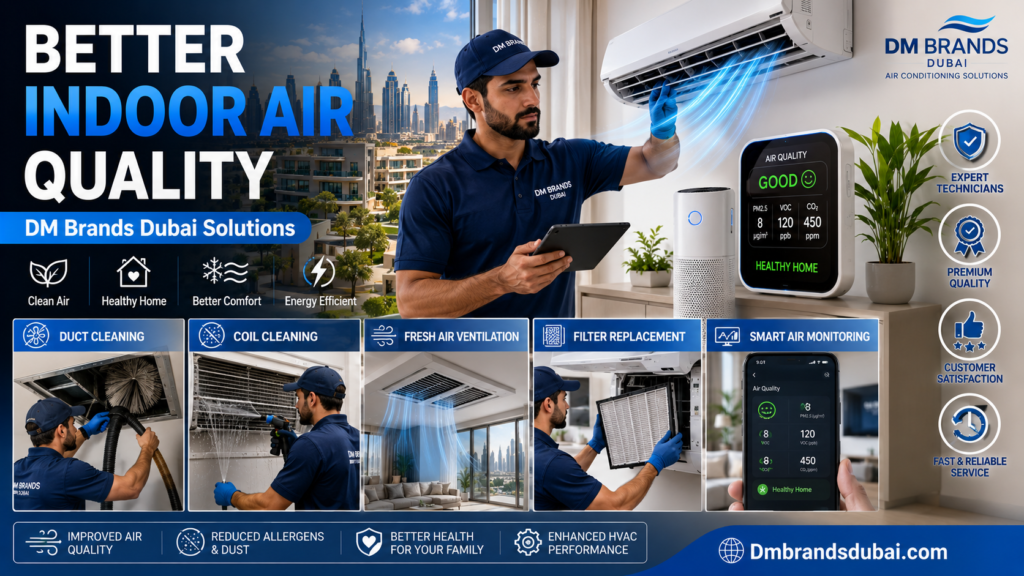
DM Brands Dubai’s duct cleaning service clears dust, damp, and microbial growth from the ductwork carrying air through the home, while the coil cleaning service deep-cleans the evaporator and condenser coils with measured results, recording temperatures before and after so the improvement is confirmed rather than assumed.
Both are carried out by directly employed, insured technicians, priced before any work begins. For properties that want this handled on a set schedule rather than reactively, coil and duct maintenance are included in DM Brands’ residential and commercial annual maintenance contracts, which combine scheduled servicing with priority booking during peak summer demand.
Related Articles
- AC Duct Cleaning Dubai: What It Costs, and When You Need It
- AC Coil Cleaning Service Dubai: Signs, Process, and What It Should Cost
- How to Choose the Right AC Servicing Companies in Dubai
- Duct Cleaning Service
- Coil Cleaning Service
- Residential Annual Maintenance Contract
Frequently Asked Questions (FAQs)
What is the fastest way to improve indoor air quality in a Dubai home?
Start with the AC system: replace or clean the filter, then check when the ducts and coils were last professionally cleaned, since these directly control what circulates through every room.
How often should I change my AC filter in Dubai?
Every one to three months, and check monthly during high dust periods or shortly after a sandstorm, since Dubai’s dust load clogs filters faster than in most climates.
Does opening windows help improve indoor air quality in Dubai?
Rarely, for most of the year. Outdoor heat, humidity, and dust usually make brief ventilation during cooler winter mornings or evenings more practical than daytime window opening.
How often should AC ducts be cleaned for good air quality?
Roughly every 12 to 24 months for most homes, though properties with musty odours, visible dust return, or known mould should be assessed sooner.
Can dirty AC coils cause poor indoor air quality?
Yes. A fouled coil reduces airflow and, in humid conditions, can support mould or bacterial growth that then circulates through the home every time the system runs.
What humidity level is best for indoor air quality?
Roughly 40 to 60 percent relative humidity. Levels above that range encourage mould, while levels well below it can dry out and irritate eyes and airways.
Do air purifiers work well in Dubai homes?
They can help in individual rooms, but they work best as a supplement to a clean, well-maintained central AC system rather than as a replacement for duct and coil maintenance.
What causes dust to come back so quickly after cleaning in Dubai?
Fine desert dust and construction dust settle continuously, and if ductwork or filters are already loaded with debris, they redistribute it through the home even after surfaces are wiped down.
Are VOCs a real concern in Dubai homes?
Yes, particularly in newly completed developments, where fresh paint, adhesives, and furnishings off-gas volatile organic compounds most heavily in the first weeks after fit-out.
How do I know if my indoor air quality is actually poor?
Common signs include dust returning within a day of cleaning, a musty smell when the AC starts, increased allergy symptoms indoors, and visible debris from supply vents.
Is professional duct cleaning worth it for a small apartment?
Yes, ductwork accumulates buildup regardless of unit size, and a smaller property often has less air volume to dilute the same amount of dust and allergens.
Can poor indoor air quality affect sleep or concentration?
Yes, elevated CO2 and particulate levels are commonly linked to fatigue, headaches, and reduced concentration, particularly in bedrooms with limited fresh air exchange.
Should I get an IAQ assessment before making changes?
It helps, since testing for particulates, VOCs, and humidity identifies the actual cause rather than guessing, though addressing the AC system first is a reasonable starting point for most homes.
How does construction nearby affect indoor air quality?
Ongoing construction significantly increases fine dust in the surrounding air, which loads outdoor condenser coils and filters faster and increases how often maintenance is needed.
Does coastal humidity in Dubai make indoor air quality worse?
It can, since salt-laden coastal air combines with dust to foul outdoor coils faster and adds to humidity control challenges indoors.
What is the difference between duct cleaning and coil cleaning for air quality?
Duct cleaning removes buildup from the pathways air travels through, while coil cleaning addresses the component where heat exchange happens. Both affect air quality, and most homes benefit from addressing each on its own schedule.
Can a dirty AC system make allergies worse?
Yes, dust, pollen, and mould circulating through a poorly maintained system are common allergy triggers, and symptoms often improve noticeably after a thorough clean.
How much does it cost to improve indoor air quality in a Dubai home?
Costs vary depending on what is needed, from a low-cost filter change to a full duct and coil cleaning service, with pricing best confirmed through a written quote based on the specific property.
Do annual maintenance contracts help with air quality specifically?
Yes, because they schedule coil, duct, and filter maintenance proactively rather than reactively, which prevents the gradual buildup that leads to poor air quality in the first place.
What is the single most overlooked cause of poor indoor air quality in Dubai?
Assuming the AC still working means it is still clean. Efficiency and air quality both decline gradually, so a system can keep cooling the room while quietly circulating dust, allergens, or mould.
Conclusion
Improving indoor air quality in a Dubai home comes down to managing the one system that touches almost every breath taken indoors: the AC.
Filter changes handle the day-to-day dust, but duct and coil cleaning address the buildup that filters alone cannot reach, and both matter more in Dubai’s climate than almost anywhere else because homes stay sealed and air-conditioned for most of the year. A structured, scheduled approach beats reacting to symptoms after they appear.
Book a duct and coil cleaning assessment with DM Brands Dubai and get a written price before any work starts.