A heating & air conditioning service near me is a local HVAC company that repairs, maintains, and installs the systems that keep your home or office comfortable all year. It covers furnaces, heat pumps, boilers, split units, ducted systems, and central air conditioning.
People usually search this phrase at stressful moments. The AC stops cooling in summer, the heat fails on a cold night, or a strange noise starts coming from the unit.
Choosing a nearby provider matters because distance affects response time. A local team can reach you faster, knows the climate your system works in, and is easier to call back if a problem returns.
Table of Contents
What Is a Heating & Air Conditioning Service?
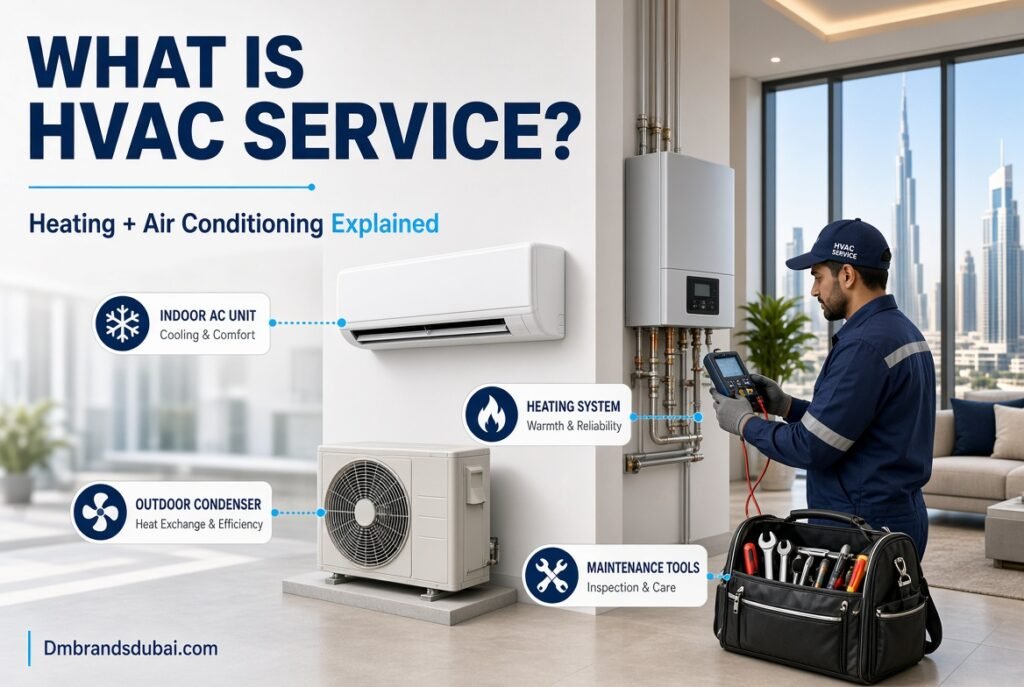
A heating and air conditioning service is professional HVAC work that includes repair, preventive maintenance, installation, replacement, and cleaning of your heating and cooling equipment. Choose a licensed, insured, well-reviewed company that offers clear pricing, fast response, and 24/7 emergency help.
HVAC stands for heating, ventilation, and air conditioning. One provider often handles all three because the systems share ducts, blowers, thermostats, and electrical controls.
Many companies also offer annual maintenance contracts. These plans schedule regular visits so small faults are caught before they become breakdowns.
Key Takeaways
- A local provider usually responds faster and understands your climate.
- Look for licensed, insured technicians and transparent, written quotes.
- Confirm that the company services your exact system type and brand.
- Ask whether 24/7 emergency service and same-day repair are available.
- Regular servicing prevents most breakdowns and helps keep energy bills down.
- Compare at least two or three quotes for major repairs or replacements.
- Never ignore a gas smell or a carbon monoxide alarm. Leave the building and call emergency services.
- A full-service company that handles repair, maintenance, installation, and cleaning saves time.
What Does a Heating & Air Conditioning Service Include?
A good HVAC company does far more than fix breakdowns. Its services cover the full life of your system, from installation to cleaning and repair.
Here is what you can usually expect.
Repair Services
Repair is the most common request. A technician diagnoses the fault, explains the cause, and fixes or replaces the failed part.
Typical repairs include thermostat faults, refrigerant leaks, failed capacitors, blocked drain lines, blower motor problems, and ignition failures.
Maintenance and Tune-Ups
Maintenance is preventive work. It keeps components clean, correctly adjusted, and working as designed.
A typical visit includes filter cleaning, coil cleaning, a refrigerant check, thermostat testing, duct inspection, and an electrical check.
Installation and Replacement
When a system is beyond repair, a provider helps you choose the right unit, removes the old equipment, and installs the new one. Correct sizing is essential for comfort and efficiency.
An oversized or undersized unit cycles badly and wastes energy.
Cleaning Services
Deep cleaning removes dust, allergens, and buildup from ducts, coils, and filters. It improves airflow, indoor air quality, and system efficiency.
Cleaning is especially useful if you notice musty smells or heavy dust around vents.
Annual Maintenance Contracts
An annual maintenance contract (AMC) schedules planned visits throughout the year. It helps you budget and keeps your system under regular professional care.
Contracts suit apartments, villas, offices, and larger commercial properties.
Emergency Service
Emergency service means a technician can reach you outside normal hours. It covers nights, weekends, and holidays.
If your system fails in extreme weather, this service can protect health and property.
Why Choose a Local Heating & Air Conditioning Service?
The word “near me” signals that location matters. Local providers offer clear advantages over distant or out-of-area companies.
Faster Response Times
A nearby technician spends less time traveling. That matters when your AC fails in a heatwave or your heat stops in the cold.
Shorter travel also makes same-day appointments more realistic.
Local Climate Knowledge
Climate shapes how systems wear out. In hot, dusty, humid regions, filters clog quickly and units run for long hours.
Local technicians know which problems appear most often in your area and how to prevent them.
Easier Follow-Up
If a problem returns, a local company can come back quickly. You also build a relationship with technicians who learn your system over time.
Records of past visits make future repairs faster and cheaper.
Reputation You Can Check
Local businesses depend on word of mouth. Neighbors, building managers, and local reviews give you real feedback.
A company with a long, positive track record in your area is a safer choice.
Better Understanding of Local Rules
Local providers understand regional licensing, building rules, and property requirements. This is important for installations and for rented or managed properties.
How to Find a Heating & Air Conditioning Service Near You
Finding a good provider takes a few minutes of research. Follow these steps to avoid guesswork.
Step 1: Search With Specific Terms
Try phrases such as “AC repair near me,” “heating repair near me,” or “HVAC service in [your area].” Adding your neighborhood narrows results to companies that really serve you.
Look beyond the first result. Paid ads often appear at the top.
Step 2: Check Maps and Local Listings
Online maps show distance, hours, ratings, and photos. Check that the address, phone number, and service area match the company’s website.
A real address and consistent contact details are good trust signals.
Step 3: Read Recent Reviews
Look for patterns in recent reviews. Pay attention to comments about punctuality, honesty, pricing, and cleanup.
A few negative reviews are normal. Repeated complaints about hidden fees or missed appointments are a warning.
Step 4: Ask Neighbors and Property Managers
People nearby often know who fixed their system quickly. Building managers also keep lists of approved contractors.
Personal recommendations are valuable because they come from real experience.
Step 5: Confirm Services and Brands
Make sure the company works on your system type and brand. Ask whether it handles repair, maintenance, installation, and cleaning.
A full-service provider can handle problems from start to finish.
Step 6: Call and Ask Questions
Call two or three companies. A friendly, clear phone conversation tells you a lot about how they treat customers.
Ask about availability, pricing, licensing, and warranties.
Step 7: Compare Written Quotes
For larger jobs, get written quotes. Compare scope, parts, labor, and warranty, not just price.
The cheapest quote is not always the best value.
What to Look for in a Heating & Air Conditioning Company
Use this checklist to compare providers side by side.
| What to Check | Why It Matters |
|---|---|
| Valid trade license | Confirms the company can legally operate |
| Insured technicians | Protects your property during work |
| Certified refrigerant handling | Ensures safe, legal gas work |
| Clear, itemized quotes | Prevents surprise charges |
| 24/7 emergency availability | Helps in urgent breakdowns |
| Same-day service | Restores comfort quickly |
| Experience with your system type | Improves diagnosis and repair quality |
| Warranty on parts and labor | Shows confidence in the work |
| Recent customer reviews | Reveals real service quality |
| Transparent service area | Confirms they actually serve your location |
A strong provider meets most of these points. If a company avoids simple questions, look elsewhere.
Licensing and Certification
Ask for the trade license or registration required in your area. A legitimate company shares this readily.
Technicians who handle refrigerants should be trained in safe handling. The U.S. EPA Section 608 framework is a useful benchmark for proper refrigerant training.
Manufacturer authorization is also valuable. Brands such as Daikin, LG, Mitsubishi Electric, and Carrier often have authorized service partners.
Employed or Subcontracted Technicians?
Ask whether technicians are direct employees. Employees are trained to company standards and answer to it.
Also ask whether they are insured. Insurance protects your home if something goes wrong.
Transparent Pricing
A trustworthy company explains pricing before work begins. You should receive an itemized quote that lists parts and labor.
Avoid companies that refuse to give a written estimate.
Questions to Ask Before You Book
Keep this list handy when you call.
| Question | What a Good Answer Sounds Like |
|---|---|
| Do you service my type of system? | A clear yes with relevant examples |
| Are you available 24/7? | Yes, with real people answering |
| How soon can someone come? | A realistic window, often same-day for repairs |
| What is the call-out fee? | A clear figure and what it covers |
| Do you give written quotes? | Yes, itemized and before work starts |
| Are technicians licensed and insured? | Yes, and proof on request |
| Do you offer warranties? | Yes, with clear terms |
| Do you offer maintenance contracts? | Yes, with packages explained |
Red Flags When Choosing an HVAC Provider
Most providers are honest, but a few use pressure tactics. Watch for these signs.
- A price quoted over the phone without seeing the system
- Pressure to replace your whole system immediately
- No written scope of work
- No license or certification details on request
- Pressure to sign a long contract on the first visit
- Vague answers about emergency response times
- Demands for full payment up front
- No physical address or verifiable business details
If something feels wrong, pause and get a second opinion. The exception is a safety hazard, which must be handled right away.
Common Air Conditioning Problems a Local Service Fixes
Air conditioning faults follow predictable patterns. Knowing them helps you describe the issue clearly on the phone.
AC Not Cooling or Weak Airflow
Low refrigerant, a failing compressor, or a blocked filter are the usual suspects. A technician runs a diagnostic to find the root cause.
Fixing only the symptom, such as adding gas without finding the leak, leads to repeat problems.
AC Leaking Water
A blocked condensate drain line or a damaged evaporator coil is the most common cause. Left alone, leaks can damage ceilings, walls, and floors.
The technician clears the blockage, repairs the coil if needed, and tests the system.
AC Making Strange Noises
Rattling, squealing, or grinding often means a mechanical fault, such as loose fan blades, worn bearings, or a failing motor.
Turn the unit off if the noise is loud, and call for service.
AC Smells Bad
A musty smell usually points to mold or bacteria on the coils or in the drain pan. Professional cleaning and sanitization normally solve it.
A burning smell is more serious. Turn the system off and call a technician.
AC Not Turning On
The cause is usually electrical, such as a tripped breaker, faulty thermostat, or blown capacitor. A technician traces the electrical path to find the fault.
This approach avoids paying for a full replacement you do not need.
AC Trips the Breaker
Repeated tripping signals an electrical problem, such as a failing capacitor, damaged wiring, or a compressor drawing too much current.
Do not keep resetting the breaker. Call a licensed technician.
High Electricity Bills
Dirty coils, low refrigerant, and a struggling compressor make the system work harder. Your bill rises even though your habits have not changed.
Regular servicing keeps efficiency up and bills in check.
Common Heating Problems a Local Service Fixes
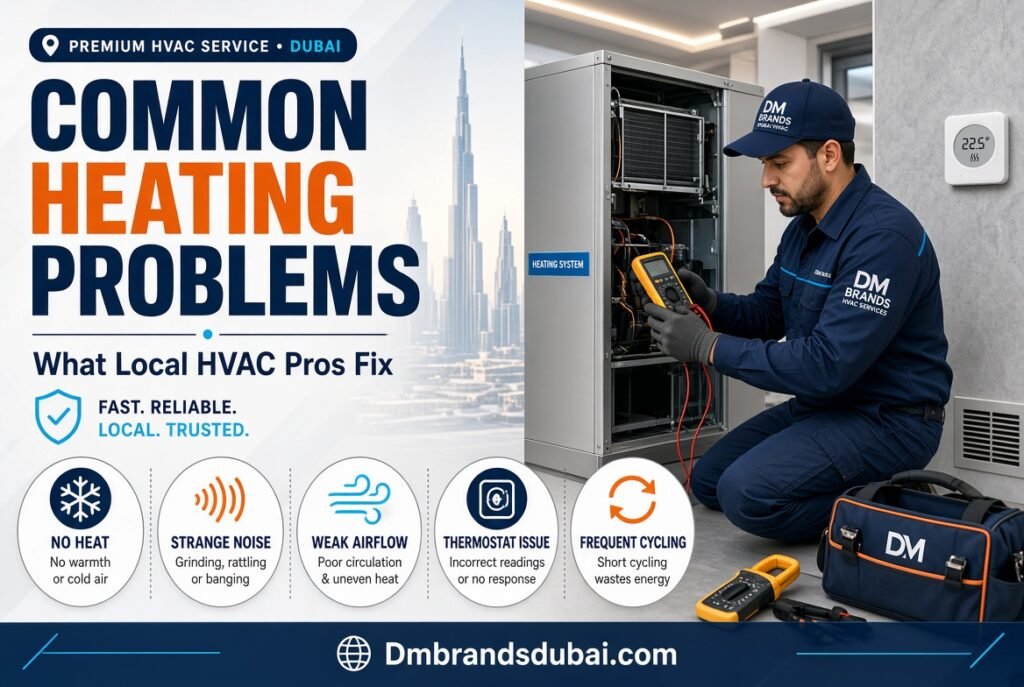
Heating faults can be urgent in cold weather. A local provider can respond quickly and restore safe warmth.
No Heat
Possible causes include a dead thermostat, tripped breaker, failed igniter, closed gas valve, or control board fault. Basic checks sometimes solve the issue.
If the heat does not return, call a technician.
Blowing Cold Air in Heating Mode
On a furnace, this often means the burners are not lighting. On a heat pump, it can point to a frozen outdoor coil or a faulty reversing valve.
Do not chip ice off the outdoor unit. Call for service.
Short Cycling
Short cycling means the system turns on and off in quick bursts. Dirty filters, overheating, or a faulty thermostat can cause it.
It wears out parts and wastes energy, so it needs a proper diagnosis.
Strange Noises
Banging, squealing, and grinding each suggest a different fault. Delayed ignition can cause a bang, while worn bearings often squeal.
Turn the system off if the noise is loud or sudden.
Uneven Heating
Cold rooms and warm rooms often point to duct leaks, blocked vents, or a failing blower. A technician can test airflow to find the cause.
Pilot Light or Ignition Failure
On older gas systems, a pilot that will not stay lit may need a new thermocouple. Newer models use electronic ignition.
Do not keep relighting a pilot that fails repeatedly.
Heating and Cooling System Types a Local Technician Services
Different systems fail in different ways. Knowing your system helps the dispatcher send the right technician.
| System | How It Works | Common Issues |
|---|---|---|
| Split AC | Indoor unit plus outdoor compressor | Leaks, refrigerant loss, dirty coils, electrical faults |
| Ducted AC | Central unit pushes air through ducts | Duct leaks, blower faults, uneven cooling |
| Central AC | One system serves the whole property | Compressor trouble, airflow problems, thermostat faults |
| Heat pump | Moves heat for both heating and cooling | Frozen coil, reversing valve, refrigerant leaks |
| Gas furnace | Burns gas and blows warm air through ducts | Ignition faults, dirty flame sensor, heat exchanger cracks |
| Boiler | Heats water for radiators or floors | Low pressure, leaks, circulator pump failure |
| VRF or commercial system | Multi-zone systems for larger buildings | Control faults, refrigerant circuit issues |
| Window AC | Single self-contained unit | Weak cooling, noise, drainage problems |
Many technicians work on several of these. Always confirm that the provider handles your exact system.
Signs You Should Call a Heating & Air Conditioning Service
Do not wait for a total breakdown. Early warning signs give you time to book a regular appointment.
Warning Signs for Cooling Systems
- Weak airflow from vents
- Warm air when the unit should be cooling
- Water leaking near the indoor unit
- Ice forming on the unit
- Unusual noises or smells
- Rising electricity bills with no change in usage
- The unit turning on and off repeatedly
Warning Signs for Heating Systems
- Cold air from vents in heating mode
- Banging, squealing, or grinding sounds
- A yellow or flickering burner flame on gas systems
- Soot or rust around the unit
- Frequent shutoffs
- Uneven temperatures between rooms
Signs That Need Immediate Action
Some signs are urgent. Treat these as emergencies.
- A gas smell
- A carbon monoxide alarm
- Smoke or a strong burning smell
- Water pouring from the unit near electrical parts
- Sparking or burning noises
For a gas smell or a carbon monoxide alarm, leave the building first. Then call emergency services. The CDC advises this for carbon monoxide alarms.
Heating & Air Conditioning Emergency Service
Breakdowns rarely happen at convenient times. Emergency service gives you access to help at any hour.
What 24/7 Service Should Look Like
A real 24/7 service has people answering the phone around the clock. Technicians should be available at night, on weekends, and on public holidays.
Ask whether you will speak with a person or leave a message.
When to Call for Emergency Help
- Your AC fails during extreme heat and vulnerable people are at home.
- Your heating fails in freezing weather.
- You notice water leaking near electrical equipment.
- Your unit trips the breaker repeatedly.
- You suspect a gas or refrigerant leak.
If your situation is not dangerous, a next-day appointment may cost less.
What to Do While You Wait
Close doors and keep the cooled or heated area small. Use fans in hot weather and blankets in cold weather.
Check the thermostat, breaker, and filter. Do not open the unit or touch gas lines.
Protect Vulnerable People
Babies, older adults, and people with medical conditions are more sensitive to heat and cold. Move them to a safer, more comfortable space if needed.
Contact a doctor if anyone feels unwell.
Quick Safe Checks Before You Call
These steps are safe for most homeowners. They can save you a service call.
- Check the thermostat. Confirm the mode and temperature setting. Replace the batteries if the screen is blank.
- Check the breaker. Reset a tripped breaker once. If it trips again, stop and call a technician.
- Check the filter. A clogged filter restricts airflow and can cause shutdowns.
- Check vents. Make sure supply vents and return grilles are open and unblocked.
- Check the outdoor unit. Clear leaves, debris, or covers from around it.
- Check the drain. If water is leaking, look for a visible blockage, but leave deeper clearing to a professional.
If these checks do not help, stop. Do not remove panels or touch refrigerant or gas parts.
How Much Does a Heating & Air Conditioning Service Cost?
Prices vary by region, system type, and the problem. That is why a written quote after inspection is the safest approach.
Several factors shape the final bill.
Factors That Affect HVAC Service Cost
| Factor | How It Affects Price |
|---|---|
| Type of fault | A thermostat or filter fix costs less than a compressor or refrigerant recharge |
| System type and size | Ducted, central, and commercial systems cost more than a single split unit |
| Time of day | Emergency and after-hours visits often cost more |
| Parts needed | Brand-specific or hard-to-find parts raise the price |
| Property type | Commercial work usually costs more than residential |
| Contract status | An annual maintenance contract can reduce per-visit costs |
| Warranty coverage | Parts may be covered, though labor often is not |
Typical Maintenance Costs in Dubai
For reference, these are typical Dubai market ranges from DM Brands Dubai’s maintenance guide. Always request a written quote for your property.
| Unit Type | Typical Cost Per Visit (AED) |
|---|---|
| Window AC unit | 80 to 200 |
| Split AC unit | 100 to 250 |
| Ducted or central AC (per system) | 300 to 800 and up |
| Commercial or VRF systems | Custom quote based on scope |
Typical Annual Maintenance Contract Costs in Dubai
| AMC Tier | Typical Annual Cost (AED) | Best For |
|---|---|---|
| Basic (2 to 3 units) | 500 to 1,200 | Apartments and small villas |
| Comprehensive (labor and minor parts) | 1,500 to 2,500 | Larger villas and families wanting fewer surprises |
| Commercial or full cover | 5,000 to 30,000 and up | Offices, retail, hospitality, and larger buildings |
Ways to Keep Costs Down
- Book maintenance before peak season.
- Replace filters on schedule.
- Fix small problems early.
- Compare written quotes for major jobs.
- Consider a maintenance contract if you have several units.
Free Quotes and Written Estimates
A free quote helps you compare providers without pressure. A good company explains what it will do and what it will cost.
What a Good Quote Includes
- A description of the fault
- The work to be done
- Parts and labor, itemized
- Any call-out or diagnostic fee
- Warranty terms
- Estimated time to complete
Do not approve major work without a written estimate, unless there is a safety emergency.
Repair or Replace Your Heating or Cooling System?
Sometimes repair is not the best choice. Use this table to decide.
| Factor | Lean Toward Repair | Lean Toward Replacement |
|---|---|---|
| System age | Within normal lifespan | Past typical lifespan |
| Repair cost | Small part, low labor | Major component, high cost |
| Breakdown history | First problem in a long time | Repeated breakdowns |
| Efficiency | Still efficient | Rising energy bills |
| Parts | Readily available | Discontinued or scarce |
| Safety | No safety concerns | Cracked heat exchanger or refrigerant issues |
| Comfort | Cools or heats evenly | Uneven comfort, noise |
Questions to Ask Your Technician
- How old is my system, and what is its expected lifespan?
- Will this repair solve the problem for good?
- What other parts are showing wear?
- How does a replacement cost compare with this repair?
You do not need to decide on the spot, unless the system is unsafe.
Choosing the Right Size for a New System
Correct sizing is a calculation, not a guess. A technician considers floor area, ceiling height, insulation, windows, sun exposure, and how many people use the space.
An oversized unit cycles on and off too often. An undersized unit runs constantly and still struggles to keep up.
AC Installation and Replacement: What to Expect
A proper installation affects comfort, efficiency, and system life for years. Follow the process closely.
Step-by-Step Installation Process
- Site assessment. The technician inspects your space and discusses your needs.
- Sizing and unit selection. The right capacity and model are chosen.
- Quote and scheduling. You receive a written quote and a date.
- Removal of the old system. The old unit is safely removed, including refrigerant recovery.
- Installation. The new unit, piping, wiring, and drainage are installed.
- Testing. The system is run and checked for airflow, cooling or heating, and leaks.
- Handover. You receive instructions, warranty details, and maintenance advice.
Ask About Warranty
Most installations come with a warranty on parts and workmanship. Keep your invoice and warranty papers in a safe place.
Heating and Air Conditioning Maintenance: Why It Matters
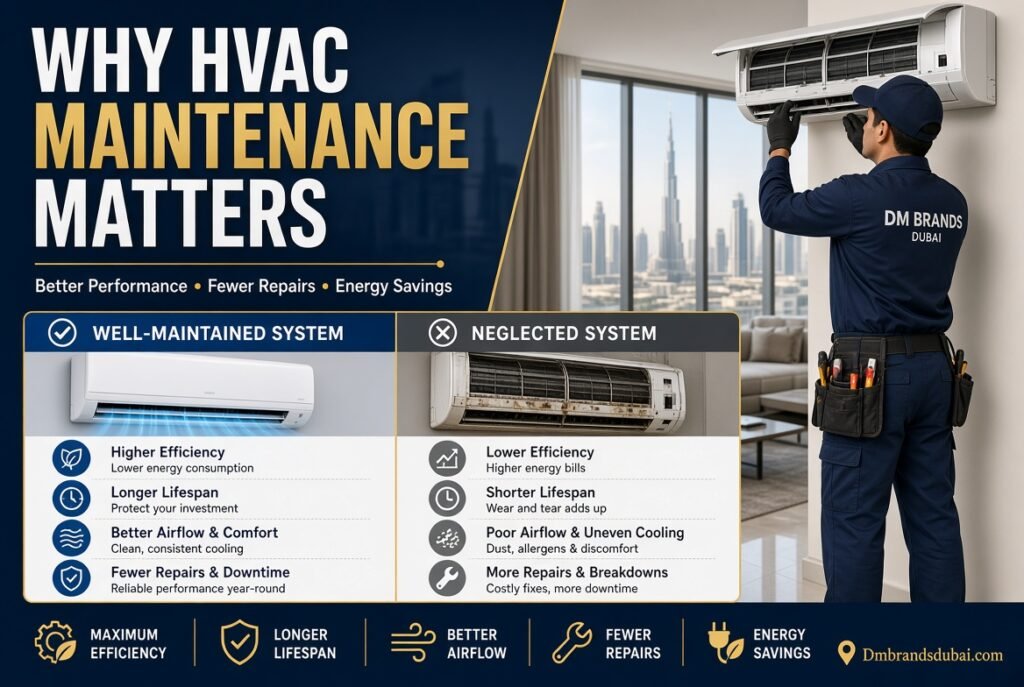
Maintenance is the single best way to prevent breakdowns. It also keeps your system running efficiently.
What a Maintenance Visit Includes
| Task | Why It Matters |
|---|---|
| Filter cleaning or replacement | Protects airflow and air quality |
| Coil cleaning | Restores heat-exchange efficiency |
| Refrigerant level check | Low levels usually signal a leak |
| Drain line inspection | Prevents leaks and water damage |
| Electrical and thermostat check | Catches worn parts before they fail |
| Duct inspection | Finds leaks and blockages |
| Burner and ignition check (gas systems) | Supports safe, reliable heating |
| Safety check | Confirms safe operation |
A thorough visit touches all of these areas. A quick wipe-down is not true maintenance.
Benefits of Regular Maintenance
- Fewer emergency breakdowns
- Lower energy use and bills
- Longer equipment life
- Better indoor air quality
- Safer operation
- Higher resale or rental value
Why Low Refrigerant Is a Warning, Not a Top-Up Opportunity
Refrigerant is not used up in a sealed system. If levels are low, there is usually a leak.
A good technician finds and repairs the leak instead of just adding gas.
How Often Should You Service Heating and Cooling Systems?
Frequency depends on climate, usage, and system type. Heavy use calls for more frequent care.
| Property or Condition | Suggested Frequency |
|---|---|
| Typical home in a mild climate | Once or twice a year |
| Home in a hot, dusty climate such as Dubai | Every three to four months, plus a deep clean yearly |
| Homes with pets, children, or allergy sufferers | More frequent filter care and cleaning |
| Offices and retail spaces | Quarterly to monthly checks |
| Systems with gas heating | Yearly safety inspection before cold weather |
An annual maintenance contract keeps you on schedule without reminders.
Seasonal Maintenance Calendar
| Season | Recommended Action |
|---|---|
| Before summer or peak cooling season | Full inspection, filter and coil cleaning, refrigerant check |
| Peak cooling season | Monitor performance and act quickly if cooling drops |
| After summer | Filter cleaning, drain check, general inspection |
| Before winter or peak heating season | Heating tune-up, safety check, filter replacement |
| Winter | Lighter maintenance, ideal time for duct cleaning and non-urgent repairs |
Booking during quieter periods usually means easier scheduling.
Filter Care: The Easiest Habit for Better Performance
Filters protect your system and your air. They are also the easiest part for you to maintain.
How Often to Clean or Replace Filters
Check filters monthly in heavy-use seasons. Replace disposable filters every one to three months, or more often with pets, allergies, or dusty conditions.
In dusty regions, filters may need attention every two to four weeks in peak months.
Signs a Filter Needs Attention
- Visible dust or discoloration
- Weak airflow
- The system running longer than usual
- More dust around the home
DIY Care vs. Professional Service
Some tasks are safe for owners. Others need training and tools.
| Task | DIY-Safe? | Notes |
|---|---|---|
| Cleaning accessible filters | Yes | Do this monthly in heavy-use months |
| Wiping vents and grilles | Yes | Simple, no tools needed |
| Checking thermostat settings and batteries | Yes | Rule out simple causes first |
| Clearing debris around the outdoor unit | Yes | Keep the unit powered off |
| Refrigerant handling or top-up | No | Needs certified technicians and equipment |
| Deep coil cleaning | No | Risk of damaging delicate fins |
| Electrical or capacitor work | No | Safety risk, licensed technicians only |
| Gas valve or burner work | No | Serious safety risk |
| Duct cleaning | No | Needs professional equipment |
Handle light filter care yourself and leave anything involving refrigerant, gas, or electrical parts to professionals.
Indoor Air Quality and Your HVAC System
Your HVAC system circulates the air you breathe. A dirty system can spread dust, allergens, and bacteria through your home.
How HVAC Affects Air Quality
Filters trap dust and particles. Coils and drain pans can grow mold if they stay damp and dirty. Ducts can collect dust over time.
Regular cleaning keeps air healthier, especially for children, older adults, and people with respiratory sensitivities.
Ways to Improve Air Quality
- Replace filters on schedule.
- Schedule duct, coil, and filter cleaning.
- Fix leaks and moisture problems quickly.
- Keep vents and returns clear.
- Ask your technician about higher-grade filters, if your system supports them.
Duct Repair and Cleaning
Ducts carry cooled and heated air through your property. Leaks, blockages, and dust reduce comfort and efficiency.
Signs of Duct Problems
- Some rooms stay too hot or too cold
- Weak airflow from vents
- Whistling or rattling in walls
- Dust blowing from vents
- Higher energy bills
- Visible gaps or disconnected sections
Why Duct Service Matters
Leaky ducts waste conditioned air and make the system work harder. Sealing, repairing, and cleaning ducts restores airflow and comfort.
A provider that handles both heating and cooling can fix duct issues that affect either mode.
Thermostat Problems and Upgrades
A faulty thermostat can mimic a broken system. Always check it first.
Thermostat Troubleshooting
- Confirm the mode (heat or cool) is correct.
- Set the temperature clearly above or below room temperature.
- Replace the batteries.
- Check that schedules or smart features are not overriding settings.
- Make sure the display is working.
Should You Upgrade to a Smart Thermostat?
A smart or programmable thermostat can improve comfort and help manage energy use. Compatibility matters, especially for heat pumps and multi-stage systems.
Ask your technician before buying one.
Heat Pumps: Heating and Cooling in One System
Heat pumps move heat instead of burning fuel. In summer they cool, and in winter they reverse and heat.
Because they do both jobs, they depend on a reliable reversing valve, refrigerant circuit, and outdoor unit.
Common Heat Pump Issues
- Not heating or cooling properly
- Ice buildup on the outdoor unit
- Strange noises
- Short cycling
- Refrigerant leaks
What “Emergency Heat” Means
Many heat pump thermostats have an “EM Heat” setting. It switches to backup heating, usually electric resistance heat, and bypasses the heat pump.
It can keep you warm if the outdoor unit fails, but it usually costs more to run. Use it only until repairs are done.
Safety: Carbon Monoxide, Gas, and Electrical Hazards
Heating and cooling equipment involves gas, electricity, and refrigerants. Safety must always come first.
Carbon Monoxide Safety
The CDC explains that carbon monoxide is an odorless, colorless gas produced by fuel-burning appliances such as furnaces. It can cause headache, dizziness, weakness, nausea, vomiting, chest pain, and confusion.
If your carbon monoxide alarm sounds, leave your home immediately and call emergency services, as the CDC advises.
Gas Smell Safety
Do not use switches, phones, or flames inside. Leave the building and call your gas supplier or emergency services from outside.
Electrical Safety
Never open electrical panels on your unit. Do not keep resetting a tripping breaker.
Repeated tripping signals a fault that needs a licensed technician.
Refrigerant Safety
Refrigerant should only be handled by trained technicians. Leaks can harm the system and the environment.
Residential vs. Commercial HVAC Service
Homes and businesses have different needs. A good provider understands both.
| Factor | Residential | Commercial |
|---|---|---|
| System type | Split, ducted, central, heat pump | VRF, central, rooftop, multi-zone |
| Response priority | Comfort and safety | Downtime, productivity, customer experience |
| Maintenance frequency | Seasonal | Quarterly to monthly |
| Contract type | Basic or comprehensive AMC | Full-cover AMC with priority response |
| Scheduling | Flexible | After-hours work often needed |
Villas
Villas often have several split or ducted units across zones. Each unit should be serviced individually.
Larger villas with central systems benefit from comprehensive contracts because ducted repairs cost more.
Apartments
Most apartments have one to three split units. A basic contract is often enough.
Check with building management whether communal chiller systems fall under building maintenance rather than your own contract.
Offices and Retail Spaces
Downtime affects staff and customers, so commercial contracts usually include priority response and broader parts coverage.
Annual Maintenance Contracts Explained
An AMC is a service agreement that covers planned maintenance and sometimes repairs. Understanding tiers helps you pick the right one.
| Feature | Basic AMC | Comprehensive AMC | Full-Cover or Commercial |
|---|---|---|---|
| Scheduled preventive visits | Yes | Yes | Yes, custom schedule |
| Filter and coil cleaning | Yes | Yes | Yes |
| Gas top-up | Extra charge | Often included, capped | Included |
| Labor on repairs | Extra charge | Included | Included |
| Spare parts | Not included | Minor parts included | Included up to a set value |
| Emergency callouts | Standard queue | Priority | 24/7 priority |
| Best for | Single apartments, tight budgets | Villas and families wanting predictability | Offices, hotels, retail |
Which AMC Is Right for You?
- Basic: You have one or two units and are comfortable paying separately if a part fails.
- Comprehensive: You want cost predictability and no labor charges for each repair.
- Full cover: Downtime hurts your business, so you want priority help and broader coverage.
Questions to Ask Before Signing an AMC
- What exactly is included in each visit?
- Is labor included on repairs?
- What is the emergency response time?
- Are spare parts genuine or OEM, and is there a cap on parts coverage?
- What is the cancellation policy?
Energy Efficiency and Lower Electricity Bills
Heating and cooling are often the biggest part of a home’s energy use. Small efficiency gains lead to real savings.
How Maintenance Lowers Energy Use
Clean coils and filters let air flow freely. Correct refrigerant levels let the system cool or heat with less effort.
A system that works less to do the same job uses less electricity.
More Ways to Save
- Seal air leaks around doors and windows.
- Use curtains or blinds to reduce heat gain or loss.
- Keep thermostat settings steady.
- Use ceiling fans to improve air circulation.
- Repair duct leaks.
- Replace very old equipment with efficient models.
How DM Brands Dubai Provides Heating, Cooling, and HVAC Service
DM Brands Dubai provides home maintenance, AC servicing, and emergency repair across Dubai. Its licensed technicians are directly employed and insured, and its call centre is open 24 hours.
The team serves homes, villas, and offices, seven days a week.
Why Customers Choose DM Brands Dubai
- Expert technicians. Licensed and experienced across split, ducted, and central air conditioning systems.
- 24/7 emergency service. The emergency line is staffed around the clock, including nights, weekends, and public holidays.
- Transparent pricing. You receive a clear, itemized quote before any work begins.
- Same-day service. In most cases, appointments are prioritized so comfort returns the same day you call.
- Complete solutions. Repair, maintenance, installation, and cleaning are handled under one roof.
- Citywide coverage. The team covers all major communities across Dubai.
Services Offered
| Service | What It Covers |
|---|---|
| AC repair | Full diagnostic and repair for split, ducted, and central systems across all major brands |
| AC maintenance and servicing | Filter cleaning, coil cleaning, refrigerant top-up, thermostat checks, and duct inspection |
| AC installation and replacement | Unit sizing, professional installation, and safe removal of the old system |
| AC deep cleaning | Duct, coil, and filter cleaning with sanitization |
| Annual maintenance contracts | Planned, regular servicing for homes, villas, and offices |
| Emergency repair | 24/7 response for urgent breakdowns |
If your system has a heating mode, such as a heat pump or a unit that heats on cooler nights, confirm your exact model when you call. This helps the team send the right technician.
Service Areas
DM Brands Dubai covers these communities and more.
- Dubai Marina
- Jumeirah Village Circle (JVC)
- Palm Jumeirah
- Downtown Dubai
- Business Bay
- Al Barsha
- Arabian Ranches
- Jumeirah
- JBR
- Al Quoz
Whether you live in a high-rise apartment or a villa, technicians are equipped to handle homes, villas, and offices across the city.
How to Book
- Contact the team. Reach out by phone, WhatsApp, or the online form.
- Describe the problem. Share your system type, symptoms, and location.
- Receive your quote. You get a clear, itemized quote before work starts.
- Meet the technician. A licensed, insured technician arrives, often the same day.
- Confirm the fix. The system is tested to make sure the problem is fully resolved.
A free, no-obligation quote is available at DM Brands Dubai.
Which Service Do You Need: Repair, Maintenance, Installation, or Deep Cleaning?
Match your situation to the right service using this table.
| Service | When You Need It | What Is Included | Typical Turnaround |
|---|---|---|---|
| Repair | Unit not cooling, leaking, noisy, or not turning on | Diagnostic, part repair or replacement, system testing | Same-day in most cases |
| Maintenance and servicing | Preventive, seasonal, or under an AMC | Filter, coil, and duct cleaning, gas check, thermostat check | Scheduled visit |
| Installation and replacement | New unit, old system beyond repair, renovation | Sizing consultation, removal of old unit, professional install | About one day per unit |
| Deep cleaning | Bad smells, allergy symptoms, visible dust or mold | Duct, coil, and filter deep clean, sanitization | Half a day to a full day |
Not sure which category fits? Contact the team and they will point you in the right direction.
Why Professional HVAC Care Matters in Hot, Dusty Climates
In places like Dubai, air conditioning is essential infrastructure. Units run near-constantly for much of the year, and heat and humidity speed up wear on compressors, coils, and seals.
Fine desert dust also clogs filters and coils year-round. That is why regular servicing and a pre-summer inspection matter so much.
Better Indoor Air
A poorly maintained system recirculates dust, allergens, and bacteria. Regular cleaning and filter changes are especially important for children, older adults, and anyone with respiratory sensitivities.
Longer Equipment Life
Routine professional care helps protect your unit and keeps energy use under control. Neglected systems tend to fail sooner and at worse times.
Fewer Costly Emergencies
Preventive maintenance is usually cheaper than emergency repair. Catching a refrigerant leak or a worn part during a routine visit costs a fraction of a full compressor failure.
What to Expect During a Service Visit
Knowing the process makes any visit smoother. Here is a typical flow.
Arrival and Introduction
The technician introduces themselves and confirms the problem. They may ask when it began and whether anything unusual happened.
Share details about noises, smells, or recent repairs.
Inspection and Testing
The technician checks the thermostat, power, filters, coils, drain, blower, and refrigerant levels. Gas systems also get burner and safety checks.
They use meters and gauges to test electrical and refrigerant components.
Explanation and Estimate
Once the cause is found, the technician explains the problem in plain language. They offer repair options and a price.
Ask questions. A good technician welcomes them.
Repair and Testing
After you approve the work, the technician repairs or replaces the faulty part and tests the system. They confirm it cools or heats properly and check for leaks.
Final Walkthrough
You should receive a summary of the work, advice to prevent a repeat problem, and any follow-up recommendations. Ask for an invoice and warranty details.
How to Prepare for a Technician Visit
A little preparation saves time and money.
- Clear a path to the indoor and outdoor units.
- Move furniture, rugs, and pets away from work areas.
- Note the brand, model, and age of your system.
- Write down symptoms, noises, smells, and error codes.
- Share any recent repairs or maintenance records.
- Make sure someone adult is home or authorize access.
- Check with building management if access rules apply.
How to Describe Your Problem on the Phone
Clear details help the dispatcher send the right technician with the right parts.
Information to Have Ready
- Your address and best phone number
- The type of system, such as split, ducted, central, or heat pump
- Brand and approximate age
- What you see, hear, or smell
- When the problem started
- What you already checked
- Any health concerns in the household
Say “the unit runs but blows warm air” instead of “it’s broken.” Specific details lead to faster diagnosis.
Local Company vs. National Chain: Which Is Better?
Both can be good. The right choice depends on your needs.
| Factor | Local Company | National or Large Chain |
|---|---|---|
| Response time | Often faster for nearby addresses | Depends on branch coverage |
| Personal service | Familiar technicians, easier follow-up | More standardized, less personal |
| Pricing | Often flexible, quote-based | Often fixed price lists |
| Local knowledge | Strong understanding of local climate and buildings | Varies by branch |
| Resources | May be smaller | Larger teams and parts supply |
| Accountability | Reputation tied to the area | Corporate policies |
For urgent repairs and ongoing care, many property owners prefer a trusted local team with full-service capability and 24/7 support.
Common Mistakes When Hiring an HVAC Service
Avoid these errors to protect your time and money.
Choosing Only on Price
The cheapest quote can hide poor parts or rushed work. Compare scope, warranty, and reputation, not just cost.
Skipping License and Insurance Checks
Hiring an unlicensed company puts your property and safety at risk. Always ask for proof.
Ignoring Small Problems
A weak airflow or odd noise often grows into a breakdown. Early service costs less.
Not Asking for a Written Quote
Verbal estimates lead to disputes. Always request a written, itemized quote.
Delaying Maintenance Until Peak Season
Technicians are busiest during extreme weather. Book service before demand spikes.
Trying Risky DIY Repairs
Refrigerant, gas, and electrical work can cause injury or damage. Stay within safe DIY limits.
Adding Gas Without Fixing the Leak
Topping up refrigerant without repairing the leak wastes money and the problem returns.
Common Myths About Heating and Air Conditioning Service
Some beliefs lead to wasted money or damaged equipment.
Myth: Maintenance Is Only Needed When Something Breaks
Fact: Preventive care catches small faults early and avoids most emergency breakdowns.
Myth: Turning the Thermostat Very Low Cools Faster
Fact: The system cools at the same rate. A lower setting just runs it longer.
Myth: Closing Vents Saves Energy
Fact: Closing too many vents can raise pressure in the ducts and strain the system.
Myth: Refrigerant Gets Used Up
Fact: Refrigerant circulates in a sealed system. Low levels mean a leak.
Myth: Bigger Units Are Always Better
Fact: Oversized units cycle too often, cool unevenly, and waste energy.
Landlords, Tenants, and Property Managers
Heating and cooling in rented properties raise questions about who is responsible.
Tenants
Report problems to your landlord or property manager right away, ideally in writing. Keep a record of messages.
Check your tenancy agreement. Many rental contracts have landlords cover major repairs while tenants handle routine care, but terms vary.
Landlords and Property Managers
Keep an emergency contact plan and a trusted provider for after-hours calls. Keep service records for each unit.
A maintenance contract can reduce emergencies and protect tenant comfort.
Real-World Examples: When to Call a Local Service
Examples make decisions easier.
Example 1: AC Stops Cooling in a Heatwave
Your split unit runs but blows warm air on a very hot afternoon. You check the thermostat and filter with no change.
Call a provider with same-day or emergency service. Close doors, use fans, and keep vulnerable people cool.
Example 2: Water Dripping From the Indoor Unit
A steady drip appears from your indoor unit and stains the ceiling. You suspect a blocked drain.
Turn the unit off and call a technician. Clearing the drain line and checking the coil prevents further damage.
Example 3: Heat Fails on a Cold Night
Your furnace will not start. The house is cooling quickly.
Check the thermostat, breaker, and filter. If heat does not return, call an emergency heating and cooling provider and stay warm in one room.
Example 4: Rising Bills and Weak Cooling
Your electricity bill keeps climbing and rooms feel warm. The unit has not been serviced in over a year.
Book a full maintenance visit. Dirty coils and low refrigerant are likely culprits.
Example 5: A Villa Needs Planned Care
You own a villa with four split units and a ducted system. Breakdowns are costly and unpredictable.
Choose a comprehensive maintenance contract with scheduled visits and priority callouts.
Pros and Cons of Hiring a Local HVAC Service
| Pros | Cons |
|---|---|
| Faster response times | Smaller companies may have fewer technicians |
| Local climate expertise | Quality varies, so vetting is essential |
| Easier follow-up visits | Emergency rates can be higher |
| Reputation you can check locally | Fewer brand-specific specialists in some areas |
| Personal service | Parts may take time for rare models |
The benefits usually outweigh the drawbacks when you check licensing, insurance, and reviews.
Documentation to Keep for Your System
Good records make every service visit smoother.
| Item | Why Keep It |
|---|---|
| Model and serial numbers | Needed for parts and warranty |
| Installation date | Shows system age |
| Warranty papers | Proves coverage |
| Service invoices | Tracks repairs and patterns |
| Filter size | Makes replacement quick |
| Technician notes | Highlights ongoing issues |
| Provider contact details | Speeds up emergency calls |
Take photos of the unit label and keep them on your phone.
Seasonal HVAC Preparedness Checklist
Use this list before each peak season.
- Book a professional inspection.
- Replace or clean filters.
- Clear debris around outdoor units.
- Test the thermostat.
- Check drain lines for blockages.
- Test smoke and carbon monoxide alarms.
- Save your 24/7 provider’s number in your phone.
- Review your maintenance contract.
- Note your system’s model and age.
Trusted Sources for HVAC Safety and Maintenance
Use official resources to verify advice.
- The CDC provides carbon monoxide prevention guidance and symptoms.
- The EPA explains refrigerant handling rules and certification benchmarks.
- Equipment manufacturers publish model-specific maintenance and safety instructions.
- The NFPA shares fire safety guidance for heating equipment.
- Local civil defence and utility authorities provide regional safety rules.
Guidance changes over time, so check for updates regularly.
How to Compare HVAC Quotes Side by Side
Quotes can look different even when the work is the same. A simple comparison table keeps things fair.
| Item to Compare | What to Look For |
|---|---|
| Scope of work | Exactly which faults and parts are covered |
| Parts | Genuine or OEM-equivalent, with brand named |
| Labor | Fixed price or hourly, and estimated hours |
| Call-out or diagnostic fee | Whether it is credited toward the repair |
| Warranty | Length and what it covers, parts and labor |
| Timeline | When work starts and how long it takes |
| Payment terms | Deposit, milestones, and final payment |
| Extras | Cleaning, disposal of old equipment, testing |
Ask each company the same questions so you can compare answers directly.
Why the Lowest Quote Is Not Always the Best
A very low price may leave out parts, skip testing, or use poor-quality components. Ask what is excluded before you decide.
A slightly higher quote with a clear warranty and full scope often costs less over time.
Warranty Basics for HVAC Repairs and Installations
Warranties protect you when a repair or new system fails early. Know what you are getting.
Types of Warranty
- Manufacturer warranty: Covers certain parts for a set period, but labor is often excluded.
- Workmanship warranty: Covers the quality of the installation or repair.
- Extended warranty: Optional coverage that may add years or labor.
- Contract coverage: Some maintenance contracts include labor or minor parts.
How to Protect Your Warranty
- Keep invoices, serial numbers, and purchase dates.
- Follow the maintenance schedule in the manual.
- Use licensed technicians for service.
- Report problems promptly.
Skipping maintenance can void some manufacturer warranties, so read the terms carefully.
Summer Cooling Tips Between Service Visits
Small habits help your system last through peak heat.
- Clean accessible filters every few weeks in dusty conditions.
- Keep the thermostat at a steady, comfortable setting.
- Close curtains or blinds during the hottest hours.
- Keep doors and windows closed while the system runs.
- Keep outdoor units clear of debris and covers.
- Do not block supply vents or return grilles.
- Act quickly if airflow weakens or water appears.
Winter Heating Tips Between Service Visits
Cold weather puts a heavy load on heating equipment. Prepare early.
- Replace the filter before the first cold spell.
- Test your carbon monoxide and smoke alarms.
- Keep vents and registers clear of furniture.
- Know where your gas shut-off and water main are.
- Seal obvious drafts around doors and windows.
- Keep a warm blanket kit and flashlight ready for outages.
- Save your 24/7 provider’s number in your phone.
How Your Provider Can Help You Plan for the Future
The best provider relationship is ongoing. A trusted team learns your system and spots patterns.
What a Long-Term Relationship Offers
- Faster diagnosis because past visits are on record
- Priority scheduling during busy periods
- Honest advice on when to repair or replace
- Planned maintenance that fits your budget
- A single contact for heating, cooling, and air quality
Steps to Build That Relationship
- Research and shortlist two or three local providers.
- Call and ask the key questions from this guide.
- Book a routine maintenance visit as a trial.
- Keep records of every visit.
- Move to an annual maintenance contract if you are happy.
Also Read:
- AC Repair Dubai: Fast, Trusted and 24/7 Service for Homes and Offices
- AC Maintenance Dubai: The Complete Guide to Keeping Your Cooling System Running
- Carrier AC Repair Near Me: Costs and Common Problems
- Local Air Conditioning Repair: Complete Guide for Dubai Homes
- AC Duct Repair: Signs, Causes, and What to Expect
- Local AC Repair Near Me: Fast and Reliable Service
- 24 Hour Emergency Heating Service: What to Do When Your Heat Goes Out
Frequently Asked Questions (FAQs)
What is a heating & air conditioning service?
It is professional HVAC work that covers repair, maintenance, installation, replacement, and cleaning of heating and cooling systems. A single provider often handles both because the systems share ducts, blowers, and controls.
How do I find a good heating & air conditioning service near me?
Search with specific terms and your area, check maps and local listings, and read recent reviews. Then call two or three companies and compare written quotes.
Confirm licensing, insurance, and experience with your system type.
What should I look for in a local HVAC company?
Look for a valid trade license, insured technicians, clear itemized quotes, and 24/7 emergency availability. Also check for same-day service, warranties, and strong recent reviews.
How much does heating and air conditioning service cost?
Cost depends on the fault, system type, time of day, and parts needed. A simple filter or thermostat fix costs far less than a compressor replacement or refrigerant recharge.
Always request a written quote after inspection.
How much does AC maintenance cost in Dubai?
Typical Dubai market ranges are about AED 80 to 200 for a window unit and AED 100 to 250 for a split unit per visit. Ducted or central systems often run AED 300 to 800 and up.
Request a written quote for your property.
How much does an annual maintenance contract cost in Dubai?
Basic residential plans typically start around AED 500 to 1,200 a year. Comprehensive plans run roughly AED 1,500 to 2,500, and commercial contracts start around AED 5,000 and go higher.
Exact prices depend on units, property size, and scope.
Do you offer 24/7 emergency service?
DM Brands Dubai does. Its call centre is open 24 hours, and the emergency line is staffed around the clock, including nights, weekends, and public holidays.
Do you offer same-day service?
In most cases, yes. DM Brands Dubai prioritizes appointments so comfort is restored the same day you call.
Which AC systems and brands do you service?
DM Brands Dubai works on split, ducted, and central air conditioning systems across all major brands sold and installed in the UAE. Share your model when you call so the right technician is sent.
Which areas do you cover?
Coverage includes Dubai Marina, JVC, Palm Jumeirah, Downtown Dubai, Business Bay, Al Barsha, Arabian Ranches, Jumeirah, JBR, Al Quoz, and other communities across Dubai.
How do I get a quote?
Contact the team by phone, WhatsApp, or the online form. You receive a clear, itemized quote before any work begins, and quotes are free with no obligation.
Are your technicians licensed and insured?
DM Brands Dubai states that its technicians are licensed, directly employed, and insured. Ask every provider for proof of licensing and insurance before work starts.
How often should I service my AC?
In hot, dusty climates like Dubai, most homes and offices benefit from servicing every three to four months, with a deep clean at least once a year. Milder climates may need only one or two visits a year.
How often should I service my heating system?
Have it inspected once a year before cold weather. The CDC recommends yearly servicing of fuel-burning appliances by a qualified technician.
What is the difference between maintenance and repair?
Maintenance is preventive and scheduled. Repair fixes a specific fault after something has gone wrong.
Regular maintenance reduces how often you need repairs.
What does an AC maintenance visit include?
A typical visit includes filter cleaning, coil cleaning, a refrigerant check, drain line inspection, a thermostat check, an electrical check, and a duct inspection.
Why is my AC not cooling?
Common causes include a dirty filter, low refrigerant, a failing compressor, or a thermostat problem. A technician needs to inspect the system to find the exact cause.
Why is my AC leaking water?
The most common cause is a blocked condensate drain line. A damaged evaporator coil can also cause leaks.
Turn the unit off and call a technician to prevent water damage.
Why is my AC making noise or smelling bad?
Noise often means a mechanical fault such as loose fan blades or worn bearings. A musty smell usually means mold or bacteria buildup, which calls for professional cleaning.
Why won’t my heater or furnace turn on?
Possible causes include a dead thermostat, tripped breaker, closed gas valve, failed igniter, or control board fault. Check the thermostat and breaker first, then call a technician.
Why is my heat pump blowing cold air?
It may be in defrost mode, have a frozen outdoor coil, or have a faulty reversing valve or low refrigerant. Do not chip ice off the unit. Call for service.
What does emergency heat mean on a thermostat?
It switches a heat pump to backup heating, usually electric resistance heat. It can keep you warm if the outdoor unit fails but costs more to run.
Is an annual maintenance contract worth it?
For most owners, yes. A basic plan for two or three units often costs less than a couple of emergency callouts, and it helps catch problems early.
Should I repair or replace my system?
Consider age, repair cost, breakdown history, efficiency, and safety. Frequent breakdowns, discontinued parts, or safety risks often point toward replacement.
Can I do HVAC maintenance myself?
You can safely clean accessible filters, wipe vents, clear debris from outdoor units, and check thermostat settings. Refrigerant, gas, and electrical work must be done by licensed technicians.
How long does a service visit take?
A standard residential visit usually takes 30 to 60 minutes per unit. Central, ducted, and commercial systems can take longer depending on complexity.
Does regular maintenance lower my electricity bill?
Yes. A clean, properly charged system runs more efficiently and uses less electricity to reach the same temperature.
What should I do if I smell gas or my carbon monoxide alarm sounds?
Leave the building immediately and call emergency services from outside. Do not use switches, phones, or flames inside.
Do not return until responders say it is safe.
Do HVAC companies work on weekends and holidays?
Companies with true 24/7 service do. Confirm this when you call, since some advertise round-the-clock help but only take messages.
Conclusion
A heating & air conditioning service near me is most valuable when it is fast, licensed, insured, and clear about pricing. The right local provider restores comfort quickly and keeps your system running reliably through every season.
Start by checking licenses, insurance, reviews, and brand experience. Ask for written quotes, compare scope and warranties, and confirm that 24/7 emergency help is real.
Prevention saves the most money and stress. Schedule regular servicing, clean or replace filters on time, fix small problems early, and consider an annual maintenance contract.
Always put safety first. If you smell gas or your carbon monoxide alarm sounds, leave the building and call emergency services.
DM Brands Dubai offers 24/7 emergency service, same-day repairs, maintenance, installation, deep cleaning, and annual maintenance contracts for homes, villas, and offices across Dubai. Contact the team by phone, WhatsApp, or the online form for a free, no-obligation quote.