Your floor sets the tone for your whole home. It is the surface you walk on every morning, the background for your furniture, and the first thing guests notice when they step inside. When tiles are level, clean and well finished, a room feels calm, bright and cared for. When tiles are cracked, hollow, stained or uneven, even a beautiful villa can feel tired and unfinished.
That is why professional floor tiling services in Dubai matter so much. Dubai homes face heat, humidity, sand, heavy air conditioning and constant use. A tile floor that looks perfect on day one can fail quickly if the surface was not prepared properly, the wrong adhesive was used, or the grout was not sealed. Good tiling is not only about choosing a pretty tile. It is about preparation, waterproofing, levelling, cutting, laying, grouting and sealing, done in the right order by people who do it every day.
This guide explains everything you need to know about floor tiling services Dubai homeowners search for. You will learn what a full service includes, how to choose porcelain, ceramic, marble, granite, mosaic, terracotta and vinyl tiles for Dubai conditions, and what works best in bathrooms, kitchens, living rooms, balconies and outdoor areas. You will see the step-by-step installation process, realistic pricing guidance in AED, common mistakes to avoid, and how tile repair works when only part of a floor needs attention.
Whether you are renovating a villa in Arabian Ranches, refreshing an apartment in Dubai Marina, upgrading a kitchen in JVC, or replacing worn bathroom tiles in Deira, this guide will help you make a confident decision. DM Brands Dubai provides professional tile installation Dubai residents trust, from a single bathroom floor to full-villa retiling, with careful preparation, clean finishing and honest pricing.
Quick Answer: What Are Floor Tiling Services in Dubai?
Floor tiling services in Dubai cover the complete process of supplying, preparing, laying and finishing floor tiles in homes, apartments and villas. A professional service includes site inspection, measuring, surface preparation, waterproofing where needed, tile laying with the correct adhesive, grouting, sealing and a final clean. It also covers tile repair Dubai homeowners need for cracked, loose or hollow tiles, and replacement of damaged sections without disturbing the rest of the floor.
The best results come from matching the tile to the room. Porcelain tiles suit most living areas because they are dense, hard-wearing and easy to clean. Marble tiling adds luxury to living rooms and entrances but needs sealing and regular care. Ceramic tiles work well in kitchens and bathrooms. Outdoor tiling needs frost-proof, slip-resistant tiles that cope with heat, rain and sand. A good tiler will explain these choices before work starts, not after the tiles are already laid.
What Floor Tiling Services Include
A complete floor tiling service is far more than laying tiles on a floor. Each stage protects the next one. Skipping a stage may save a day now, but it often creates cracks, hollow sounds, water damage or loose tiles later. Here is what a professional service should include.
Site Inspection and Measurement
Every job starts with a visit. The tiler checks the existing floor, measures the area, looks for uneven surfaces, damp patches, cracks and old adhesive, and discusses how you use the room. A bathroom needs different preparation from a living room. A balcony needs different drainage from a bedroom. Accurate measurement also prevents ordering too few tiles or wasting money on far too many.
During this visit, you can discuss tile size, colour, finish and layout. Large-format tiles make a small room look bigger, but they need a very flat surface. Small mosaic tiles suit shower floors and curved areas. A herringbone or diagonal layout looks striking but uses more tiles and takes longer to lay. Your tiler should explain the trade-offs clearly.
Removal of Old Tiles and Flooring
If old tiles are cracked, hollow or badly laid, they usually need to come off. Removal is dusty and noisy work, so a professional team protects nearby furniture, doors and skirting, and removes debris the same day where possible. In some cases, new tiles can go over sound old tiles, but only if the old surface is flat, firmly fixed and level enough for the new floor height. Door clearances, skirting height and drainage levels all matter here.
Surface Preparation and Levelling
This is the most important hidden stage. Tiles follow the surface beneath them. If the screed is uneven, cracked or dusty, tiles will rock, crack or sound hollow when walked on. Preparation may include cleaning, priming, repairing cracks, applying a self-levelling compound, and checking levels with a long straight edge. In Dubai, where many villas sit on concrete slabs and apartments have screeded floors, this stage often decides whether a floor lasts five years or twenty.
Waterproofing for Wet Areas
Bathrooms, kitchens, laundry rooms, balconies and pool decks need waterproofing before tiles go down. Waterproofing is a liquid membrane or sheet system applied to the floor and up the walls in wet zones. It stops water reaching the concrete below, protects neighbours below you in an apartment, and prevents damp, mould and peeling paint. For bathroom tiling Dubai projects, waterproofing is not optional. It is the difference between a bathroom that stays dry and one that leaks into the ceiling below. Learn more in our guide to bathroom waterproofing in Dubai.
Tile Laying, Cutting and Levelling
Professional tilers use the right adhesive for the tile type and location, spread it evenly with a notched trowel, and press each tile firmly into place. Tile levelling clips keep large tiles flat and prevent lippage, where one tile edge sits higher than the next. Cuts around doors, pipes, drains and corners are measured carefully so edges look neat and waste stays low. Expansion joints are left where floors meet walls and across large areas, so tiles can move slightly with temperature changes without cracking.
Grouting, Sealing and Finishing
Once the adhesive has cured, grout fills the joints between tiles. Grout colour changes the whole look of a floor. A matching grout makes tiles blend together. A contrasting grout makes the pattern stand out. In wet areas, epoxy grout resists stains and water better than standard cement grout. Natural stone such as marble and granite needs sealing after grouting to resist stains. The final stage includes cleaning, checking every tile for hollow spots, fitting skirting or edge trims, and a last inspection with you.
Tile Repair and Replacement
Not every floor needs full replacement. A good service also repairs single cracked tiles, replaces loose tiles, re-grouts worn joints, and fixes hollow tiles before they break. Repair work needs matching tiles, careful removal of the damaged tile without breaking its neighbours, and fresh adhesive and grout. If your original tiles are no longer available, a skilled tiler can suggest a close match or a smart design change, such as a feature border or a contrasting tile in the repaired area.

Professional floor tiling services in Dubai start with preparation, not just laying tiles. The right adhesive, levelling and waterproofing decide how long your floor lasts.
Tile Types Explained: Which Floor Tiles Suit Dubai Homes?
Choosing floor tiles in Dubai is about more than colour. Each material behaves differently in heat, humidity, sand and daily wear. The table below gives a fast comparison. The sections that follow explain each type in detail.
| Tile type | Best for | Durability | Water resistance | Maintenance | Look and feel |
|---|---|---|---|---|---|
| Porcelain | Living rooms, halls, kitchens, bathrooms | Very high | Very high | Low | Modern, stone or wood looks |
| Ceramic | Kitchens, bathrooms, walls | High | High | Low | Wide colours and patterns |
| Marble | Living rooms, entrances, feature floors | High with care | Medium, needs sealing | Higher | Luxury, natural veining |
| Granite | Entrances, kitchens, outdoor areas | Very high | High | Low to medium | Speckled, hard natural stone |
| Mosaic | Shower floors, feature strips, niches | High | Very high | Medium | Small tiles, many colours |
| Terracotta | Courtyards, rustic interiors | Medium | Medium, needs sealing | Higher | Warm, earthy, handmade feel |
| Vinyl tiles | Bedrooms, rentals, quick refreshes | Medium to high | High | Low | Wood or stone look, softer underfoot |
Porcelain Tiles Dubai: The Most Popular Choice
Porcelain tiles are the most popular floor tiles Dubai homeowners choose, and for good reason. Porcelain is fired at a very high temperature, which makes it dense, hard and almost non-porous. It resists stains, scratches and water, and it copes well with sand brought in on shoes, heavy furniture and daily cleaning. Large-format porcelain tiles, often 60×60 cm or 60×120 cm, create a clean, modern look with fewer grout lines.
Porcelain comes in many finishes. Polished porcelain looks bright and luxurious but can be slippery when wet, so it suits living rooms and bedrooms more than bathrooms. Matt porcelain gives grip and hides dust better, which suits kitchens, hallways and family homes. Wood-look porcelain gives the warmth of timber without the worry of water damage or warping in Dubai humidity. Stone-look porcelain gives the feel of marble or travertine at a lower cost and with less maintenance.
Porcelain needs a strong adhesive and a flat surface, especially in large formats. A professional tiler will use a flexible adhesive rated for porcelain and check for hollow spots after laying. When installed well, a porcelain floor can last for decades with simple cleaning.
Ceramic Tiles: Affordable and Versatile
Ceramic tiles are made from clay fired at a lower temperature than porcelain, which makes them slightly softer and more porous. They are lighter, easier to cut and often cheaper than porcelain. Glazed ceramic tiles come in a huge range of colours, patterns and sizes, from classic white to bold Moroccan patterns and handmade-look finishes.
Ceramic works best in kitchens, bathrooms and low-traffic areas. It is easy to clean and comfortable underfoot. It is less suited to very heavy traffic or outdoor areas where frost, heat and impact can chip the glaze. For a rental apartment refresh or a bathroom update on a tighter budget, ceramic is a smart, practical choice.
Marble Tiling Dubai: Luxury That Needs Care
Marble is natural stone with unique veining. No two marble tiles look exactly alike, which is part of its appeal. A polished marble floor in a living room or entrance makes a Dubai villa feel grand and cool underfoot, which matters in summer. Marble also suits feature areas, stair treads and large open-plan living spaces.
Marble is softer than porcelain and granite, so it can scratch and stain if it is not sealed. Spilled coffee, citrus juice and harsh cleaners can mark the surface. That is why marble tiling Dubai projects need proper sealing after installation and gentle, pH-neutral cleaning afterwards. With care, marble ages beautifully. Without care, it dulls and stains. If you love the look but want less maintenance, marble-look porcelain is a strong alternative. For ongoing care, see our guide to marble polishing in Dubai.
Granite Tiles: Hard-Wearing Natural Stone
Granite is one of the hardest natural stones used for flooring. It resists scratches, heat and heavy use, which makes it ideal for entrances, kitchens, staircases and outdoor areas. Granite tiles have a speckled, natural look in grey, black, beige and warm brown tones. They feel solid and cool underfoot.
Granite needs sealing, like marble, but it is more forgiving in daily use. It is heavier than ceramic or porcelain, so the floor beneath must be sound. In outdoor areas, granite copes well with heat and rain, provided the adhesive and grout are rated for external use.
Mosaic Tiles: Small Tiles, Big Impact
Mosaic tiles are small tiles, often 2.5×2.5 cm or 5×5 cm, supplied on mesh sheets. They are perfect for shower floors, where the many grout lines give grip under wet feet, and for feature strips, niches, splashbacks and curved surfaces. Mosaic adds colour, texture and detail without overwhelming a room.
Mosaic floors need careful grouting because there are many joints. Epoxy grout is often the best choice in showers because it resists mould and staining. Mosaic is rarely used for a whole living-room floor because laying it takes longer and costs more per square metre, but as an accent it transforms a plain bathroom.
Terracotta Tiles: Warm and Rustic
Terracotta tiles are made from natural clay and have a warm, earthy, handmade look. They suit courtyards, rustic kitchens, entrance porches and traditional-style villas. Terracotta feels warm and textured underfoot, and it ages with character.
Terracotta is porous, so it must be sealed well, especially outdoors or in wet areas. It can stain and wear unevenly if left unsealed. In Dubai, terracotta works best in covered outdoor areas and low-traffic interiors where its warm colour can shine without constant water exposure.
Vinyl Tiles: Practical and Budget-Friendly
Luxury vinyl tiles, often called LVT, are not ceramic or stone. They are a resilient, layered product that looks like wood or stone but feels softer and warmer underfoot. Vinyl tiles are waterproof, quiet, quick to install and easy to replace one tile at a time. They suit bedrooms, home offices, rental properties and quick refreshes where a full tile installation would take too long.
Vinyl tiles need a very smooth, flat subfloor because they are thin and will show bumps beneath them. They can dent under very heavy furniture and can fade in strong direct sunlight, so they are less suited to sun-facing balconies or uncovered outdoor areas. For a fast, affordable floor update inside the home, they are hard to beat.
Choosing Tiles for Dubai Homes: Heat, Sand, Humidity and Cooling
Dubai conditions shape every tiling decision. A tile that works well in a cool climate may fail here if it cannot cope with heat, sand and humidity. Here is what to consider before you choose.
Heat and Temperature Changes
Dubai summers are hot, and floors near glass doors, balconies and skylights can heat up during the day and cool at night. Tiles expand and contract slightly with temperature. That is why expansion joints matter, especially in large open-plan floors and outdoor areas. Flexible adhesive and grout help tiles move without cracking. Dark tiles absorb more heat in direct sun, so lighter colours are often better for balconies and outdoor areas.
Sand and Dust
Sand is part of life in Dubai. Fine sand gets tracked indoors on shoes and acts like sandpaper on soft floors. Hard, glazed porcelain and granite resist sand abrasion far better than soft marble or unsealed terracotta. A matt or lightly textured finish hides dust and sand better than a high-gloss finish, which shows every footprint. A good doormat, regular sweeping and a mop with clean water will protect any tile floor.
Humidity and Air Conditioning
Air conditioning keeps Dubai homes cool, but it also creates condensation where cool indoor air meets warm, humid outdoor air. Bathrooms, kitchens and laundry rooms are the most humid rooms. Tiles themselves do not suffer from humidity, but grout, adhesive and the layers beneath them can if waterproofing is poor. Ventilation, extractor fans and sealed grout help keep bathrooms dry and mould-free. Underfloor cooling, used in some modern villas, needs tiles that conduct coolness well. Porcelain, ceramic and natural stone all work well with underfloor cooling because they transfer temperature efficiently and feel cool underfoot.
Slip Resistance
Slip resistance matters most in bathrooms, kitchens, balconies and pool decks. A polished tile that looks stunning in a showroom can be dangerous when wet. Look for tiles with a matt, textured or anti-slip finish in wet areas. Small mosaic tiles also give grip because of their many grout lines. Your tiler should check the slip rating of tiles for wet rooms and outdoor areas and advise you before you buy.
Tile Size and Room Size
Large tiles make a room look larger and more open because there are fewer grout lines to break up the floor. They suit living rooms, halls and large bedrooms. Small tiles suit small bathrooms, shower floors and areas with many corners because they need fewer cuts and follow curves better. Very large tiles need a very flat floor. If your floor is uneven, medium-sized tiles may give a better finish with less preparation cost.
Colour, Light and Cleaning
Light tiles brighten a room and make it feel bigger, but they show dirt more easily. Dark tiles hide dirt but show dust, sand and water marks. Mid-tone tiles with a slight pattern hide daily marks best. In Dubai, where dust is constant, a mid-tone matt porcelain is often the easiest floor to live with. Grout colour matters too. Light grout looks fresh but stains faster in kitchens and entrances. Dark or mid-tone grout hides stains and needs less scrubbing.
Room-by-Room Guide to Floor Tiling in Dubai
Every room has different needs. A tile that is perfect for a living room may be wrong for a bathroom. Use this guide to plan each space.
Bathroom Tiling Dubai: Waterproofing Comes First
Bathroom floors face water every day. They need waterproof tiles, sealed grout and a floor that drains towards the shower or drain. Porcelain and ceramic are the safest choices because they absorb almost no water. Mosaic works well on shower floors for grip. Marble can work in a bathroom, but it needs careful sealing and gentle cleaning.
Before any tile goes down, the floor and lower walls must be waterproofed. The waterproof membrane should run up the walls in the shower area and around the bath. Pipe penetrations and corners need extra sealing. A good tiler will test the waterproofing and check falls to the drain before tiling. Skipping this step is the most common cause of leaks into the flat below.
Choose a matt or textured finish for bathroom floors. Polished tiles look luxurious but become slippery when wet. A slightly darker grout hides soap and shampoo stains. If you are planning a full bathroom update, read our guide to bathroom renovation costs in Dubai to plan the wider budget.
Kitchen Tiling Dubai: Durable, Easy to Clean, Spill-Proof
Kitchen floors face dropped pans, spilled oil, water, food stains and constant foot traffic. Porcelain is the top choice because it resists stains, scratches and heat. Large-format porcelain with minimal grout lines is easy to mop and looks modern. Ceramic is a good budget option. Granite also works well in kitchens because it is hard and heat-resistant.
Avoid very light grout in a kitchen. It will stain near the cooker and sink. Epoxy grout or a mid-tone cement grout is easier to keep clean. Choose a matt or satin finish for grip. If you cook often, a textured tile gives extra safety when the floor is wet. Kitchen wall tiles can be different from floor tiles, but the floor must be strong enough for heavy appliances and island units. For a full kitchen update, see our guide to kitchen renovation costs in Dubai.
Living Room and Hallway Tiling
Living rooms and hallways are the showpiece of a home. Large-format porcelain, marble or marble-look porcelain all work well here. A polished finish reflects light and makes the room feel bright and spacious. A matt finish feels softer and hides dust better. The choice depends on your lifestyle. Homes with children and pets often prefer matt porcelain. Homes that prioritise a luxury look often choose polished marble or polished porcelain.
Hallways need hard-wearing tiles because they take the most foot traffic and sand from outside. A darker or patterned tile hides marks well. Consider a feature border or a different tile in the entrance to define the space and protect the main floor from dirt.
Bedroom Tiling
Bedrooms in Dubai are often tiled because tiles stay cool in summer and are easy to clean. Wood-look porcelain gives a warm, calm feel without the maintenance of real wood. Light, matt porcelain suits bedrooms because it feels soft under bare feet in the morning and does not show dust as much as polished tiles. Vinyl tiles are another option for bedrooms because they feel warmer and quieter underfoot.
If you use air conditioning at night, tiles will feel cool when you step out of bed. A rug beside the bed adds warmth and comfort without covering the whole floor. Choose a tile that matches your bedroom furniture and wall colour, and keep the grout colour close to the tile colour for a calm, seamless look.
Balcony Tiling and Outdoor Tiling Dubai
Balconies, terraces and courtyards need outdoor-rated tiles. Outdoor tiling Dubai projects face direct sun, rain, sand and temperature swings. The tiles must be frost-proof, slip-resistant and fixed with exterior-grade adhesive and grout. Porcelain outdoor tiles, granite and some terracotta tiles all work outdoors, provided they are rated for external use.
Drainage is critical outdoors. The floor must fall gently towards a drain or edge so water does not pool. Waterproofing beneath balcony tiles protects the rooms below. Light colours stay cooler in the sun. A textured, anti-slip finish is essential, especially near a pool or where children play. Never use polished indoor tiles outdoors. They become dangerously slippery when wet and may crack in heat.
Pool Deck and Garden Areas
Pool decks need tiles that stay cool, give grip when wet and resist chlorine and pool chemicals. Porcelain pool tiles, natural stone and granite are common choices. Mosaic is often used around pool edges and steps because it gives grip and looks attractive. The grout must be waterproof and chemical-resistant. A professional tiler will also check that the deck falls away from the pool and towards drains, so water does not sit on the surface.
Stairs, Entrances and Feature Areas
Stairs need tiles with a nosing or edge trim for safety and a neat finish. The same tile as the main floor often works, cut to fit each step. Entrances benefit from a hard-wearing tile that hides dirt and sand. Feature areas, such as a fireplace surround or a hallway medallion, can use mosaic, marble or patterned tiles to create a focal point without overwhelming the room.

Large-format marble-look porcelain gives a Dubai living room a bright, luxurious finish with far less maintenance than real marble.
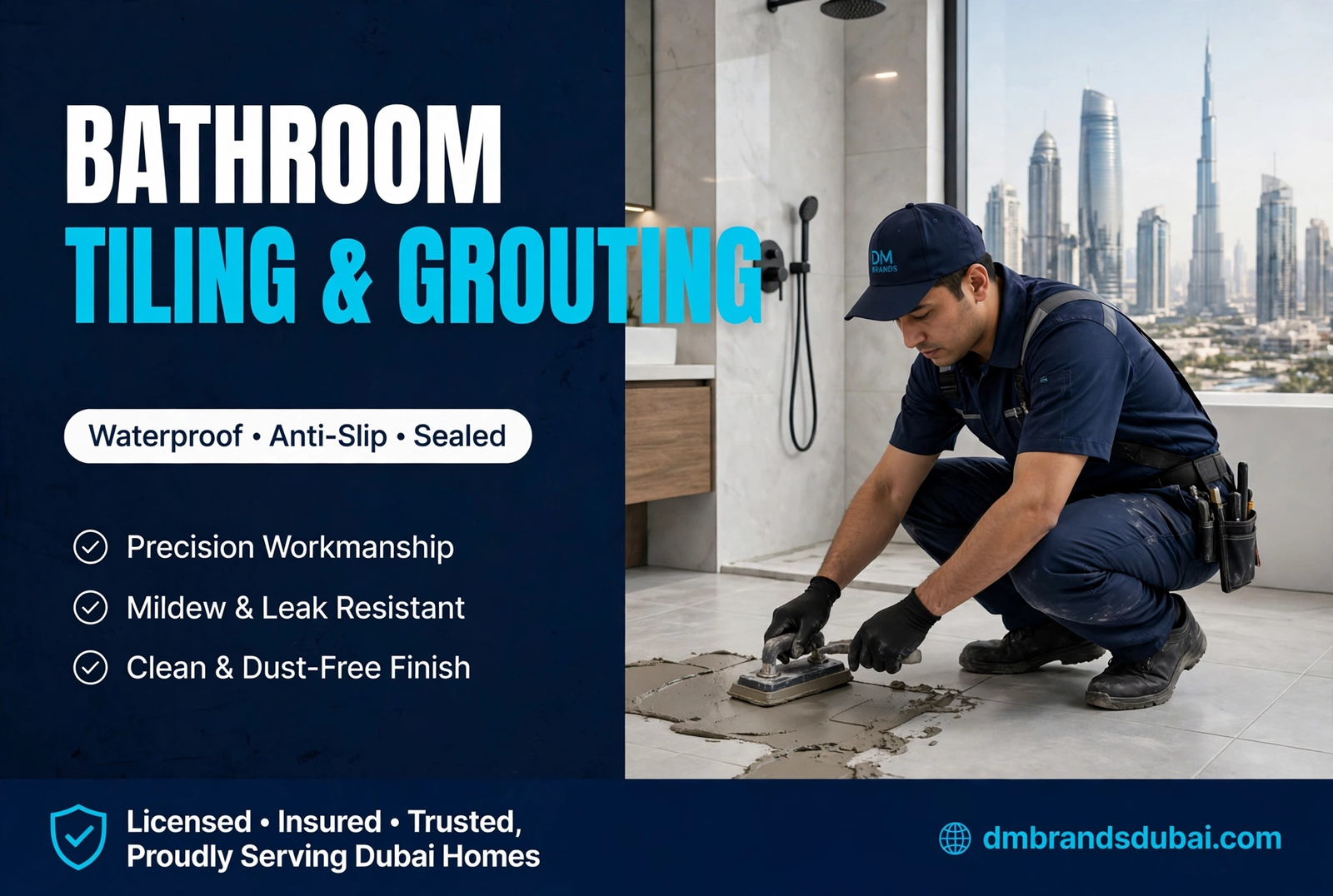
Waterproofing, anti-slip finish and sealed grout make a bathroom floor safe and long-lasting.
Step-by-Step Tile Installation Process
Knowing the process helps you judge quality and plan your time. A professional floor tiling job follows these steps in order.
Step 1: Consultation and Quotation
The tiler visits your home, measures the area, checks the existing floor, and discusses tile type, layout, colours and finish. You receive a written quotation that lists labour, materials, adhesive, grout, waterproofing, tile removal and waste disposal separately where possible. A clear quotation prevents surprises later.
Step 2: Tile Selection and Ordering
Choose your tiles and order them with 10 percent extra for cuts, breakages and future repairs. Keep a few spare tiles after the job. If a tile breaks years later, a spare tile from the same batch will match perfectly. A different batch can vary slightly in colour. Your tiler can advise on how many boxes to order and check the tiles for colour variation before laying.
Step 3: Preparation and Protection
Furniture is moved, floors and doorways are protected, and dust sheets are laid. Old tiles are removed if needed. The surface is cleaned, primed and levelled. Any cracks are repaired. In wet areas, waterproofing is applied and allowed to cure fully. Rushing this stage is the most common cause of failed tiling.
Step 4: Setting Out and Dry Laying
The tiler marks the centre of the room and plans the layout so cut tiles at the edges look balanced, not thin slivers. Tiles are dry-laid first to check the pattern, colour variation and grout spacing. This step is especially important for large-format tiles, patterned tiles and herringbone layouts. It is far easier to adjust a layout before adhesive is applied.
Step 5: Laying the Tiles
Adhesive is mixed and spread evenly with a notched trowel. Each tile is pressed firmly into place, levelled with clips or spacers, and checked with a spirit level. The tiler works in small sections so the adhesive does not dry before tiles are laid. Cuts are made with a wet saw for clean edges. Pipes, drains and door frames are cut around neatly.
Step 6: Curing Time
Adhesive needs time to cure before grouting. Walking on fresh tiles too soon can shift them and create hollow spots. A professional tiler will tell you how long to wait, usually at least 24 hours, and longer in humid conditions. Patience at this stage protects the whole floor.
Step 7: Grouting
Grout is mixed and pressed into the joints with a rubber float. Excess grout is wiped off with a damp sponge before it dries. The tiler checks that every joint is full and even, and that no grout haze remains on the tile surface. In wet areas, epoxy grout may be used for extra water and stain resistance.
Step 8: Sealing, Cleaning and Final Check
Natural stone tiles are sealed after grouting. The floor is cleaned thoroughly, edge trims and skirting are fitted, and every tile is tapped to check for hollow sounds. The tiler walks the floor with you, points out the finish, and explains how to clean and care for the new tiles. Any small touch-ups are done before the team leaves.
Surface Preparation and Waterproofing: The Hidden Work That Matters Most
Most tiling failures start beneath the tile, not on top of it. A beautiful tile on a weak surface will crack, lift or sound hollow. Good preparation prevents that.
The surface must be clean, dry, sound and flat. Dust, grease, old adhesive and loose screed must be removed. Cracks in the screed should be repaired before tiling. A primer helps adhesive bond to the surface. A self-levelling compound fills dips and creates a flat base for large tiles. The tiler should check levels across the whole room, not just in one corner.
Waterproofing deserves special attention. In bathrooms, the membrane should cover the floor and run up the walls at least 150 mm, and higher in the shower. Corners, joints and pipe openings need reinforcing tape or extra coats. The membrane must cure fully before tiling. A flood test, where the floor is filled with a shallow layer of water and left to check for leaks, is the best way to confirm waterproofing works before tiles hide it.
In kitchens, waterproofing is needed around sinks and wet areas. On balconies, waterproofing protects the structure below and prevents damp in the rooms underneath. On ground floors, a damp-proof membrane stops moisture rising from the soil. If you are unsure whether your floor needs waterproofing, ask your tiler to explain what they will apply and where. A professional will be happy to show you the products and the areas covered.
Grouting and Sealing Explained
Grout fills the gaps between tiles, locks them in place, and stops water and dirt getting underneath. The right grout matters as much as the right tile.
Cement grout is the most common type. It is affordable, easy to apply and available in many colours. It needs sealing in wet areas because it is slightly porous. Epoxy grout is stronger, waterproof and stain-resistant. It costs more and takes longer to apply, but it is the best choice for showers, kitchens, pool areas and high-traffic floors. It also resists mould, which is a real benefit in Dubai humidity.
Grout width affects the look. Narrow joints, around 2 to 3 mm, suit modern large-format porcelain. Wider joints, around 5 mm, suit rustic terracotta and natural stone. Your tiler should use spacers to keep joints even across the whole floor. Uneven joints are one of the first signs of poor workmanship.
Sealing protects natural stone and grout. Marble, granite, terracotta and limestone should be sealed after installation and resealed periodically. Sealer does not make stone waterproof, but it slows staining and makes cleaning easier. Porcelain and glazed ceramic do not need sealing because their surface is already non-porous, but their grout may benefit from a grout sealer in wet areas.
Floor Tiling Costs in Dubai: Pricing Guidance in AED
Tile installation costs in Dubai vary with tile type, room size, preparation needed, layout complexity and location. The figures below are typical market guidance for labour and standard materials, not a fixed quotation. Your exact price will depend on your home, your tiles and the condition of your existing floor. Always get a written quotation after a site visit.
Cost Per Square Metre by Tile Type
| Tile type | Typical labour cost per sqm (AED) | Notes |
|---|---|---|
| Ceramic tiles | 45–80 | Easier to cut and lay, good for standard rooms |
| Porcelain tiles | 60–110 | Most common; large formats cost more to lay |
| Marble tiles | 100–180 | Needs careful handling, levelling and sealing |
| Granite tiles | 90–160 | Heavy, hard to cut, needs strong adhesive |
| Mosaic tiles | 120–200 | Many small tiles, slower laying, more grout |
| Terracotta tiles | 70–120 | Needs sealing, careful layout for variation |
| Vinyl tiles | 40–70 | Faster to lay, needs a very flat subfloor |
These labour rates usually cover laying, grouting and basic finishing. They do not always include tile supply, adhesive, grout, waterproofing, tile removal, levelling compound or waste disposal. Ask your tiler to list what is included.
What Else Affects the Total Price?
Several factors can raise or lower the final cost. Tile removal adds labour and disposal costs, especially if old tiles are firmly fixed. Levelling work adds cost if the floor is uneven. Waterproofing adds cost in bathrooms, kitchens and balconies, but it is essential and should never be skipped to save money. Complex layouts, such as herringbone, diagonal or patterned floors, take longer and use more tiles. Large-format tiles need more preparation and levelling clips. Small rooms cost more per square metre because cutting and edging take a larger share of the time.
Example Project Budgets
A small bathroom floor of 5 square metres in porcelain might cost a few hundred dirhams in labour plus tiles and waterproofing. A medium kitchen of 15 square metres in porcelain might cost more, with extra for removal and grout. A large living room of 40 square metres in marble-look porcelain will cost more still, but the per-square-metre rate often falls as the area grows because the tiler can work faster in a large open space. A full villa retiling is a larger project and should be quoted room by room, with preparation, waterproofing and finishing listed separately.
How to Compare Quotations Fairly
Do not choose a tiler on price alone. A very low quotation often means preparation, waterproofing or sealing has been left out. Compare quotations line by line. Check what adhesive, grout and waterproofing products are included. Ask how long the work will take, how many people will be on site, and what happens if a tile is damaged during laying. A professional quotation is clear, written and specific. A vague verbal price is a warning sign.
Saving Money Without Cutting Corners
You can save money by choosing porcelain instead of real marble, by using a standard layout instead of herringbone, and by buying tiles during a sale. You can also save by doing the room in one visit rather than in small stages. Do not save money by skipping waterproofing, using cheap adhesive, or hiring an unskilled worker to lay expensive tiles. The tiles are only as good as the installation beneath them.
Tiling vs Other Flooring: A Clear Comparison
Tiles are not the only flooring option in Dubai. Wood, laminate, vinyl and carpet each have strengths. This comparison helps you decide if tiling is right for your room.
| Flooring type | Best for | Water resistance | Durability in Dubai | Maintenance | Cost level |
|---|---|---|---|---|---|
| Porcelain / ceramic tiles | Most rooms, wet areas | Excellent | Excellent | Low, mop and sweep | Medium |
| Marble / granite | Luxury living areas | Good with sealing | Very good | Medium to high | High |
| Vinyl tiles / LVT | Bedrooms, rentals, offices | Excellent | Good | Low | Low to medium |
| Laminate | Bedrooms, living rooms | Poor if wet | Medium | Low, dry mop only | Low to medium |
| Engineered wood | Bedrooms, living rooms | Poor if wet | Medium, can warp in humidity | Medium | High |
| Carpet | Bedrooms | Poor | Low, traps dust and sand | High, needs vacuuming | Low to medium |
Tiles win for water resistance, durability and easy cleaning, which is why they dominate Dubai homes. They stay cool in summer, resist sand and stains, and suit air-conditioned living. Wood and laminate feel warmer and quieter, but they can warp in humidity and suffer if water spills. Carpet feels soft but traps dust and sand, which is a drawback in Dubai. Vinyl is a strong middle ground for bedrooms and rentals where warmth and speed matter more than a stone finish.
Tile Repair and Replacement in Dubai
Tiles do not last forever without care. Heavy objects can crack them. Water can loosen adhesive. Grout can wear and stain. The good news is that most tile damage can be repaired without replacing the whole floor.
Common Tile Problems
Cracked tiles are the most common repair. They happen when a heavy object drops, when the floor beneath moves, or when a tile was laid over a hollow spot. Loose or hollow tiles sound empty when tapped and may rock underfoot. They often mean the adhesive did not bond fully or water got underneath. Stained grout makes a floor look old even when the tiles are sound. Chipped edges happen near doors and heavy furniture. Lippage, where one tile sits higher than its neighbour, is usually an installation fault and may need re-laying.
How Tile Repair Works
A repair starts with inspection. The tiler taps the damaged tile and its neighbours to check how far the problem spreads. The damaged tile is cut out carefully, often with a grout saw and a drill, so neighbouring tiles are not broken. Old adhesive is removed, the surface is cleaned and primed, and a new tile is laid with fresh adhesive. Once cured, it is grouted to match the surrounding joints. If the grout colour has faded, the tiler may re-grout a larger area so the repair blends in.
When to Repair and When to Replace
Repair is best when only one or a few tiles are damaged and matching tiles are available. Replacement of a whole floor makes sense when many tiles are cracked, hollow or loose, when the floor is uneven, when waterproofing has failed, or when you want a new look. If more than a quarter of a floor is damaged, full replacement is often cheaper and gives a better finish than patching many areas.
Preventing Future Damage
Use felt pads under heavy furniture. Avoid dropping heavy objects on tiles. Clean spills quickly, especially on marble and grout. Re-seal natural stone and grout when water no longer beads on the surface. Fix loose tiles early before they crack or break their neighbours. Keep spare tiles from the original batch for future repairs.
Areas Served Across Dubai
DM Brands Dubai provides floor tiling services across the city, from apartments and villas to townhouses and offices. Our teams work in Dubai Marina, Jumeirah Village Circle (JVC), Arabian Ranches, Downtown Dubai, Palm Jumeirah, Business Bay, Al Barsha, The Springs, Jumeirah Lake Towers (JLT) and Deira, as well as nearby communities including Jumeirah Village Triangle, Dubai Hills Estate, Motor City, Al Furjan, Dubai Sports City, Mirdif, Al Qusais, International City and Dubai Silicon Oasis.
Each area has different home types. Marina and JLT apartments often need bathroom and kitchen retiling within building rules and working hours. Arabian Ranches, The Springs and Palm Jumeirah villas often need larger living-room floors, outdoor tiling and pool decks. Downtown and Business Bay apartments need careful protection of lifts, corridors and neighbours during tile removal. Deira and older areas often need more preparation because floors may be uneven or damp. Wherever you live, a site visit lets us plan access, timing and waste removal around your building rules.
Mistakes to Avoid When Tiling a Floor in Dubai
Avoiding these mistakes saves money, time and stress.
Skipping Surface Preparation
Laying tiles on an uneven, dusty or cracked floor is the fastest way to a failed floor. Always insist on cleaning, priming, crack repair and levelling where needed. Ask the tiler to show you the level before laying starts.
Skipping Waterproofing in Wet Areas
Waterproofing is invisible once tiles are laid, so it is tempting to skip it. Do not. A bathroom without waterproofing can leak for months before damage appears in the ceiling below. The repair then costs far more than the waterproofing would have.
Choosing the Wrong Tile for the Room
Polished tiles in a bathroom, indoor tiles on a balcony, or soft marble in a busy entrance will all cause problems. Match the tile to the room, the traffic and the water exposure. Ask for the slip rating and water absorption rating before you buy.
Using the Wrong Adhesive or Grout
Different tiles need different adhesives. Porcelain needs a flexible, high-bond adhesive. Outdoor tiles need exterior-grade adhesive and grout. Natural stone needs a white adhesive to avoid staining light marble. Cheap adhesive may save a little now and fail within a year.
Buying Too Few Tiles
Always order 10 percent extra. Tiles break during cutting. A batch can vary in colour. Without spares, a future repair may need a mismatched tile or a full floor replacement.
Ignoring Expansion Joints
Large floors need room to move. Without expansion joints at walls and across large areas, tiles can crack or lift as temperatures change. A professional tiler will plan joints before laying.
Rushing the Curing Time
Walking on tiles or grouting too soon can shift tiles and create hollow spots. Allow the adhesive to cure as advised, usually at least 24 hours. Plan your home around this wait rather than rushing it.
Hiring on Price Alone
The cheapest quotation often leaves out preparation, waterproofing or sealing. Compare what is included, not just the total. Check reviews, ask for photos of past work, and get a written quotation.
What to Expect During a Tiling Visit
Knowing what happens on the day helps you prepare your home and your family.
A typical visit starts with protection. Furniture is moved or covered, doorways are protected, and dust sheets are laid. Tile removal, if needed, is noisy and dusty, so plan to be out of the room during this stage. Cutting tiles is also noisy and is usually done on a balcony or outside where possible.
Laying is quieter but slower. The tiler will work section by section, checking levels as they go. You may need to stay off the floor for 24 hours after laying, and longer before heavy furniture returns. Grouting usually happens the next day. The team should clean up at the end of each day and remove debris.
For a bathroom, expect the room to be out of use for several days while waterproofing cures, tiles are laid and grout sets. For a living room, you may need to move furniture to another room. Your tiler should give you a clear schedule before work starts, including when each room will be usable again. If you need other work at the same time, such as a handyman service in Dubai for skirting, doors or small repairs, ask for it to be planned around the tiling schedule.
Expert Tips for a Floor That Lasts
These tips come from years of tiling Dubai homes.
- Choose matt porcelain for family homes. It hides dust, gives grip and cleans easily.
- Use epoxy grout in showers and kitchens. It resists stains and mould far better than standard grout.
- Keep spare tiles. Store them flat, dry and labelled with the room and batch.
- Seal natural stone after installation. Test sealing by dropping water on the surface. If it soaks in quickly, reseal.
- Clean tiles with a pH-neutral cleaner. Avoid harsh acids and bleach on marble and grout.
- Sweep before mopping. Sand and grit scratch tiles if dragged under a mop.
- Fix loose tiles early. A small repair now prevents a cracked tile and damaged neighbours later.
- Plan grout colour with the tile. A mid-tone grout hides stains and suits most Dubai homes.
- Check tile batches. Mix tiles from several boxes during laying so colour variation looks natural.
- After tiling, book a deep cleaning service in Dubai to remove dust and grout haze and leave the new floor looking its best.
For technical guidance on tile installation, adhesive choice and grout standards, see the Tile Council of North America handbook guidance at tile Council resources and manufacturer guidance from Mapei tile installation guides. For natural stone care, the Natural Stone Institute provides practical advice at naturalstoneinstitute.org. These sources explain why preparation, movement joints and correct adhesive matter for a lasting floor.
How to Care for Your New Tiled Floor
A tiled floor is easy to care for if you follow a simple routine. Sweep or vacuum regularly to remove sand and dust. Mop with clean water and a small amount of pH-neutral floor cleaner. Avoid flooding the floor with water. Dry mop after mopping in humid weather to prevent water marks.
Clean spills quickly, especially coffee, wine, oil and citrus juice on marble and grout. Use a soft brush on grout lines, not a wire brush. Re-seal grout and natural stone when water stops beading. Place mats at entrances and felt pads under furniture legs. Avoid dragging heavy furniture across tiles. With this routine, a well-laid porcelain floor will look new for many years.
Key Takeaways
- Professional floor tiling services in Dubai include inspection, preparation, waterproofing, laying, grouting, sealing and repair.
- Porcelain is the most versatile choice for Dubai homes. Marble adds luxury but needs sealing and care.
- Waterproofing and surface preparation decide how long a floor lasts, more than the tile itself.
- Match the tile to the room. Use slip-resistant, water-resistant tiles in bathrooms, kitchens and outdoor areas.
- Always order 10 percent extra tiles, allow adhesive to cure, and choose a written quotation that lists preparation and waterproofing.
- Repair single damaged tiles early. Replace a full floor when damage is widespread or waterproofing has failed.
Frequently Asked Questions
How much do floor tiling services cost in Dubai?
Costs vary by tile type, area size and preparation needed. Typical labour rates range from about AED 45 to AED 80 per square metre for ceramic, AED 60 to AED 110 for porcelain, AED 100 to AED 180 for marble, and AED 120 to AED 200 for mosaic. Tile supply, removal, levelling, waterproofing and waste disposal are often charged separately. Always get a written quotation after a site visit.
How long does floor tiling take?
A small bathroom floor may take two to four days including waterproofing and curing time. A kitchen may take three to five days. A large living room may take four to seven days. Full villa retiling can take one to three weeks depending on area and preparation. Curing time between laying and grouting adds at least a day.
Can new tiles be laid over old tiles?
Sometimes, yes, if the old tiles are sound, flat and firmly fixed, and if floor height, door clearance and drainage allow it. Your tiler must check for hollow tiles, level and adhesion first. In many cases, removal gives a better, longer-lasting finish, especially in bathrooms where waterproofing needs to be renewed.
What is the best tile for a Dubai living room?
Large-format porcelain is the most popular choice because it is hard-wearing, easy to clean and available in marble, stone and wood looks. Marble-look porcelain gives luxury without the sealing and staining worries of real marble. Real marble suits a luxury look if you accept higher maintenance.
What is the best tile for a bathroom floor in Dubai?
Matt porcelain or ceramic with a textured or anti-slip finish is best. Mosaic works well in shower areas for grip. Avoid polished tiles in wet areas because they become slippery. Waterproofing beneath the tiles is essential in every bathroom.
Are porcelain tiles good for outdoor use in Dubai?
Yes, if they are rated for outdoor use. Outdoor porcelain must be frost-proof, slip-resistant and fixed with exterior-grade adhesive and grout. Light colours stay cooler in the sun. Indoor porcelain should not be used outdoors.
How do I choose between porcelain and ceramic tiles?
Choose porcelain for high-traffic areas, kitchens, living rooms and outdoor areas because it is denser, harder and more water-resistant. Choose ceramic for bathrooms, kitchens and budget projects where a wide range of colours matters and traffic is lighter. Porcelain usually costs more to buy and lay, but it lasts longer in busy homes.
Do marble floors need sealing?
Yes. Marble is porous and should be sealed after installation and resealed periodically. Sealing slows staining from coffee, oil and citrus, and makes cleaning easier. Use a pH-neutral cleaner on marble and avoid acidic cleaners.
What is the difference between cement grout and epoxy grout?
Cement grout is affordable and common, but it is slightly porous and can stain and grow mould in wet areas. Epoxy grout is waterproof, stain-resistant and stronger, but it costs more and takes longer to apply. Epoxy grout is best for showers, kitchens, pool areas and high-traffic floors.
How do I fix a cracked floor tile?
A single cracked tile can be cut out carefully without breaking its neighbours, then replaced with a matching tile, fresh adhesive and grout. Keep spare tiles from the original batch for this reason. If many tiles are cracked, the cause may be a poor subfloor or failed adhesive, and a larger repair may be needed.
Why do some tiles sound hollow when walked on?
Hollow sounds usually mean the adhesive did not bond fully beneath the tile, often because the surface was dusty, the adhesive was spread unevenly, or the tile was not pressed firmly into place. Hollow tiles can crack under load and should be checked early. A tiler can inject adhesive or replace the tile depending on the cause.
How do I prevent tiles from cracking?
Use the right adhesive, prepare the surface properly, leave expansion joints, and allow curing time. Avoid dropping heavy objects on tiles. Fix loose tiles early. In large areas, movement joints allow tiles to expand and contract with temperature changes without cracking.
What size tiles should I choose for a small bathroom?
Medium tiles, around 30×30 cm or 30×60 cm, often work best in a small bathroom because they need fewer cuts and look balanced. Mosaic suits shower floors. Very large tiles can look good in a small bathroom if the floor is flat, but they need more cutting around drains and corners.
Can I tile a balcony in Dubai?
Yes, with outdoor-rated, slip-resistant tiles, exterior adhesive and grout, proper waterproofing and drainage that falls towards a drain. Light colours stay cooler. Never use polished indoor tiles on a balcony because they become slippery when wet.
How do I clean tiled floors in Dubai?
Sweep or vacuum first to remove sand, then mop with clean water and a pH-neutral cleaner. Avoid harsh bleach and acidic cleaners on marble and grout. Dry the floor after mopping in humid weather. Re-seal natural stone and grout when water no longer beads on the surface.
How long will a tiled floor last?
A well-installed porcelain or granite floor can last for decades with simple cleaning. Marble lasts for decades with sealing and gentle care. Ceramic lasts for many years in low-traffic areas. The lifespan depends far more on preparation, adhesive and waterproofing than on the tile alone.
Do I need waterproofing under kitchen floor tiles?
Waterproofing is essential in bathrooms and recommended around sinks, dishwashers and wet areas in kitchens. It protects the floor beneath and prevents damp. Your tiler should explain where waterproofing will be applied in your kitchen.
What is lippage in tiling?
Lippage is when one tile edge sits higher than the tile next to it. It happens when the floor is uneven or large tiles are laid without levelling clips. It feels rough underfoot and catches dirt. Professional tilers use levelling systems and check with a straight edge to prevent it.
Can you repair tiles without replacing the whole floor?
Yes, in most cases. Single cracked or loose tiles can be replaced, grout can be renewed, and hollow tiles can be fixed. Full replacement is only needed when damage is widespread, waterproofing has failed, or the floor is uneven.
How do I get a quote for floor tiling services in Dubai?
Book a site visit. The tiler will measure the area, check the existing floor, discuss tile choices and layout, and give a written quotation that lists labour, materials, waterproofing, removal and finishing separately. DM Brands Dubai offers a free site visit and quotation for floor tiling across Dubai.
Conclusion: A Beautiful Floor Starts Beneath the Surface
A great tiled floor is not an accident. It is the result of careful choices, honest preparation and skilled laying. The tile you see is only the top layer. Beneath it are levelling, waterproofing, adhesive, grout and sealing, all working together to keep your floor level, dry and beautiful for years.
If you choose the right tile for each room, prepare the surface properly, waterproof wet areas, and hire a professional team that checks every tile before they leave, your floor will reward you every day. It will stay cool in summer, resist sand and stains, clean easily, and make your whole home feel brighter and more valuable.
DM Brands Dubai is ready to help. From a single bathroom floor to a full villa retiling, our team provides expert floor tiling services in Dubai with careful preparation, clean finishing and honest pricing. We serve Dubai Marina, JVC, Arabian Ranches, Downtown Dubai, Palm Jumeirah, Business Bay, Al Barsha, The Springs, JLT, Deira and communities across the city.
Contact DM Brands Dubai today for a free site visit and written quotation. Tell us about your room, your tile ideas and your budget, and we will show you the best options for your home. Your new floor starts with one call. Book your free tiling consultation now and enjoy a home that looks and feels brand new.