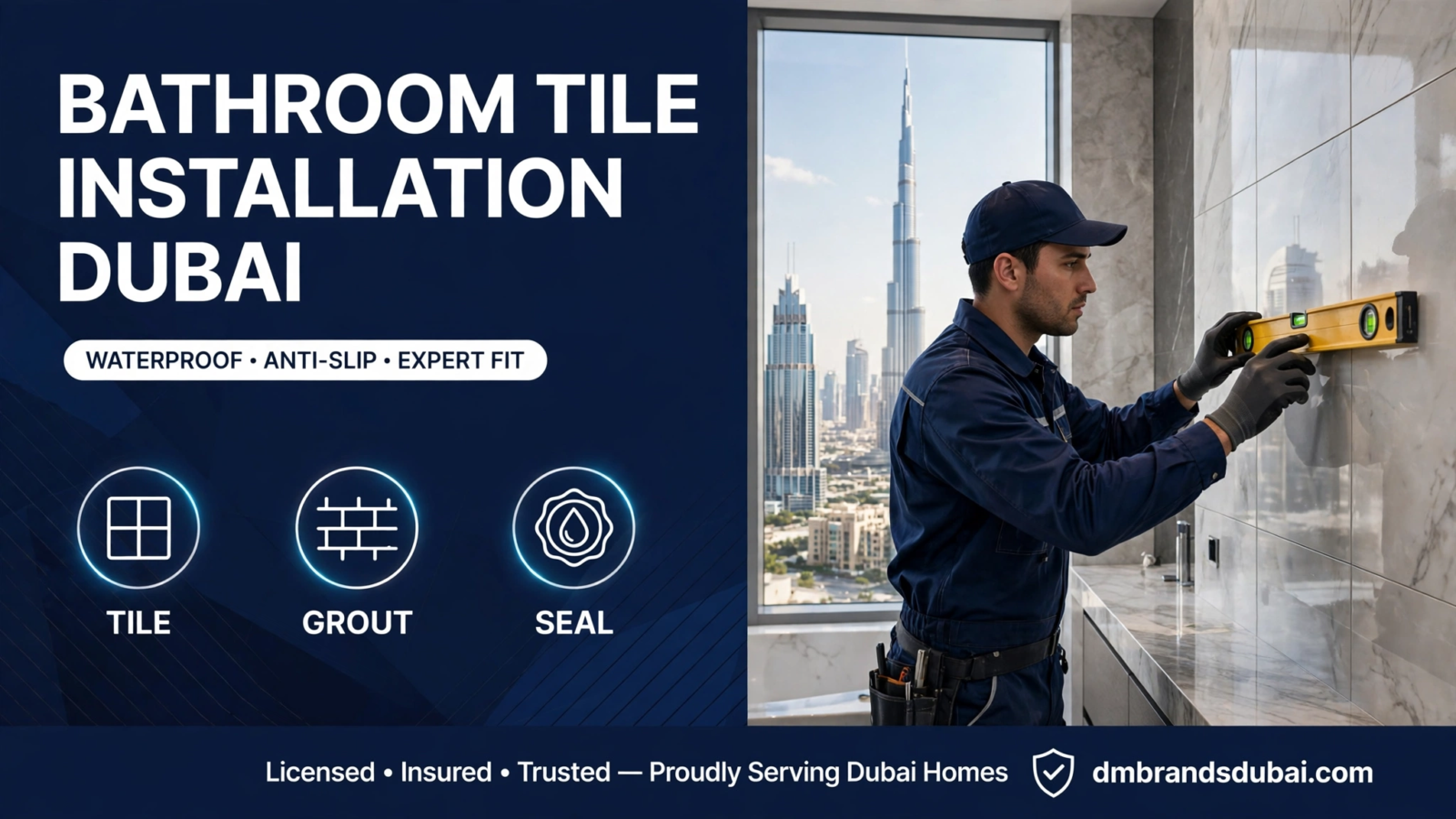
Bathroom Tile Installation Dubai: Costs, Tile Types, Waterproofing and Expert Guide
A bathroom fails or succeeds at the tile layer. You notice beautiful tiles every morning, and you notice bad tiling even faster — through loose grout, stained corners, hollow sounds underfoot, and damp patches that spread behind the wall. That is why bathroom tile installation in Dubai deserves more care than a quick price comparison. Dubai bathrooms face constant humidity, hard water, heavy daily use, and temperature swings between air-conditioned interiors and warm, humid air. A tile job that looks perfect on day one can fail within a year if the substrate, waterproofing, adhesive, slope, and grout were rushed.
This guide explains the full process in plain language. You will learn which tile types suit Dubai bathrooms, what installation should cost in AED, how professional tilers prepare and waterproof a bathroom, where wet areas differ from dry areas, and which mistakes cause most failures. You will also find practical advice on choosing a tiler, maintaining tiles in hard-water conditions, and handling approvals in villas and apartments across Dubai Marina, Jumeirah Village Circle (JVC), Palm Jumeirah, Downtown Dubai, Arabian Ranches, Business Bay, Dubai Hills Estate, Al Barsha, Mirdif, and International City.
DM Brands Dubai installs bathroom tiles across all of these communities every week. Our tilers work alongside licensed plumbers and waterproofing specialists, so the visible finish and the hidden layers both meet the same standard. If you want a free site visit and a written quote, the conclusion explains how to book one.
What Bathroom Tile Installation Involves
Bathroom tile installation is the complete process of preparing bathroom walls and floors, waterproofing wet areas, fixing tiles with the correct adhesive, grouting joints, sealing edges, and finishing around fixtures. It is not simply sticking tiles to a wall. A durable installation depends on what happens before the first tile goes on, and on the details that remain invisible after the job is finished.
A professional job starts with an inspection. The tiler checks the condition of the existing walls and floor, looks for damp, hollow plaster, cracks, and uneven surfaces, and measures the room accurately. In older apartments in Al Barsha, Mirdif, and International City, this inspection often reveals loose old tiles, salt damage, or a screed that has lost its bond. In newer villas in Arabian Ranches and Dubai Hills Estate, the issue is more often an uneven wall or a floor that does not fall correctly toward the drain.
After inspection comes removal, if needed. Old tiles, failed grout, damaged plaster, and loose screed come off. The team protects the door, sanitary ware, and any fixtures that stay in place. Dust control matters in an occupied home, so a careful crew seals the doorway and cleans as it works. Removal also exposes the real condition of the substrate, which determines how much preparation the job needs.
Substrate preparation follows. Walls are levelled, holes are filled, and floors are screeded to the correct falls. Waterproofing is applied to showers, wet walls, and floors before tiling begins. Only then does tile fixing start, with layout planning, cutting, adhesive application, levelling, grouting, and sealing. Each stage has its own drying and curing time, and skipping those waits is one of the most common causes of failure.
Quick Answer: How Long Does Bathroom Tile Installation Take in Dubai?
A standard Dubai bathroom of 4 to 6 square metres of floor area typically takes 4 to 7 working days for full wall and floor tiling, including preparation, waterproofing, curing, and grouting. A small guest toilet may take 3 to 4 days. A large master bathroom or a villa bathroom with floor-to-ceiling marble can take 8 to 12 days. Drying times for screed and waterproofing membranes set the real pace, not the speed of tile fixing alone.
Key Takeaway
Good tiling is a system. Tiles, adhesive, grout, waterproofing, substrate, slope, and sealing must work together. A premium tile on a weak substrate will still fail, while a mid-range porcelain tile on a properly prepared and waterproofed surface can last for decades.
Why Dubai Bathrooms Need a Different Approach
Dubai conditions shape every tiling decision. Humidity stays high for much of the year, bathrooms are used heavily, and many homes run air conditioning almost constantly. Warm, moist air meets cool tile surfaces, which encourages condensation and mould in poorly ventilated bathrooms. Tiles and grout must resist moisture, not just look good in a showroom.
Hard water is another local factor. Dubai tap water carries a high mineral content, which leaves limescale on tiles, taps, shower glass, and grout lines. Light-coloured grout shows these deposits quickly. Dark grout hides them better but can fade unevenly if cleaned with harsh chemicals. The right grout choice and a simple cleaning routine matter more here than in softer-water cities.
Building type also matters. Apartments in Downtown Dubai, Business Bay, Dubai Marina, and Palm Jumeirah sit inside managed towers with strict renovation rules, working hours, and noise limits. Villas in Arabian Ranches, Dubai Hills Estate, and Jumeirah Village Circle (JVC) usually allow more flexibility, but community management may still require a permit, a refundable deposit, and approval for plumbing changes. A tiler who works in Dubai regularly understands these rules and plans around them.
Temperature movement is easy to overlook. Tiles expand and contract slightly as temperatures change. Large-format tiles need the correct adhesive coverage and movement joints, especially on floors exposed to sunlight near a window or on a balcony-adjacent bathroom wall. Without those joints, pressure builds and tiles can crack, lift, or tent.
Bathroom Tile Types Compared
Choosing a tile is a balance of appearance, slip resistance, water absorption, durability, and maintenance. The best tile for a shower floor is rarely the best tile for a feature wall. The table below compares the main options used in Dubai bathrooms, followed by a detailed look at each type.
Tile Comparison Table
| Tile Type | Best Use | Water Absorption | Slip Resistance | Durability | Maintenance | Typical Look |
|---|---|---|---|---|---|---|
| Ceramic | Walls, low-traffic floors | Moderate | Medium | Good | Easy | Wide colours and patterns |
| Porcelain | Floors, shower walls, all areas | Very low | Good to excellent | Excellent | Easy | Stone, wood, marble effects |
| Marble | Feature walls, floors, vanity areas | Higher, needs sealing | Low when polished | Good if sealed | Higher | Natural veining, luxury finish |
| Mosaic | Shower floors, niches, feature strips | Low to moderate | Excellent | Good | More grout to clean | Small tiles, rich texture |
| Large-format porcelain | Floors, full-height walls | Very low | Good with matte finish | Excellent | Easy, fewer grout lines | Seamless, modern, spacious |
| Anti-slip porcelain | Shower floors, wet floors | Very low | Excellent | Excellent | Easy | Matte, textured, safe underfoot |
| Glass mosaic | Feature walls, niches | Very low | Good on walls | Good | Easy on walls | Glossy, reflective, decorative |
| Terrazzo-look porcelain | Floors, feature walls | Very low | Good | Excellent | Easy | Speckled, contemporary |
Ceramic Tiles
Ceramic tiles are the most affordable and versatile option for bathroom walls in Dubai. They come in a huge range of colours, sizes, and finishes, and they cut cleanly around sockets, pipes, and niches. Glazed ceramic resists stains well and cleans easily with a mild detergent. It suits dry walls, splash areas, and feature walls where foot traffic is not a concern.
Ceramic has limits on floors. Standard wall ceramic is softer than porcelain and absorbs more water, so it can chip under heavy use and may stain if the glaze is damaged. For bathroom floors, choose a floor-rated ceramic with a suitable PEI rating, or step up to porcelain. In rental apartments in International City and Al Barsha, ceramic wall tiles offer a smart balance of cost and appearance when the budget is tight.
Porcelain Tiles
Porcelain is the workhorse of modern bathroom tile installation in Dubai, and for good reason. It is fired at higher temperatures than ceramic, which makes it denser, harder, and far less absorbent. Good porcelain absorbs less than 0.5 percent water, which is ideal for showers, wet floors, and humid bathrooms. It resists stains, scratches, and limescale better than ceramic, and it holds up well under daily family use.
Porcelain now mimics marble, stone, concrete, and timber convincingly. A marble-look porcelain gives you the veining of Carrara or Calacatta without the sealing and staining worries of real marble. Wood-look porcelain brings warmth to a bathroom floor without the moisture risk of real timber. Matte porcelain works well on floors, while polished porcelain suits walls and dry areas. For most Dubai homeowners, porcelain is the safest all-round choice.
Marble Tiles
Real marble brings a depth and natural variation that no printed tile fully reproduces. Each slab has unique veining, and a book-matched marble wall becomes the centrepiece of a luxury bathroom in Palm Jumeirah, Downtown Dubai, or Arabian Ranches. Marble suits feature walls, vanity splashbacks, and floors in low-traffic master bathrooms when it is sealed correctly.
Marble needs more care than porcelain. It is porous, so it must be sealed before grouting and resealed regularly. Acidic cleaners, hair dye, and harsh descalers can etch or stain it. Polished marble is slippery when wet, so it is a poor choice for a shower floor unless it is honed or used in small mosaic pieces with plenty of grout for grip. If you love marble, use it where it shines and pair it with porcelain or mosaic where safety and water resistance matter most. Our team also handles marble polishing in Dubai for existing marble floors that have lost their shine.
Mosaic Tiles
Mosaic tiles are small tiles mounted on mesh sheets, usually 25 mm to 50 mm per piece. They excel in curved areas, shower floors, niches, and feature strips because they follow slopes and shapes that large tiles cannot. The many grout lines create natural grip under wet feet, which makes mosaic one of the safest choices for a shower floor.
The trade-off is maintenance. More grout lines mean more places for soap scum and limescale to settle. Epoxy grout solves much of this problem, and it is worth the extra cost in a shower. Mosaic also takes longer to install because each sheet must be aligned carefully. Used as an accent — a shower niche, a feature strip, or a floor inset — mosaic adds craft and texture without overwhelming the cleaning routine.
Large-Format Tiles
Large-format tiles, typically 600 x 1200 mm or larger, create a calm, seamless look with very few grout lines. They make small bathrooms in JVC, Business Bay, and Dubai Marina feel larger because the eye reads fewer breaks across the wall and floor. Fewer joints also mean fewer places for mould and dirt to collect, which simplifies cleaning.
Large tiles demand a flat substrate and skilled fixing. A wall that is even slightly uneven will show lippage, where one tile edge sits higher than its neighbour. The tiler must use a high-quality flexible adhesive, full coverage with a notched trowel, and a levelling system. Large-format installation costs more in labour, but the result justifies it in a modern master bathroom. Rectified edges and a 2 mm joint give the cleanest finish.
Anti-Slip Tiles
Anti-slip tiles are rated by their slip resistance, often shown as R9 to R13 or by a pendulum test value. For a bathroom floor, look for R10 or higher, and for a wet shower floor, R11 or higher with a textured or matte surface. These tiles protect children, older family members, and anyone stepping out of a shower with wet feet.
Anti-slip does not have to mean rough or unattractive. Modern textured porcelain looks like natural stone and feels secure without scraping bare feet. Avoid polished tiles on any floor that gets wet. A polished floor may look elegant in a showroom, but it becomes a hazard in a real Dubai family bathroom. Ask your tiler for the slip rating in writing before you buy floor tiles.
How to Choose Tiles for Each Bathroom Zone
A bathroom has distinct zones, and each zone needs different tile properties. Treating the whole room as one surface leads to slippery floors, stained shower walls, and grout that fails early. Plan by zone instead.
Shower Walls
Shower walls face constant water, soap, and shampoo. Porcelain is the default choice because it absorbs almost no water and cleans easily. Large-format porcelain with minimal grout lines reduces maintenance. Marble-look porcelain gives a luxury finish without sealing worries. If you choose real marble here, seal it properly and accept the extra maintenance.
Shower Floors
Shower floors need grip, slope, and drainage. Small mosaic tiles or textured anti-slip porcelain work best because they follow the fall to the drain and provide traction. The floor must slope gently toward the drain, usually around 1 to 2 percent, so water never pools. A flat shower floor is a defect, not a design choice. Epoxy grout is strongly recommended here because it resists water, stains, and mould far better than cement grout.
Main Bathroom Floor
The main floor needs durability, slip resistance, and easy cleaning. Porcelain in a matte or lightly textured finish is the standard recommendation. Choose a tile size that suits the room: 600 x 600 mm works well in most Dubai bathrooms, while 600 x 1200 mm suits larger master bathrooms. Avoid polished tiles and very dark grout that shows every water mark. A mid-tone tile with a matching grout hides daily wear best.
Dry Walls and Feature Walls
Dry walls give you design freedom. Ceramic, glass mosaic, porcelain, and marble all work here because they face only occasional splashes. This is the place for a bold pattern, a textured tile, or a marble feature wall behind the vanity. Keep the feature to one wall so the room feels balanced rather than busy. A full-height feature wall behind a freestanding bath or vanity creates a focal point without adding maintenance.
Vanity Splashbacks and Niches
Splashbacks and niches face toothpaste, cosmetics, and water splashes. Glossy porcelain, glass mosaic, and ceramic clean easily in these spots. A niche lined in mosaic looks crafted and hides the joints well. Seal the niche edges carefully, because water collects in corners. A tiler should waterproof the niche before tiling it, not just tile over raw board.
Bathroom Tile Installation Cost in Dubai
Costs vary with tile choice, bathroom size, substrate condition, and access. The figures below are typical Dubai market ranges, not fixed quotes. A site visit gives you an exact price because the tiler can see the substrate, measure the room, and confirm the tile size and pattern. Use these ranges to budget and to judge whether a quote is realistic.
Cost Per Square Metre: Supply and Installation
| Tile Type | Supply Only (AED per sqm) | Installation Labour (AED per sqm) | Supply + Installation (AED per sqm) |
|---|---|---|---|
| Ceramic wall tiles | 60 – 150 | 80 – 140 | 140 – 290 |
| Porcelain floor and wall | 90 – 250 | 100 – 180 | 190 – 430 |
| Marble-look porcelain | 140 – 350 | 120 – 200 | 260 – 550 |
| Real marble | 300 – 900 | 180 – 350 | 480 – 1,250 |
| Mosaic (porcelain or ceramic) | 120 – 350 | 150 – 280 | 270 – 630 |
| Large-format porcelain (600 x 1200 mm+) | 150 – 400 | 150 – 280 | 300 – 680 |
| Anti-slip porcelain | 100 – 280 | 110 – 190 | 210 – 470 |
| Glass mosaic (feature areas) | 200 – 500 | 180 – 320 | 380 – 820 |
Supply prices depend on brand, origin, size, and finish. Italian and Spanish porcelain costs more than standard ranges, while good-quality UAE and Asian porcelain offers strong value. Labour rises with tile size, pattern complexity, and the number of cuts around pipes, niches, and fixtures.
Total Project Cost by Bathroom Size
| Bathroom Type | Approximate Area | Typical Total Range (AED) | What It Usually Includes |
|---|---|---|---|
| Guest toilet / powder room | 2 – 3 sqm floor, 8 – 12 sqm walls | 3,500 – 8,000 | Floor and wall tiles, labour, grout, adhesive |
| Small apartment bathroom | 4 – 5 sqm floor, 15 – 20 sqm walls | 6,000 – 14,000 | Full tiling, waterproofing, grout, trims |
| Standard family bathroom | 5 – 7 sqm floor, 20 – 28 sqm walls | 9,000 – 20,000 | Full tiling, waterproofing, screed, grout |
| Large master bathroom | 8 – 12 sqm floor, 30 – 45 sqm walls | 15,000 – 35,000 | Full tiling, waterproofing, large-format or marble |
| Luxury villa bathroom | 12 sqm+ floor, 45 sqm+ walls | 30,000 – 70,000+ | Marble or large-format, niches, feature walls |
These totals assume a straightforward re-tile with sound substrate. They exclude sanitary ware, shower screens, vanities, and major plumbing changes. If the substrate needs rebuilding, the screed is damaged, or the layout changes, add preparation and plumbing costs.
Labour, Materials and Extra Costs
| Item | Typical Dubai Market Range (AED) |
|---|---|
| Tile removal and disposal | 800 – 2,500 per bathroom |
| Screed and levelling | 60 – 120 per sqm |
| Waterproofing membrane (walls and floor) | 80 – 160 per sqm |
| Tile adhesive (flexible, waterproof) | 40 – 90 per sqm |
| Cement grout | 15 – 30 per sqm |
| Epoxy grout (showers and wet areas) | 60 – 120 per sqm |
| Edge trims and profiles | 25 – 60 per linear metre |
| Silicone sealing | 200 – 500 per bathroom |
| Tile levelling system | 20 – 40 per sqm |
| Waste and tile allowance (10 percent extra) | Add 10 percent to tile quantity |
Always budget for 10 percent extra tiles. Cuts, breakage, and future repairs need matching spares. A tile batch can vary slightly in shade, so buying spares from the same batch protects you if a tile cracks years later. Keep two or three spare tiles and the grout colour code after the job.
What Affects the Price Most?
Tile size is the biggest labour factor. Small mosaics and large-format tiles both take longer than standard 600 x 600 mm tiles. Pattern work adds time too: herringbone, brick bond, and diagonal layouts need more cuts and more planning than a straight stack. Substrate condition is the second factor. A bathroom that needs full screed replacement and waterproofing costs more than one with a sound base.
Access and building rules also affect price. High-rise apartments in Dubai Marina and Downtown Dubai may restrict working hours and require material delivery through a service lift at set times. Villas in Arabian Ranches and Dubai Hills Estate usually allow longer days but may need community approval first. A detailed written quote should list tiles, adhesive, grout, waterproofing, labour, removal, and disposal separately so you can compare quotes fairly.
For a full renovation budget, see our guide to bathroom renovation costs in Dubai. Tiling is often the largest single trade in a bathroom renovation, so getting this quote right sets the budget for the whole project.
Step-by-Step Bathroom Tile Installation Process
A professional installation follows a clear sequence. Each step protects the next one. Rushing the sequence saves a day and costs years of durability. Here is how DM Brands Dubai approaches a standard bathroom re-tile.
Step 1: Site Survey and Measurement
The tiler visits the bathroom, measures walls and floors, checks levels with a spirit level and laser, and tests the existing surface for hollow spots. The survey notes the drain position, pipe locations, door swing, vanity and WC positions, and any niche or shelf. The team confirms the tile choice, size, layout, grout colour, and trim finish with you before ordering.
Step 2: Protection and Removal
Floors outside the bathroom are protected, the doorway is sealed against dust, and any fixtures that stay are covered. Old tiles are removed carefully to limit damage to the substrate. Adhesive residue is scraped back, and loose plaster or screed is taken out. Waste is bagged and removed the same day where building rules allow.
Step 3: Substrate Repair and Levelling
Holes and cracks are filled, walls are rendered or levelled, and the floor is screeded to the correct falls toward the drain. The substrate must be clean, dry, sound, and flat within the tolerance the tile size requires. Large-format tiles need a flatter surface than small mosaics. This step is not cosmetic. It decides whether tiles sit flat and stay bonded.
Step 4: Waterproofing
Waterproofing is applied to the shower area, wet walls, and bathroom floor before any tile goes on. The membrane is applied in two coats, with reinforcing tape at corners, joints, and around pipes and drains. It must cure fully before tiling. A flood test may be carried out on the floor to confirm there are no leaks. Skipping or rushing this step is the most expensive mistake in bathroom tiling. Read our detailed guide to bathroom waterproofing in Dubai for the full method and the areas that must be covered.
Step 5: Layout Planning and Dry Lay
The tiler plans the layout on paper and then dry-lays tiles on the floor or wall to check the pattern, cut sizes, and symmetry. The goal is to avoid tiny sliver cuts at visible edges and to centre the pattern on the main focal wall. Doorways, niches, and the shower wall get special attention. A good layout looks intentional from the doorway, not improvised at the last tile.

Step 6: Tile Fixing
Tiles are fixed with the correct flexible adhesive, applied with a notched trowel to the substrate and back-buttered on larger tiles. The tiler works in small sections so the adhesive stays workable. Levelling clips keep large tiles flat, and spacers keep joints even. Cuts around pipes, sockets, and drains are made with a wet saw or diamond cutter for clean edges. The shower floor is fixed last in its section so the slope is checked as work progresses.
Step 7: Curing
Adhesive needs time to cure before grouting. Walking on a freshly tiled floor or grouting too early can shift tiles and weaken the bond. Curing usually takes 24 hours, longer in humid conditions or with large-format tiles. A professional crew plans the schedule around this wait rather than hiding it.
Step 8: Grouting
Grout fills the joints, locks the tiles together, and seals the surface. Cement grout suits dry walls and low-moisture areas. Epoxy grout suits showers, wet floors, and niches because it resists water and stains. The grout is pressed firmly into the joints, excess is cleaned off promptly, and the surface is washed carefully so grout haze does not set on the tile face.
Step 9: Sealing, Trims and Silicone
External corners receive metal or PVC trims for a clean, durable edge. Movement joints are left where the floor meets the wall and around the bath or shower tray. These joints are filled with flexible silicone, not rigid grout, so the tiles can move slightly without cracking. Natural stone is sealed after grouting. All silicone lines are tooled smooth and checked for gaps.
Step 10: Fixture Refit and Final Check
Sanitary ware, taps, shower fittings, and accessories are refitted. The team checks every tile for hollow sounds, lippage, grout coverage, and clean edges. The shower is run to confirm drainage and that water flows to the drain without pooling. The bathroom is cleaned, waste is removed, and spare tiles and grout details are handed over. If plumbing was moved during the work, our plumbing services in Dubai team tests every connection before handover.
Waterproofing and Substrate Preparation
Waterproofing is the hidden layer that decides whether a bathroom lasts five years or twenty. Tiles and grout are water-resistant, not waterproof. Water passes through grout joints, hairline cracks, and around fixtures. Without a continuous membrane beneath the tiles, that water reaches the substrate, the structure, and the room below. In apartments, a failed membrane can damage the neighbour below and create a costly liability.
Where Waterproofing Must Go
The shower floor and shower walls up to at least 1.8 metres high need full waterproofing. The bathroom floor needs full coverage, with the membrane turned up the walls by at least 150 mm. Walls around the bath, basin splash areas, and any wet wall need coverage too. Pipe penetrations, floor drains, corners, and the junction between wall and floor are the weak points. They need reinforcing tape and careful detailing, not just an extra coat of membrane.
Substrate Types in Dubai Bathrooms
Most Dubai bathrooms have a concrete or blockwork base with a cement screed on the floor and plaster or cement render on the walls. Some newer builds use cement board in shower areas. Each substrate needs a different primer and preparation. Gypsum plaster must not be tiled directly in a wet area without a suitable tanking system. Timber-based boards need a flexible adhesive and a decoupling membrane on floors that may move. A tiler who skips the primer or uses the wrong adhesive for the substrate invites debonding.
Screed Falls and Drainage
A bathroom floor must fall toward the drain. The fall is gentle, usually 1 to 2 percent, but it must be consistent. A floor that is flat in the middle and steep near the drain will pool water in the flat area. A floor that falls the wrong way will send water toward the door or under the vanity. The tiler checks falls with a level and a straight edge before tiling, not after. In a walk-in shower, the fall is created in the screed, and mosaic tiles follow that fall naturally.
Common Waterproofing Mistakes
The most common mistake is applying a single thin coat instead of two full coats at the specified coverage. Another is tiling before the membrane has cured, which traps moisture and weakens the bond. Missing the corners and pipe details is equally damaging, because water finds the smallest gap. Using a standard adhesive over a waterproof membrane without checking compatibility can also cause failure. A professional job records the membrane brand, the number of coats, and the curing time, and it allows a flood test where the floor design permits it.
Wet Areas Versus Dry Areas
Wet areas are zones that face direct water: the shower enclosure, the floor around the shower, the bath surround, and the floor itself. Dry areas are walls and ceilings that face only humidity and occasional splashes. The materials and methods differ between them, and the difference is not optional.
In wet areas, use porcelain or mosaic with very low water absorption, flexible waterproof adhesive, epoxy grout, and full waterproofing beneath. Joints should be narrow and fully filled. Silicone, not grout, seals the junction between the floor and wall and around the shower tray or bath. In dry areas, ceramic and decorative tiles are fine, cement grout is acceptable, and the focus shifts to appearance and easy cleaning.
The transition between wet and dry areas needs care. A shower screen, a raised threshold, or a clear change in tile can mark the boundary. Water should never be able to run from the shower across the main floor to the door. If your bathroom has no screen and water spreads freely, discuss a better layout or a low-profile threshold with your tiler before work starts.
Grout, Adhesive and Sealants Explained
Grout and adhesive are not interchangeable, and choosing the wrong product for the zone is a common cause of failure. A good tiler explains the choice rather than using whatever is cheapest on the shelf.
Tile Adhesive
Flexible cement-based adhesive, often called C2S1 or C2TE in technical terms, is the standard for Dubai bathrooms. It bonds well to porcelain and large-format tiles, tolerates slight movement, and works over waterproof membranes when the correct primer is used. Standard non-flexible adhesive suits small ceramic wall tiles on a stable wall, but it is not the right choice for porcelain floors or large tiles. Ready-mixed paste adhesive is convenient for small wall areas but should not be used on floors or in showers. Always check the adhesive coverage: large tiles need at least 95 percent coverage on the back, with no voids that can collect water or cause hollow sounds.
Cement Grout Versus Epoxy Grout
Cement grout is affordable, easy to apply, and available in many colours. It suits dry walls and low-moisture floors. It is porous, so it can stain and absorb water over time unless it is sealed. Epoxy grout is a two-part resin grout that resists water, stains, chemicals, and mould. It is harder to apply and costs more, but it is the best choice for showers, wet floors, and niches. In a Dubai bathroom with hard water, epoxy grout in the shower pays for itself in reduced cleaning and fewer stains.
Grout Colour and Joint Width
Grout colour changes the look of the whole room. A grout that matches the tile creates a seamless, calm surface. A contrasting grout highlights the pattern and suits herringbone or subway layouts. Light grout shows dirt faster, while very dark grout can stain light tiles if it is not cleaned promptly. Joint width depends on tile type: rectified porcelain can use 2 mm joints, standard tiles usually need 3 mm, and mosaic needs the joint the mesh sheet sets. Wider joints suit rustic or handmade-look tiles.
Silicone and Movement Joints
Silicone seals the joints that must flex: where the floor meets the wall, around the bath, around the shower tray, and at the junction between different materials. Grout in these places will crack because it cannot flex. Movement joints are also needed on large floors, usually every 3 to 4 metres, to allow expansion. A tiler who grouts every joint, including the flexible ones, is creating a future crack.
Common Bathroom Tiling Mistakes to Avoid
Most tiling failures are preventable. They come from rushing preparation, using the wrong materials, or ignoring the details that only show up months later. Avoid these mistakes whether you hire a tiler or project-manage the job yourself.
Skipping Waterproofing or Rushing Curing
This is the most expensive mistake. A bathroom without proper waterproofing will leak into the structure, stain ceilings below, and grow mould behind the tiles. Tiling over a membrane that has not cured traps moisture and weakens adhesion. Insist on two coats, taped corners, and a full curing time. Ask for photos of the membrane before tiling starts.
Tiling Over a Damaged or Uneven Substrate
Tiles follow the surface beneath them. A hollow plaster patch, a cracked screed, or an uneven wall will show through as lippage, hollow tiles, or cracked grout. Remove loose material, repair the substrate, and level it before tiling. A tiler who offers to tile directly over a damaged surface to save time is not saving you money.
Wrong Adhesive or Poor Coverage
Using wall adhesive on a floor, or a non-flexible adhesive under large-format porcelain, leads to debonding. Spot-fixing, where adhesive is dabbed in blobs instead of spread evenly, leaves voids that collect water and cause hollow tiles. Large tiles must be back-buttered and fully bedded. Ask your tiler to lift one tile during the job to show you the coverage.
Poor Layout and Tiny Cuts
A layout that ends with a 20 mm sliver of tile at the most visible wall looks unprofessional and is hard to cut cleanly. Planning the layout before fixing avoids this. Centre the pattern, balance cuts on both sides, and align grout lines across walls where the design calls for it. A dry lay takes an hour and saves a lifetime of noticing the mistake.
Ignoring Slope and Drainage
A shower floor that does not fall to the drain will pool water, breed mould, and stain grout. A floor that falls the wrong way will send water under the door. Check the slope with a level before tiling, and test it with water after grouting. If water pools, the floor needs correction, not a thicker layer of grout.
Grouting Too Early and Using the Wrong Grout
Grouting before the adhesive has cured can shift tiles and trap moisture. Using cement grout in a shower when epoxy was needed leads to staining and mould within months. Using grout instead of silicone at flexible joints leads to cracks. Each product has a purpose, and the schedule must respect curing times.
No Spare Tiles or Wrong Cleaning Products
Failing to keep spare tiles from the same batch leaves you unable to match a repair later. Cleaning with acidic descalers, bleach, or abrasive pads damages grout, etches marble, and dulls tile surfaces. Use pH-neutral cleaners for routine cleaning and a dedicated limescale remover only where the tile manufacturer allows it.
How to Choose a Bathroom Tiler in Dubai
Choosing the right tiler matters more than choosing the tile. A skilled tiler protects your investment, while a cheap, rushed job costs more to fix than the original installation. Use these checks before you hire anyone.
Check Experience and Past Work
Ask how many bathrooms the tiler has completed in Dubai, and ask to see photos of finished showers, niches, and large-format work. Look for clean grout lines, aligned patterns, neat trims, and well-finished silicone. Ask for references from recent jobs in your community, whether that is JVC, Dubai Marina, Al Barsha, or Arabian Ranches. A reputable company will share them willingly.
Ask About Waterproofing and Materials
A professional tiler explains the waterproofing system, the adhesive brand and type, the grout type, and the curing times without hesitation. Ask which membrane they use, how many coats they apply, and whether they tape corners and pipe penetrations. Ask whether they use epoxy grout in the shower and flexible adhesive for porcelain. Vague answers are a warning sign.
Get a Detailed Written Quote
A proper quote lists the tile area, tile supply or supply-only terms, adhesive, grout, waterproofing, screed, removal, disposal, trims, and labour separately. It states the tile size, layout, grout colour, and finish. It includes a start date, a realistic duration, and a payment schedule tied to stages, not a large upfront payment. Compare at least two detailed quotes, not just two totals.
Confirm Licence, Insurance and Warranty
DM Brands Dubai is licensed and insured for home maintenance work in Dubai. Your tiler should carry trade insurance and offer a written warranty on workmanship, typically one to two years for tiling and waterproofing. Ask what the warranty covers and what it excludes. A company that stands behind its work will put it in writing.
Check Building Approval and Working Hours
Apartments need management approval before work starts. The tiler or the maintenance company should help with the permit, the refundable deposit, and the schedule. Villas may need community approval for plumbing changes or external work. Confirm working hours, noise rules, and material delivery routes before the start date so the job does not stop on day one.
Red Flags to Watch For
Be cautious if a quote is far below every other quote, if the tiler asks for full payment upfront, if there is no written scope, if waterproofing is not mentioned, or if the tiler promises a full bathroom re-tile in one day. Speed is not a virtue when curing times set the pace. A realistic schedule is a sign of professionalism, not slowness.
For larger projects, a villa maintenance service in Dubai can coordinate tiling with plumbing, electrical, painting, and waterproofing under one schedule. That coordination prevents trades from working against each other and keeps the project on track.
Maintenance and Cleaning for Dubai Bathrooms
Good maintenance keeps tiles looking new and prevents the mould, limescale, and grout staining that Dubai humidity and hard water encourage. A simple routine works better than aggressive cleaning once a year.
Daily and Weekly Routine
Rinse the shower walls after use and squeegee glass and tiles if you can. This takes a minute and prevents most limescale build-up. Ventilate the bathroom after a shower by running the extractor fan for 15 to 20 minutes or opening a window where possible. Wipe the floor dry if water pools near the door. Weekly, clean tiles with a pH-neutral bathroom cleaner and a soft cloth or sponge. Avoid abrasive pads on glazed tiles and polished porcelain.
Dealing with Hard Water and Limescale
Limescale appears as white marks on tiles, taps, and shower glass. Wipe tiles dry after showering to reduce it. For existing build-up, use a limescale remover that is safe for your tile type, test it in a hidden spot first, and rinse thoroughly. Never use strong acids on marble or natural stone. A water softener or a shower filter can reduce build-up in homes with very hard water, and it also protects taps and shower heads.
Grout Care
Seal cement grout after installation and reseal it every 12 to 18 months in wet areas. Clean grout with a soft brush and a mild cleaner, not bleach, which can discolour coloured grout. If grout in the shower turns black or crumbles, it may need raking out and replacing with epoxy grout. Do not paint over failed grout; it hides the problem without fixing the water ingress behind it.
Mould Prevention
Mould grows where moisture sits and air does not move. Keep the extractor fan clean and working, check that the fan vents outside rather than into a ceiling void, and repair any leaking tap or shower connection promptly. If mould appears on silicone, replace the silicone rather than bleaching it repeatedly. Persistent mould behind tiles usually points to a waterproofing or plumbing issue, not a cleaning failure.
Marble and Natural Stone Care
Seal marble before use and reseal it every 6 to 12 months depending on use. Clean it with a pH-neutral stone cleaner only. Wipe spills promptly, especially hair dye, citrus, and acidic products. If marble looks dull or etched, professional polishing can restore it. Our marble polishing service can assess whether honing and polishing will bring the finish back.
When to Call a Professional
Call a tiler if tiles sound hollow, grout crumbles, water pools on the shower floor, damp patches appear on a ceiling below, or silicone keeps failing. These signs point to a substrate, waterproofing, or drainage issue that cleaning will not fix. Early repair is cheaper than a full re-tile after water damage spreads. For ongoing care, an annual maintenance contract in Dubai covers regular checks on tiling, grout, waterproofing, and plumbing before small issues become major repairs.

Dubai-Specific Issues: Approvals, Humidity and Building Rules
Dubai bathrooms operate under rules and conditions that differ from other cities. Understanding them before work starts prevents delays, fines, and disputes with building management.
Apartment Approvals
Most apartment towers in Dubai Marina, Downtown Dubai, Business Bay, and Palm Jumeirah require a renovation permit before tiling work begins. The application usually needs the scope of work, the contractor's trade licence and insurance, the working hours, and a refundable deposit. Some buildings restrict noisy work to weekdays between 9 am and 5 pm, with no work on Fridays or public holidays. Material delivery may need to use a service lift booked in advance. Your contractor should handle this paperwork and factor the timeline into the quote.
Villa and Community Rules
Villas in Arabian Ranches, Dubai Hills Estate, and JVC usually fall under a community management company. Internal tiling rarely needs external approval, but plumbing changes, drainage changes, and work that affects shared walls may need a permit. Some communities require a contractor registration and a refundable deposit. Check the community rules before ordering tiles, especially if the work involves moving a WC, shower, or drain.
DEWA and Water Supply
Tiling work often coincides with plumbing changes, such as moving a shower mixer, replacing a WC, or installing a new shower. Any change to the water supply should be carried out by a licensed plumber, and the water supply should be isolated before work starts. DEWA, the Dubai Electricity and Water Authority, supplies water to Dubai homes; you can find official guidance on water services at dewa.gov.ae. If a leak is found during tile removal, stop work and repair the plumbing before re-tiling. Tiling over a leak hides it until the damage is far worse.
Dubai Municipality and Building Standards
Dubai Municipality sets building and renovation standards for Dubai, with guidance available at dm.gov.ae. While a simple re-tile rarely needs a Municipality permit, structural changes, drainage changes, and major layout changes may do. A licensed contractor will advise you when a permit is needed and will not start structural work without one. Always confirm this before demolition begins.
Humidity, Ventilation and Mould
Dubai humidity, combined with air conditioning, creates condensation in bathrooms that lack ventilation. An extractor fan that vents outside, not into the ceiling, is essential. If your bathroom has no window and a weak fan, discuss upgrading the fan before tiling. Good ventilation protects grout, silicone, and paint, and it reduces mould far more effectively than any cleaning product.
Hard Water and Tile Selection
Hard water affects tile and grout choice. Light grout shows limescale quickly, while mid-tone grout hides it better. Glossy tiles show water marks more than matte tiles. In homes with very hard water, choose a tile and grout combination that is easy to wipe and does not show every droplet. Epoxy grout and a squeegee routine make the biggest difference in daily use.
Design Ideas for Dubai Bathrooms
Good tiling is both technical and visual. The right design makes a small bathroom feel larger, a dark bathroom feel brighter, and a plain bathroom feel considered. These ideas work well in Dubai homes and suit the tile types covered above.
Small Bathrooms in JVC, Business Bay and Dubai Marina
Use large-format tiles on the floor and walls to reduce grout lines and make the room feel larger. Choose a light, warm neutral for the main tiles and a single feature wall in a deeper tone or a textured tile. Run wall tiles to the ceiling to draw the eye upward. A large mirror and good lighting complete the effect. Avoid busy patterns on every wall, which can make a small room feel crowded.
Luxury Bathrooms in Palm Jumeirah and Downtown Dubai
Marble-look porcelain or real marble on a feature wall, a freestanding bath, and a walk-in shower with mosaic flooring create a hotel-style finish. Book-matched marble, brass trims, and a backlit niche add depth. Keep the floor in a matte anti-slip porcelain so the luxury finish stays safe. A frameless shower screen keeps the room open and shows the tiling.
Family Bathrooms in Arabian Ranches and Dubai Hills Estate
Family bathrooms need durability above all. Porcelain floors, epoxy grout in the shower, and a mid-tone tile that hides marks work best. A tiled niche keeps shampoo bottles off the floor, and a tiled bath panel ties the room together. Choose a tile that is easy to clean and forgiving of daily use, and keep spare tiles for future repairs.
Guest Toilets in Al Barsha, Mirdif and International City
A guest toilet is a small space where a bold tile can shine without overwhelming the home. A patterned floor, a coloured feature wall, or a mosaic splashback adds personality. Because the room is small, the tile cost stays low even with a premium choice. This is the best place to use a statement tile you love but would not use across a full family bathroom.
Floor Tiling Versus Wall Tiling
Floor and wall tiling use different skills, materials, and tolerances. Floor tiles are thicker, heavier, and need full adhesive coverage and correct falls. Wall tiles need careful layout, level starting lines, and secure fixing so they do not slip while the adhesive sets. A tiler who is excellent on walls may still need a different approach on floors, especially with large-format tiles.
Floor tiling in a bathroom also involves the screed, the drain, and the waterproofing layer. The floor must be level except for the deliberate fall to the drain. Wall tiling involves more cutting around fixtures, niches, and sockets. Both need the same attention to layout and grout, but the failure modes differ: floors fail through hollow spots and poor falls, walls fail through slipping tiles and poor adhesion.
If you are planning a wider flooring project beyond the bathroom, our floor tiling services in Dubai cover living areas, kitchens, and outdoor areas as well as bathrooms, so the finish stays consistent across your home.
Shower Installation and Tiling Together
Tiling and shower installation must be planned together, not as separate jobs. The shower tray or wet-room former sets the floor level and the fall. The shower screen, mixer, and head positions decide where tiles are cut and where niches sit. The waterproofing must run under the tray and up the walls before the tray is fixed.
If you are replacing a shower as part of a re-tile, decide the shower type before tiling starts. A walk-in shower needs a different floor build-up from a tray shower. A rain shower head needs the ceiling or wall fixing planned before tiles go on. Changing the shower after tiling means cutting into finished work. Our shower installation service in Dubai coordinates the plumbing, tray, screen, and tiling so the sequence stays correct.
Renovating a Bathroom in Dubai: Tiling in Context
Tiling is one step in a bathroom renovation, but it interacts with every other trade. Plumbing comes first, then waterproofing, then tiling, then fixture fitting, then painting and finishing. Reversing that order creates rework and damage. A tiler who arrives before the plumber has finished will have to work around pipes that may still move.
Plan the full renovation before ordering tiles. Confirm the sanitary ware sizes, the vanity dimensions, the shower type, the lighting positions, and the mirror size. Each of these affects tile cuts and layout. A vanity that arrives larger than planned can cover a feature tile or block a niche. A shower screen that is ordered late can delay the final silicone and handover.
Budget for the hidden work too. Removal, substrate repair, waterproofing, and plumbing repairs often cost more than homeowners expect, but they decide the lifespan of the visible finish. A quote that only lists tiles and labour is incomplete. Ask for the full scope, including preparation and waterproofing, before you commit.
Frequently Asked Questions
How much does bathroom tile installation cost in Dubai?
A typical Dubai bathroom re-tile costs AED 6,000 to AED 20,000 for a standard family bathroom, depending on tile type, bathroom size, and substrate condition. Small guest toilets start around AED 3,500, while large master bathrooms can reach AED 35,000 or more. These are typical Dubai market ranges. A site visit gives you an exact written quote.
How long does it take to tile a bathroom in Dubai?
A standard bathroom takes 4 to 7 working days, including preparation, waterproofing, curing, and grouting. Small toilets take 3 to 4 days, and large master bathrooms take 8 to 12 days. Drying times for screed and waterproofing set the pace. A job promised in one day has almost certainly skipped essential curing.
What is the best tile for a Dubai bathroom floor?
Matte or textured porcelain with an anti-slip rating of R10 or higher is the best all-round choice for a Dubai bathroom floor. It resists water, stains, and limescale, and it stays safe under wet feet. Mosaic porcelain is best for shower floors because it follows the slope and provides extra grip.
Is porcelain better than ceramic for bathrooms?
Yes, for most bathroom uses. Porcelain absorbs far less water, resists stains and scratches better, and lasts longer under daily use. Ceramic is fine for dry walls and low-traffic areas, but porcelain is the safer choice for floors, showers, and wet walls in Dubai humidity.
Do I need waterproofing before tiling a bathroom?
Yes. Tiles and grout are water-resistant, not waterproof. A waterproof membrane must be applied to shower walls, wet walls, and the bathroom floor before tiling. Without it, water will reach the substrate and structure, causing damp, mould, and damage to the room below.
Can you tile over old tiles in a bathroom?
It is possible in some cases, but it is rarely recommended in Dubai bathrooms. Tiling over old tiles hides substrate damage, adds weight, raises floor levels, and can trap moisture. It also makes future repairs harder. Removing old tiles and preparing the substrate properly gives a far more durable result.
What grout should I use in a shower?
Epoxy grout is the best choice for showers in Dubai. It resists water, stains, mould, and hard-water deposits far better than cement grout. It costs more and is harder to apply, but it lasts longer and needs less cleaning. Use cement grout only on dry walls and low-moisture areas.
How do I stop mould on bathroom grout?
Ventilate the bathroom after every shower, run the extractor fan for 15 to 20 minutes, and wipe tiles dry where you can. Seal cement grout and reseal it every 12 to 18 months. If mould keeps returning, check for a leak, poor ventilation, or a waterproofing failure rather than cleaning harder.
Are large-format tiles good for small Dubai bathrooms?
Yes. Large-format tiles with few grout lines make a small bathroom feel larger and are easier to clean. They need a flat substrate and a skilled tiler with a levelling system. The labour cost is higher, but the visual result suits small apartments in JVC, Business Bay, and Dubai Marina very well.
Is marble suitable for a Dubai bathroom?
Marble suits feature walls and vanity areas when it is sealed correctly, but it needs more maintenance than porcelain. It can stain and etch, and polished marble is slippery when wet. For floors and showers, marble-look porcelain gives a similar appearance with far less upkeep. If you choose real marble, seal it and use pH-neutral cleaners only.
How much extra tile should I buy?
Buy 10 percent extra tiles beyond the measured area. This covers cuts, breakage, and future repairs. Keep spare tiles from the same batch, because shade can vary between batches. Store them flat in a dry place and note the tile name, batch, and grout colour.
Do I need building approval to re-tile my bathroom in Dubai?
Most apartment towers require management approval before tiling work starts, including the contractor's licence, insurance, and working hours. Villas may need community approval if plumbing or drainage changes. A licensed contractor should help with the permit and factor the timeline into the quote.
Why do bathroom tiles sound hollow?
Hollow sounds usually mean voids in the adhesive beneath the tile, often from spot-fixing or poor coverage. A few small hollow spots may be harmless, but widespread hollowness points to poor installation and a risk of cracking or lifting. Large tiles should have at least 95 percent adhesive coverage.
How do I clean bathroom tiles with hard water in Dubai?
Use a pH-neutral cleaner for routine cleaning and wipe tiles dry after showering to reduce limescale. For build-up, use a limescale remover that is safe for your tile type and test it in a hidden spot first. Never use strong acids on marble or natural stone, and avoid abrasive pads on glazed tiles.
Can bathroom tiling be done while I live in the home?
Yes, in most cases. The bathroom being tiled will be out of use during the work, so you need access to another bathroom. The team will protect floors, control dust, and clean daily. If you have only one bathroom, discuss a phased schedule or temporary arrangements before work starts.
What is the difference between wet areas and dry areas in a bathroom?
Wet areas face direct water, such as the shower, bath surround, and floor. They need porcelain or mosaic tiles, full waterproofing, flexible adhesive, and epoxy grout. Dry areas face only humidity and splashes, so ceramic and decorative tiles with cement grout are acceptable. The materials and methods must match the zone.
How often should bathroom grout be resealed?
Cement grout in wet areas should be resealed every 12 to 18 months. Epoxy grout does not need sealing. If grout looks stained, crumbles, or lets water through, it may need replacing rather than resealing. A professional can rake out failed grout and replace it without re-tiling the whole bathroom.
What causes bathroom tiles to crack?
Tiles crack from movement in the substrate, missing movement joints, poor adhesive coverage, impact damage, or a weak screed beneath them. Large-format tiles are more sensitive to substrate movement. A flexible adhesive, a sound substrate, and movement joints where the floor meets the wall reduce the risk.
Should I choose matte or glossy tiles for a bathroom?
Matte tiles suit floors because they provide grip and hide water marks. Glossy tiles suit walls and splashbacks because they reflect light and clean easily. Avoid glossy tiles on any floor that gets wet. A combination of matte floors and glossy walls gives the best balance of safety and brightness.
How do I choose a reliable bathroom tiler in Dubai?
Check recent work in Dubai, ask about waterproofing and materials, get a detailed written quote, and confirm licence, insurance, and a workmanship warranty. Be cautious of quotes far below the market, full payment upfront, or promises of a one-day re-tile. A professional tiler explains the process and the curing times clearly.
Conclusion
Bathroom tile installation in Dubai is a skilled trade that rewards careful planning and punishes shortcuts. The tile you see is only the top layer of a system that includes substrate preparation, waterproofing, adhesive, grout, slope, and sealing. When each layer is done correctly, a Dubai bathroom stays beautiful, safe, and dry for decades, even with high humidity, hard water, and heavy daily use. When any layer is rushed, the failure shows up as loose tiles, stained grout, damp patches, or leaks that cost far more to fix than the original job.
Choose porcelain or mosaic for wet areas, use epoxy grout in the shower, insist on full waterproofing with taped corners and proper curing, and plan the layout before the first tile is fixed. Budget with realistic AED ranges, keep spare tiles from the same batch, and maintain the finish with pH-neutral cleaners and regular ventilation. Above all, choose a licensed, insured tiler who explains the process and stands behind the work in writing.
DM Brands Dubai installs bathroom tiles across Dubai Marina, JVC, Palm Jumeirah, Downtown Dubai, Arabian Ranches, Business Bay, Dubai Hills Estate, Al Barsha, Mirdif, and International City. Our team handles removal, substrate repair, waterproofing, tiling, grouting, and sealing under one quote, with licensed plumbers on hand when the work involves moving fixtures or repairing leaks. Contact DM Brands Dubai today for a free site visit and a detailed written quote. Tell us your bathroom size, your preferred tile style, and your timeline, and we will give you a clear price, a realistic schedule, and a finish you will be proud to use every day.