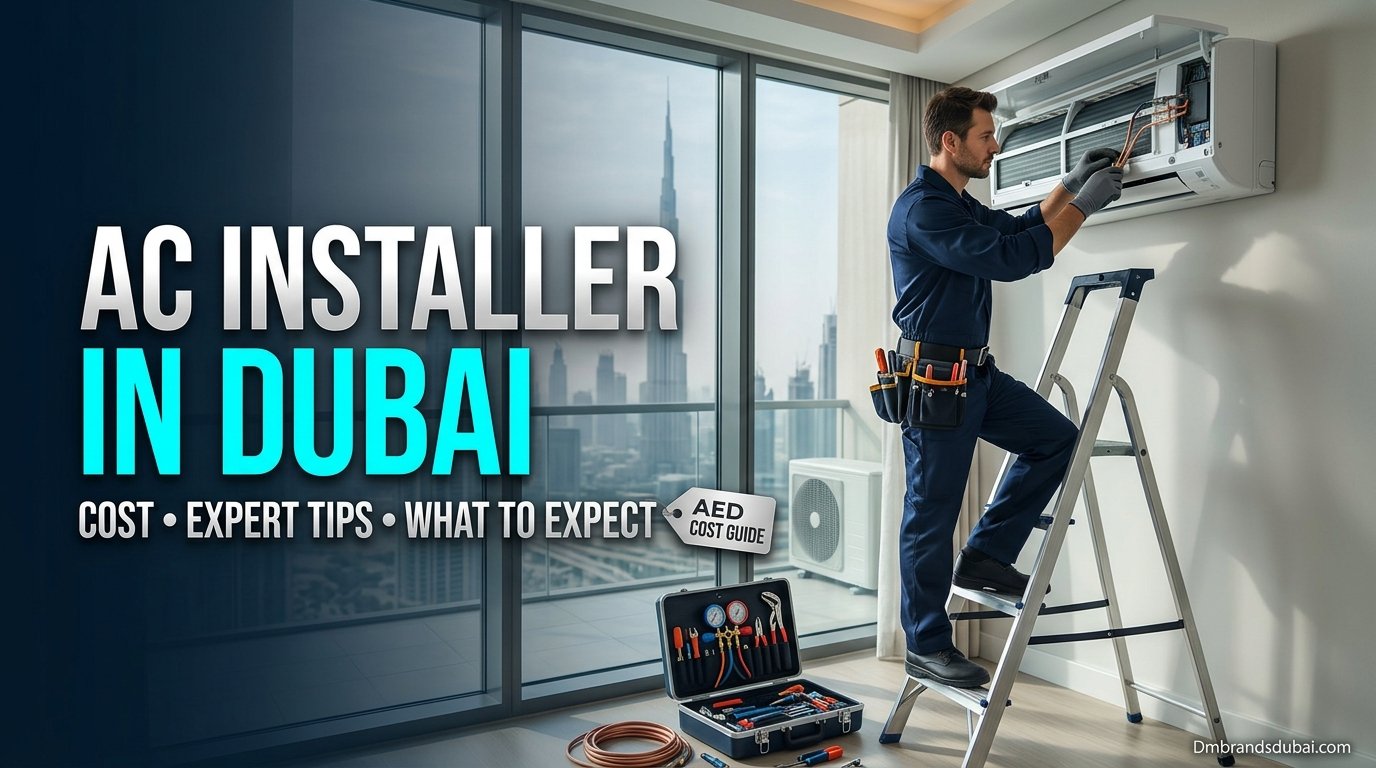
A new AC unit is only as good as the person who installs it. The best brand in the world will still leak, rattle, freeze up, or run up your DEWA bill if it is sized wrongly, mounted badly, or charged with the wrong amount of refrigerant.
That is why choosing the right AC installer matters more than most Dubai homeowners realize. In a city where outdoor temperatures regularly pass 45°C in summer, a poor installation shows up fast and costs more every month.
DM Brands Dubai, our directly employed technicians install and replace split, ducted, and central systems for villas, apartments, and offices across the city, with the price agreed in writing before work starts.
An AC installer is a trained technician or company that supplies, fits, connects, tests, and commissions an air conditioning system.
In Dubai, AC installation typically costs about AED 250–600 per split unit for labor with standard piping, AED 1,500–4,000 for a cassette unit, and AED 15,000–40,000+ for a full central or ducted system, depending on size, brand, and the condition of the property. Always get a written quote after a site assessment.
Table of Contents
What Is an AC Installer?
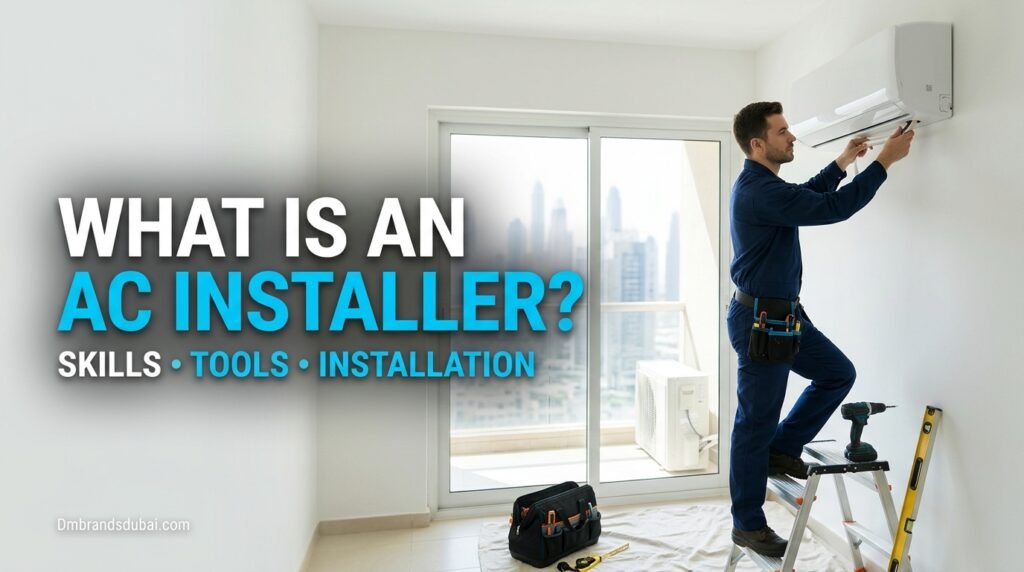
An AC installer is a qualified technician, or a company with a team of technicians, that fits air conditioning systems into homes and buildings. The job covers much more than hanging a unit on a wall.
A good installer measures the space, recommends the right capacity, plans the pipe route and drainage, handles the electrical connection, charges the refrigerant, and tests the system before handing it over.
AC Installer vs AC Technician vs HVAC Contractor
These terms overlap, but they are not identical.
| Term | What It Usually Means |
|---|---|
| AC installer | Specializes in fitting new or replacement units |
| AC technician | Diagnoses, repairs, and maintains existing units |
| HVAC contractor | Handles larger heating, ventilation, and cooling projects, including ducting |
| Air conditioning specialist | A broader term for companies that install, repair, and maintain cooling systems |
In practice, the best Dubai companies do all of these. Read more in our guide to air conditioning specialists in Dubai.
What Does an AC Installer Do?
A professional installation follows a structured process. Knowing it helps you judge whether you are getting a proper job or a rushed one.
Before Installation
- Visit the property and assess the space
- Calculate the cooling load for the room or building
- Recommend the right system type and capacity
- Plan the position of indoor and outdoor units
- Check electrical supply, breaker rating, and wiring
- Identify drainage routes for condensate water
- Confirm any building or landlord requirements
During Installation
- Mount the indoor unit securely and level
- Drill and sleeve the wall for piping
- Run insulated refrigerant pipes, drain line, and cables
- Fit the outdoor unit on a bracket or base
- Make electrical connections and fit isolators
- Vacuum the system to remove moisture and air
- Release or charge refrigerant to the correct level
- Test for leaks
After Installation
- Commission the system and check temperatures
- Confirm the drain flows freely
- Test the remote, thermostat, and modes
- Show you how to use and clean the unit
- Provide warranty details in writing
- Clean up and remove packaging
A trustworthy installer does not leave until all of these are done and tested.
Types of AC Systems an Installer Can Fit
Dubai properties use several kinds of AC systems. Each needs different skills and equipment.
| System Type | Best For | Key Installation Points |
|---|---|---|
| Split AC | Bedrooms, living rooms, offices | Indoor and outdoor unit linked by piping |
| Window AC | Small rooms, older buildings | Wall opening and secure fitting |
| Ducted AC | Villas, large apartments, offices | Ducts, plenums, and grilles across ceilings |
| Cassette AC | Offices, shops, open-plan spaces | Ceiling-mounted unit with several outlets |
| Central AC | Large villas, buildings | Large outdoor unit with ductwork |
| VRF / VRV | Commercial buildings, hotels | Multiple indoor units on one outdoor system |
| Multi-split | Homes with limited outdoor space | One outdoor unit connected to several indoor units |
| Portable AC | Temporary cooling | Window kit and exhaust hose |
Inverter vs Non-Inverter
Inverter systems adjust compressor speed to match demand, which usually means lower energy use and steadier temperatures. Non-inverter systems switch on and off at full power.
Most new installations in Dubai are inverter models because the savings on electricity add up over the life of the unit.
How Much Does AC Installation Cost in Dubai? (2026 Pricing Guide)
Cost depends on the system type, the amount of piping and cabling, the condition of the property, and whether you are buying the unit from the installer. The ranges below reflect typical Dubai market prices. Exact figures depend on a site assessment.
Labor-Only Installation Pricing (Indicative)
| Installation Type | Typical Cost (AED) |
|---|---|
| Window AC installation | 150 – 300 |
| Split AC installation (standard piping) | 250 – 600 |
| Additional piping (per meter) | 30 – 60 |
| Cassette AC installation | 1,500 – 4,000 |
| Ducted / central AC installation (labor and ductwork) | 3,000 – 15,000+ |
| AC removal (old unit) | 100 – 250 |
| AC relocation (move and reinstall) | 300 – 800 |
Full System Supply and Install (Indicative)
| Property or System | Typical Cost (AED) |
|---|---|
| Single split AC supplied and installed | 1,500 – 4,500 |
| Multi-room apartment (2–3 splits) | 4,000 – 12,000 |
| Villa central or ducted AC | 15,000 – 40,000+ |
| Commercial / VRF systems | Custom quote |
These are market-style ranges for planning, not a quote. Always request a written, itemized price after a technician has assessed your property.
For a broader look at big-ticket replacements, read our guides on HVAC system replacement in Dubai and central air replacement cost. You can also try our cost guide.
What Affects AC Installation Cost?
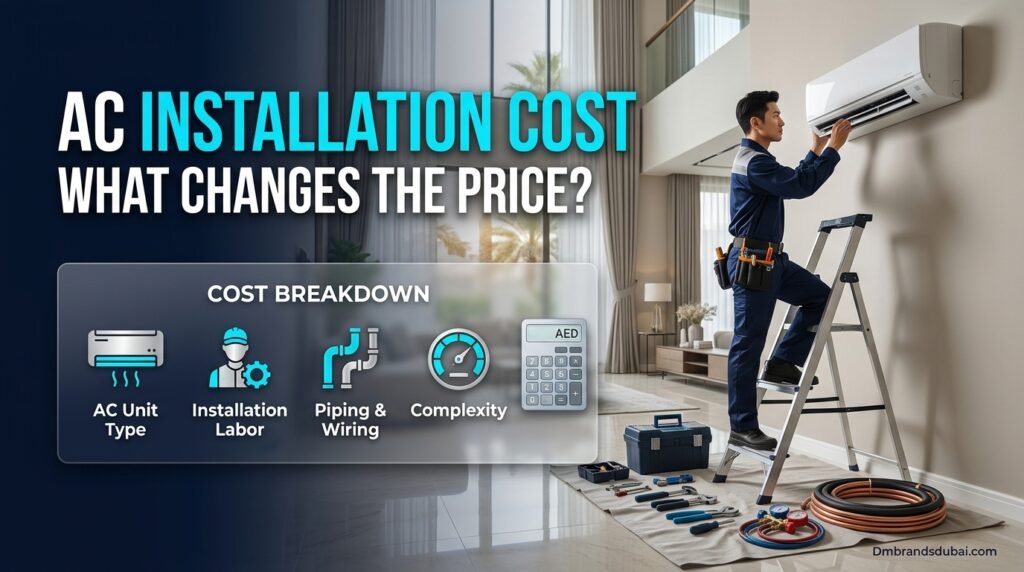
Two properties of the same size can have very different installation bills. These are the main reasons.
Unit Type and Capacity
A larger or more complex system costs more to supply and install. Ducted and central systems need more labor than a single split.
Brand and Efficiency
Premium brands and high-efficiency inverter models cost more upfront but often cost less to run. Compare the price difference with expected electricity savings.
Pipe and Cable Length
The distance between the indoor and outdoor units affects the amount of copper pipe, insulation, and cable you need. Long runs increase cost and can reduce performance.
Ease of Access
High-rise balconies, tight ducts, or hard-to-reach outdoor unit locations require more time and sometimes special equipment.
Electrical Work
If your breaker, wiring, or isolator needs upgrading to handle the new unit, expect extra cost. Safe electrical work is not an area to cut corners.
Wall and Structural Work
Drilling through thick walls, making good plasterwork, or building supports for heavy outdoor units adds to the time and materials.
Removal of the Old Unit
Taking out and disposing of an existing system takes extra labor, particularly with ducted or central units.
Timing and Urgency
Peak summer is the busiest season. Same-day and emergency installations may cost more than planned winter work.
How to Size Your AC Correctly
Sizing is the single biggest decision in an installation. An undersized unit runs nonstop and never cools properly. An oversized unit cools too fast, switches off early, and leaves the air humid and clammy.
Why Dubai Needs Careful Sizing
Dubai’s heat, strong sun, and humidity put extra load on your system. Large glass windows, top-floor apartments, and west-facing rooms need more cooling than the floor area alone suggests.
Rough Guide by Room Size
This table is only a starting point. A proper heat load calculation is the right method.
| Room Size (approx.) | Typical Capacity |
|---|---|
| Up to 120 sq ft | 1 ton (12,000 BTU) |
| 120 – 180 sq ft | 1.5 ton (18,000 BTU) |
| 180 – 250 sq ft | 2 ton (24,000 BTU) |
| 250 – 330 sq ft | 2.5 ton (30,000 BTU) |
| 330 – 400+ sq ft | 3 ton (36,000 BTU) or more |
What a Proper Load Calculation Considers
- Floor area and ceiling height
- Window size, glazing, and sun exposure
- Insulation and building age
- Number of occupants
- Heat from appliances, lighting, and equipment
- Floor level and roof exposure
- Local climate conditions
If an installer quotes a unit without asking about any of these, be cautious.
The AC Installation Process, Step by Step
Here is what a quality installation looks like from start to finish.
Step 1: Site Survey and Quote
The installer visits, measures, and checks electrical and drainage options. You receive a written quote that lists the unit, accessories, labor, and any extra items.
Step 2: Unit Selection and Approval
You confirm the brand, capacity, and model. If you rent, you confirm landlord or building requirements at this stage.
Step 3: Delivery and Preparation
The installer brings the unit and materials, protects floors and furniture, and marks the positions of the indoor and outdoor units.
Step 4: Indoor Unit Mounting
A mounting plate is fixed securely to the wall and checked for level. The indoor unit then clips on and is aligned so condensate drains properly.
Step 5: Wall Drilling and Piping
A hole is drilled for the pipes and cables. Insulated copper pipes, the drain line, and the control cable run to the outdoor unit with tidy, sealed joints.
Step 6: Outdoor Unit Placement
The outdoor unit goes on a sturdy bracket or base with clearance for airflow. Vibration pads reduce noise.
Step 7: Electrical Connection
Power and control cables connect to the correct terminals. An isolator and suitably rated breaker protect the circuit.
Step 8: Vacuuming and Leak Testing
The installer uses a vacuum pump to remove air and moisture from the pipework, then checks pressure to confirm there are no leaks. Skipping this step shortens compressor life.
Step 9: Refrigerant Charging
The system is charged to the manufacturer’s specification, commonly with R410A or R32 refrigerant. Both undercharging and overcharging cause problems.
Step 10: Testing and Commissioning
The installer runs the system in cooling mode, checks temperature drop, airflow, drainage, noise, and remote functions. Any issues are corrected before handover.
Step 11: Handover and Warranty
You receive instructions, warranty paperwork, and a clean work area. A written record of what was installed is helpful for the future.
Where Should the AC Be Installed?
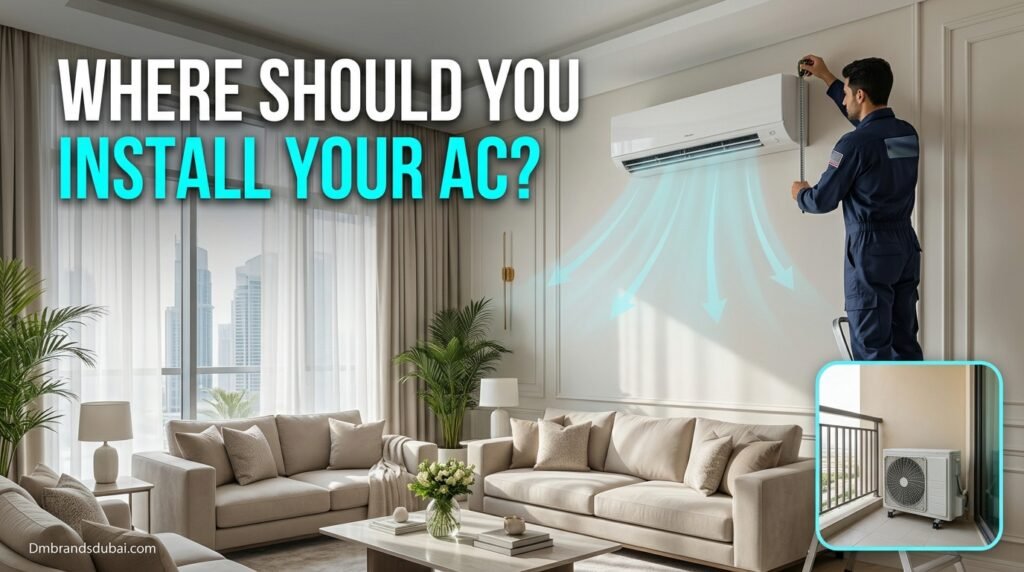
Placement affects comfort, noise, running cost, and the life of the unit.
Indoor Unit Placement
- Install high on the wall with clear airflow across the room
- Keep away from direct sunlight and heat sources
- Avoid placing directly above beds or desks where cold air blows on people
- Leave space around the unit for filter access and servicing
Outdoor Unit Placement
- Choose a shaded location where possible
- Leave clear space for airflow around the unit
- Keep the pipe run as short as practical
- Avoid corners where hot air recirculates
- Make sure the unit is easy to reach for servicing
Drain Line Planning
Condensate must drain away downhill to a proper point. A poor drain slope is one of the most common causes of water leaks later.
If you are already facing leaks or poor cooling, our residential AC repair guide explains common faults and fixes.
Do You Need Permission to Install an AC in Dubai?
In many cases, yes. Rules depend on your property and community.
Rented Properties
Check your tenancy agreement and speak to your landlord before installing or replacing a unit. Landlords often need to approve changes, especially for external units.
Apartment Buildings and Communities
Building management or the owners’ association may have rules about where outdoor units can be placed, how pipes are routed, and what approvals are required. Some buildings use district cooling or central chillers instead of individual units.
Villas and Standalone Properties
Owners generally have more freedom, but community rules, noise limits, and planning conditions may still apply. Always confirm before ordering equipment.
Electrical Requirements
Electrical work must meet local standards. A competent installer checks your supply and uses properly rated breakers and cables.
When in doubt, ask the installer to confirm requirements for your specific building before work begins.
New Installation vs Replacement vs Relocation
Different jobs have different needs. Knowing which one you need helps you request the right quote.
| Job | When You Need It | What Is Involved |
|---|---|---|
| New installation | New room, new property, or added cooling | Selecting a unit, new pipework, electrical connection |
| Replacement | Old unit failing, inefficient, or beyond repair | Removing the old unit, reusing or replacing pipes, fitting the new one |
| Relocation | Renovation, redesign, or moving to a new property | Recovering gas, removing and re-fitting the unit |
| Upgrade | Moving from non-inverter to inverter, or increasing capacity | Assessing sizing and electrical capacity |
Signs It Is Time to Replace Instead of Repair
- The unit is more than 10–12 years old
- Repair bills are rising each year
- The compressor has failed
- It uses an outdated refrigerant
- Cooling is poor even after servicing
- Your DEWA bill keeps rising without a change in usage
Before you decide, see our guide to AC compressor replacement cost in Dubai and home AC compressor replacement cost. Our AC replacement and installation service covers removal, supply, and fitting in one visit.
Choosing the Right AC Brand and Efficiency Level
Several brands are widely sold in the UAE, including Daikin, LG, Mitsubishi Electric, Carrier, O General, Gree, Samsung, Midea, Hitachi, Trane, and York. Each has strengths, and the best choice depends on your budget, space, and service availability.
What to Compare
| Factor | Why It Matters |
|---|---|
| Energy efficiency rating | Lower running cost and a lower DEWA bill |
| Inverter technology | Smoother cooling and savings |
| Capacity and coverage | Matches the room’s cooling needs |
| Noise level | Important for bedrooms and offices |
| Refrigerant type | R32 and R410A are common today |
| Warranty | Look for both product and installation cover |
| Availability of parts and service | Keeps downtime short if something fails |
| Air filtration features | Helps with dust and allergens |
Pay Attention to Efficiency Labels
Check the unit’s energy efficiency information. A slightly higher purchase price can pay for itself through lower electricity use, especially in Dubai where AC runs for much of the year.
How to Choose the Best AC Installer in Dubai
Anyone can claim to be an installer. Use this checklist to find a reliable one.
What to Look For
- Valid trade license: The company should be legally registered to provide AC services.
- Insurance: Work should be covered in case of damage.
- Trained technicians: Ask whether the team is directly employed and trained for the system you are installing.
- Clear written quotes: The price should list the unit, accessories, labor, and extras.
- Warranty on workmanship: You should get a written warranty in addition to the manufacturer’s cover.
- Experience with your system type: Split, ducted, and central systems need different skills.
- Good reviews and references: Look for consistent feedback on punctuality, tidiness, and follow-up.
- After-sales support: Choose a company that also services and repairs the units it installs.
Questions to Ask Before Hiring
- Will you survey the property and calculate the correct capacity?
- Is the quote written and itemized?
- Who will do the installation, and are they employees?
- What refrigerant and brand will be used?
- What warranty is included for the unit and for the installation?
- How long will the job take?
- What happens if there is a problem after installation?
- Can you also service the system and offer a maintenance contract?
Reading our article on aircon installation near me will help you compare options and prepare questions.
Why Directly Employed Technicians Matter
Some companies subcontract day labor for installation. Quality, tidiness, and accountability can vary from job to job.
DM Brands Dubai uses directly employed technicians who arrive in the agreed window, with parts on the van and the price agreed in writing beforehand.
Red Flags to Avoid When Hiring an AC Installer
Spot these signs early to avoid a costly mistake.
- No site visit: Quotes without checking the space often lead to wrong sizing.
- Vague pricing: “We will see on the day” usually means extra charges later.
- Unusually low quotes: Very cheap installation often means shortcuts, such as skipping vacuuming or using thin pipe.
- No license or insurance: If they cannot show documents, move on.
- Pressure to decide immediately: A good installer lets you compare quotes.
- No written warranty: Verbal promises are hard to enforce.
- Cash only with no receipt: You need a record for warranty claims.
- Ignoring building rules: An installer who skips approvals can cause problems with your landlord or building management.
DIY AC Installation vs Professional Installer
Some people consider installing a unit themselves to save money. It rarely works out.
| Task | DIY-Safe? | Notes |
|---|---|---|
| Choosing the location | Yes, with guidance | Ask a professional to confirm |
| Mounting the indoor unit | Not recommended | Must be level and secure |
| Drilling and sleeving walls | Not recommended | Risk of damaging cables or pipes |
| Refrigerant handling and vacuuming | No | Requires certified technicians and special tools |
| Electrical connection | No | Safety hazard; needs a licensed technician |
| Leak testing and commissioning | No | Needs correct equipment |
Why DIY Costs More in the End
Mistakes during installation can void the manufacturer’s warranty. Poor vacuuming, leaks, and wrong charging shorten the life of the compressor.
Safety is also a concern. Electrical faults and falls from height are real risks.
Common AC Installation Mistakes
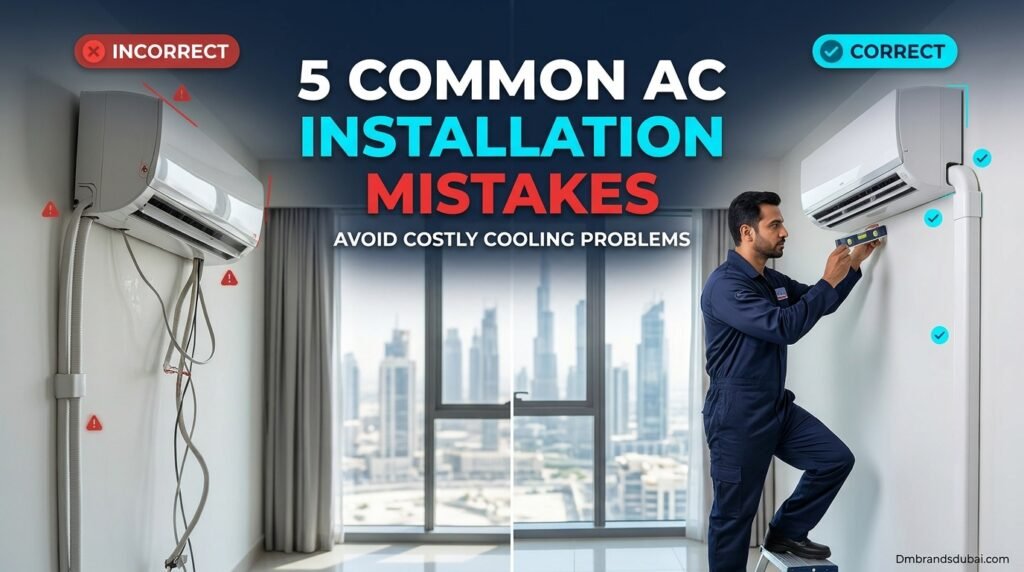
These errors are among the most common reasons new systems underperform.
Wrong Size Unit
Both undersized and oversized units waste energy and reduce comfort.
Poor Drain Slope
A drain line with the wrong gradient causes leaks and water stains.
Skipping Vacuum and Leak Test
Moisture and air trapped in the system cause corrosion and reduce efficiency. A missed leak means a refrigerant top-up soon after installation.
Long, Bent, or Uninsulated Pipes
Kinked pipes restrict flow. Missing insulation causes sweating, heat loss, and wasted energy.
Badly Placed Outdoor Unit
Units in direct sun, tight corners, or poorly ventilated spaces overheat and work harder.
Weak Electrical Setup
Undersized cables or the wrong breaker cause tripping and fire risk.
Unsecured Mounting
Units not fixed properly vibrate, make noise, and can fall.
Rushing the Job
Hasty work leaves loose connections, untidy finishes, and hidden faults that appear in the first summer.
What to Do After Your AC Is Installed
A good installation is the start, not the end. Look after the system to protect your investment.
Run a Simple Check in the First Week
- Confirm the unit cools evenly and quietly
- Look for water dripping from the indoor unit or pipes
- Listen for rattling or vibration
- Check that the remote and thermostat respond properly
Report any issue promptly while the installation is still fresh and under warranty.
Clean Filters Regularly
Dust is a constant challenge in Dubai. Clean filters every few weeks during heavy-use months to maintain airflow and efficiency.
Book Regular Servicing
Regular servicing keeps the unit efficient and catches small problems early. See our guide to air conditioner maintenance tips for Dubai, or book our AC service and repair.
Consider an Annual Maintenance Contract
An annual contract covers scheduled servicing and priority response if something fails. We offer residential contracts for villas and apartments and commercial contracts for offices and retail.
Keep Ducts and Coils Clean
If you have a ducted system, schedule duct cleaning and coil cleaning to protect air quality and efficiency.
Keep Your Paperwork
Store your invoice, warranty details, and unit information safely. You will need them if you ever make a claim.
AC Installation by Property Type
Different properties have different installation needs.
Apartments
Most apartments use one to three split units or a ducted system. Balcony space, building rules, and drainage routes are the main considerations.
Check whether your building uses a chilled-water or district cooling system. In that case, the installation may be different.
Villas
Villas often have multiple splits, a ducted system, or a central AC across several zones. The scale of the work means careful planning of duct routes, outdoor unit placement, and electrical load.
Our air duct replacement guide covers when old ducts need replacing during a new installation.
Offices and Retail
Commercial spaces often use cassette, ducted, or VRF systems. Planning should cover zoning, noise, aesthetics, and minimal disruption to staff and customers.
New Builds and Renovations
New projects allow the installer to plan pipework and ducts before walls are closed. This keeps the finished look clean and reduces long-term maintenance issues.
Why Choose DM Brands Dubai as Your AC Installer?
Dubai has many installers. Here is what you can expect from DM Brands Dubai.
- Directly employed technicians: Not subcontracted day labor, so accountability stays with us.
- Licensed and insured work: Every visit is covered.
- Priced before we start: A written quote with no surprise extras.
- Correct sizing: We assess the space instead of guessing.
- Same or next-day visits: Subject to schedule, with emergency call-out available.
- One team for the whole property: AC installation, servicing, duct cleaning, coil cleaning, plumbing, and electrical under one roof.
- Written warranty: You see what was done and what it cost.
Need help right now? Get a free quote and one of our team will come back with a written price.
If your AC fails before the installation can happen, our emergency call-out service and our guides on same day air conditioning service and weekend AC repair can get you cooling again quickly.
Our Service Areas in Dubai
DM Brands Dubai provides AC installer coverage across all major communities, including:
- Dubai Marina
- Jumeirah Village Circle (JVC)
- Palm Jumeirah
- Downtown Dubai
- Business Bay
- Al Barsha
- Arabian Ranches
- Jumeirah
- JBR
- Al Quoz
Whether you live in a high-rise apartment in Downtown or a villa in Arabian Ranches, our technicians are equipped for AC installation in homes, villas, and offices across the city. Response times vary by area and by how busy the day is, and we will tell you honestly if your location means a longer wait.
Also Read:
- Aircon Installation Near Me: Sizing, Costs, Process and Trusted Experts
- Air Conditioning Specialists in Dubai: Expert AC Repair, Installation and Maintenance
- HVAC System Replacement in Dubai: Costs, Signs and Process
- Central Air Replacement Cost: What Homeowners Really Pay
- Air Duct Replacement in Dubai: Signs, Costs, Materials and the Full Process
- AC Compressor Replacement Cost Dubai
- Home AC Compressor Replacement Cost in Dubai: Real AED Prices and Smart Savings
- Air Conditioner Maintenance Tips for Dubai
- AC Unit Fix: How to Diagnose, Repair and Prevent the Most Common Cooling Problems
- HVAC Technicians Near Me in Dubai: How to Find Fast, Licensed and Trusted Help
- Local Air Conditioning Service in Dubai: Fast AC Repair and Maintenance
- Cheapest HVAC Repair Near Me in Dubai: Affordable Fixes, Real Prices and Smart Savings
- Residential AC Repair in Dubai: Same-Day Fixes, Real Costs and Expert Help
- Weekend AC Repair: Fast, Reliable Help When Your AC Fails on Saturday or Sunday
- Same Day Air Conditioning Service in Dubai: Fast AC Repair & Maintenance
- Air Repair Near Me: Fast and Reliable AC Repair in Dubai
- Heating & Air Conditioning Service Near Me: How to Find a Fast, Reliable Local HVAC Team
- Trane AC Repair Near Me: Common Problems and How to Find a Trusted Technician
- Carrier HVAC Service Near Me: Dubai Homeowner’s Guide
- AC Replacement and Installation Service
- AC Service and Repair
- Residential Annual Maintenance Contract
- Commercial Annual Maintenance Contract
Frequently Asked Questions (FAQs)
What does an AC installer do?
An AC installer assesses the space, recommends the right unit size, mounts the indoor and outdoor units, connects pipes and electrics, charges refrigerant, and tests the system before handover.
How much does an AC installer charge in Dubai?
Labor for a standard split AC is typically around AED 250–600, with extra for additional piping. Cassette, ducted, and central systems cost more. Always get a written quote after a site visit.
How much does it cost to install a new AC in Dubai?
A single split unit supplied and installed is commonly AED 1,500–4,500, depending on brand and capacity. A villa central system can reach AED 15,000–40,000 or more.
How long does AC installation take?
A single split unit usually takes a few hours. Multiple units, ducted systems, or central systems can take one to several days depending on complexity.
Can I install an AC myself?
It is not recommended. Refrigerant handling, vacuuming, electrical work, and leak testing need trained technicians and proper equipment, and DIY mistakes can void the warranty.
How do I choose the right AC size?
Size depends on floor area, ceiling height, windows, sun exposure, insulation, and occupancy. A heat load calculation by the installer is the most reliable method.
What is better, split AC or central AC?
Split units suit individual rooms and give flexible control. Central or ducted systems cool whole villas or large spaces from one system and provide a cleaner look. The best option depends on your property and budget.
Is an inverter AC worth it in Dubai?
Usually yes. Inverter units adjust output to demand, which typically lowers electricity use and keeps temperatures steady, helping with your DEWA bill over time.
Do I need landlord permission to install an AC?
In most rental properties, yes. Check your tenancy agreement and speak to your landlord or building management before installing or replacing a unit.
Does the installer supply the AC unit?
Many do. You can buy the unit from the installer or supply your own. Confirm warranty terms in either case, since the installation warranty and the product warranty are different.
What refrigerant do new ACs use?
Most new units in the UAE use R410A or R32. Your installer should tell you which one your unit uses and charge it to the manufacturer’s specification.
How do I know if my AC was installed properly?
It should cool evenly, run quietly, drain without leaks, and have neat, insulated pipework. You should also receive warranty documents and a tested, commissioned system.
What are signs of a bad AC installation?
Water leaks, weak cooling, loud vibration, ice on pipes, frequent breaker tripping, and visible gaps in insulation can all point to poor installation.
Can you install an AC in a day?
A single split unit can usually be installed in one day. Larger or multi-unit jobs may take longer.
Can you move my AC to a new location?
Yes. Relocation involves recovering refrigerant, removing the unit, and reinstalling it with new pipework. It is often needed after renovation or moving home.
Should I repair or replace an old AC?
Consider replacement if the unit is over 10–12 years old, needs frequent repairs, has a failed compressor, or is very inefficient. A technician can compare repair and replacement costs.
Do you remove and dispose of the old AC?
A professional installer can remove your old unit as part of the job. Confirm that removal and disposal are included in your quote.
What warranty comes with AC installation?
The manufacturer provides a product warranty, and a good installer adds a workmanship warranty. Ask for both in writing.
Do you offer AC maintenance after installation?
Yes. Regular servicing and annual maintenance contracts keep your system efficient and can help you avoid emergency repairs.
How often should a new AC be serviced in Dubai?
Most systems benefit from servicing a few times per year, with a full clean before summer. Dust and near-continuous use make regular care important.
What areas of Dubai do you cover?
DM Brands Dubai covers communities across the city, including Dubai Marina, JVC, Palm Jumeirah, Downtown Dubai, Business Bay, Al Barsha, Arabian Ranches, Jumeirah, JBR, and Al Quoz.
How can I get a quote for AC installation?
Use the free quote form on our website. Tell us your property type, the rooms you want cooled, and any photos, and we will come back with a written price.
Conclusion
Your AC is one of the hardest-working systems in your home or business, and a good installation is what lets it perform. Correct sizing, careful piping, proper vacuuming, accurate charging, and tested commissioning separate a system that quietly cools for years from one that leaks, trips, and drives up your bills.
Choose an AC installer who visits the property first, quotes in writing, uses trained technicians, and stands behind the work. Then protect your investment with regular servicing and, if you want predictable costs, an annual maintenance contract.
At DM Brands Dubai, our directly employed, insured technicians install and replace split, ducted, and central systems for homes, villas, and offices across the city, with the price agreed before any work begins.
Ready to plan your installation or compare options? Request a free, written quote today and get a clear price with no surprises.
📞 Prefer to talk it through first? Contact the DM Brands Dubai team by phone, WhatsApp, or the online form.